Division of Gastroenterology and Endocrinology, Department of Medicine II, Rostock University Medical Center, Ernst-Heydemann-Str. 6, 18057, Rostock, Germany.
Institute for Clinical Chemistry and Laboratory Medicine, Rostock University Medical Center, Ernst-Heydemann-Str. 6, 18057, Rostock, Germany.
Dig Dis Sci. 2020 Dec;65(12):3521-3537. doi: 10.1007/s10620-020-06140-6. Epub 2020 Feb 19.
In short bowel syndrome, epithelial surface loss results in impaired nutrient absorption and may lead to intestinal insufficiency or intestinal failure. Nucleotide oligomerization domain 2 (Nod2) dysfunction predisposes to the development of intestinal failure after intestinal resection and is associated with intestinal barrier defects. Epithelial barrier function is crucial for intestinal absorption and for intestinal adaptation in the short bowel situation.
The aim of the study was to characterize the effects of the GLP-2 analogue Teduglutide in the small intestine in the presence and absence of Nod2 in a mouse model of short bowel syndrome.
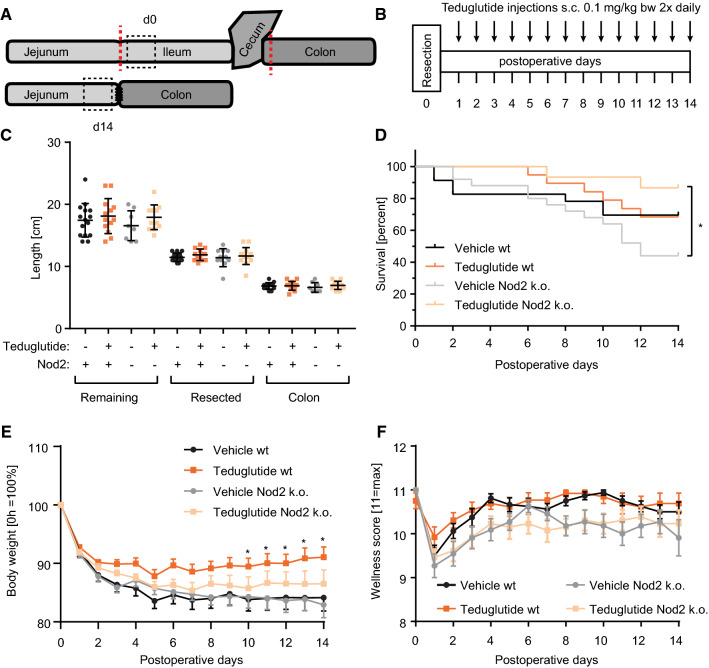
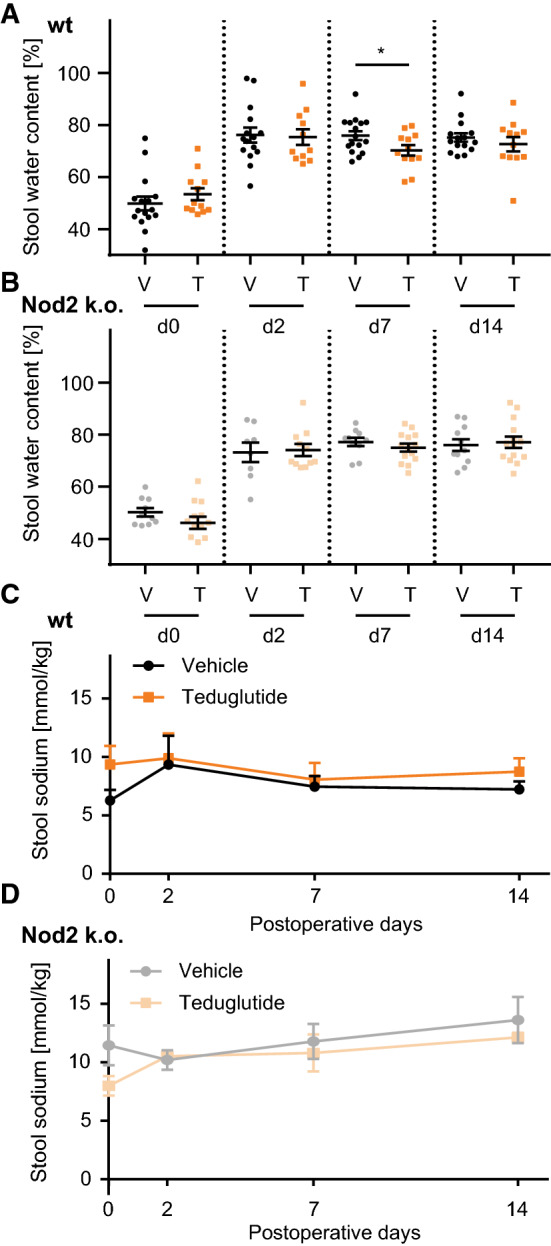
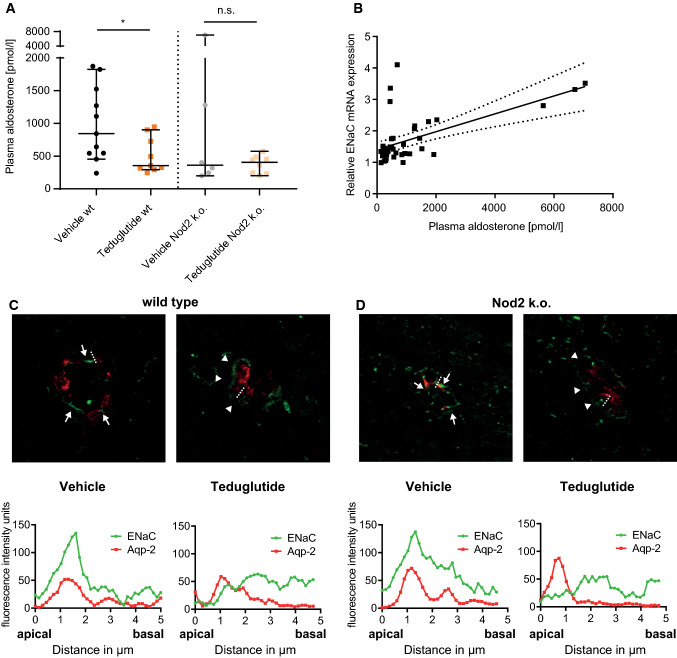
Mice underwent 40% ICR and were thereafter treated with Teduglutide versus vehicle injections. Survival, body weight, stool water, and sodium content and plasma aldosterone concentrations were determined. Intestinal and kidney tissue was examined with light and fluorescence microscopy, Ussing chamber studies and quantitative PCR in wild type and transgenic mice.
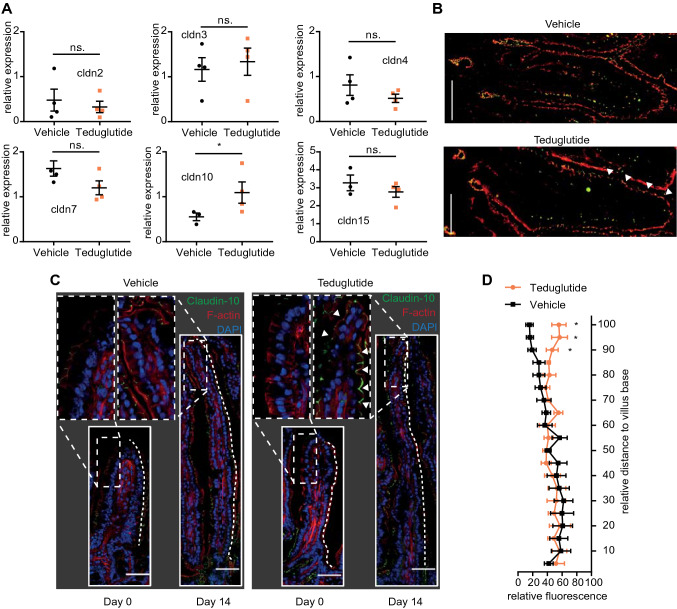
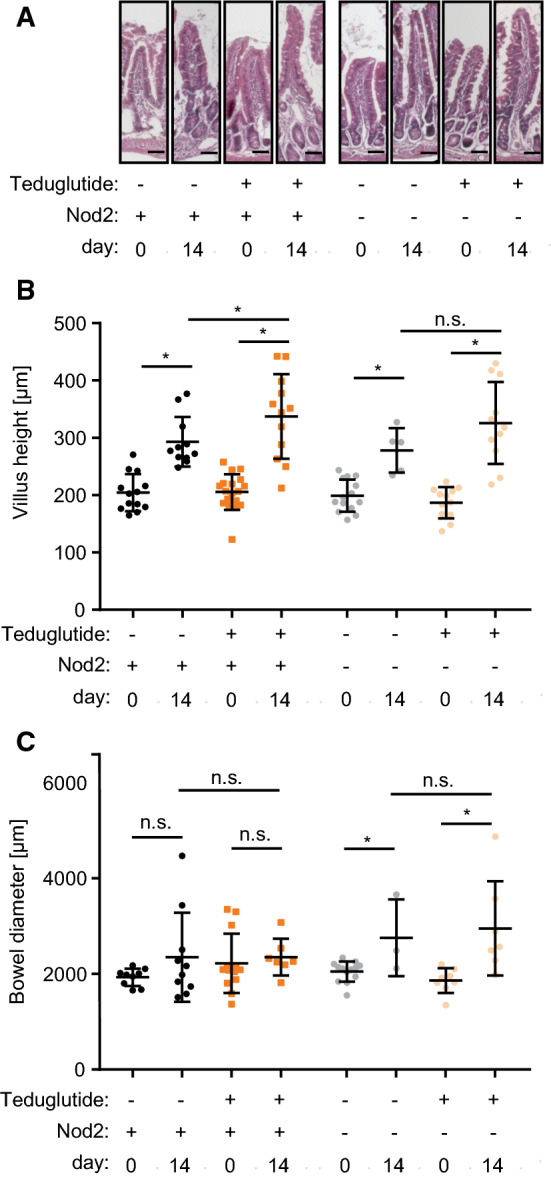
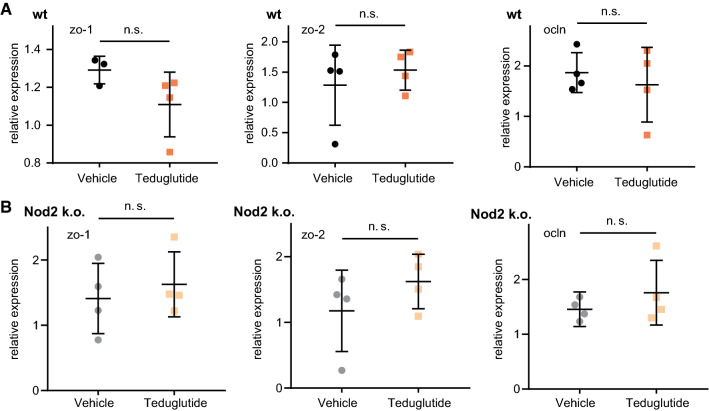
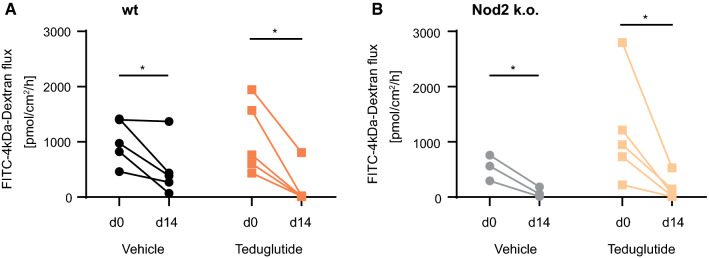
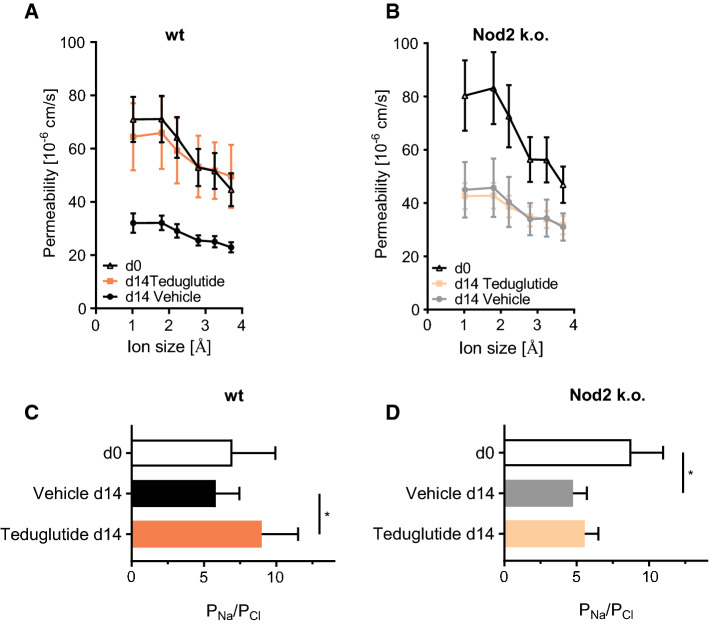
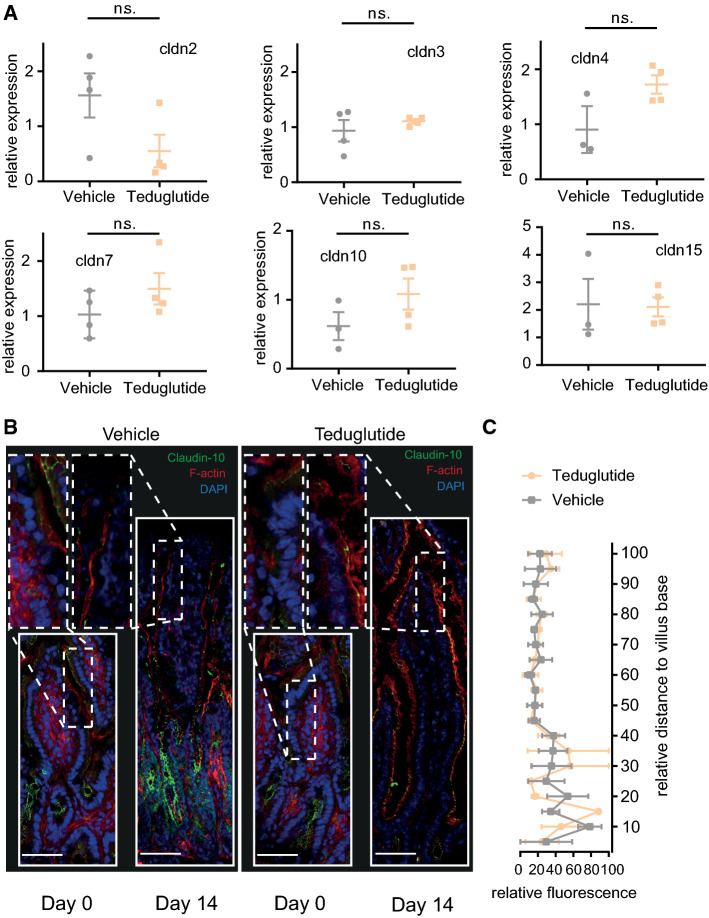
Teduglutide reduced intestinal failure incidence in Nod2 k.o. mice. In wt mice, Teduglutide attenuated intestinal insufficiency as indicated by reduced body weight loss and lower plasma aldosterone concentrations, lower stool water content, and lower stool sodium losses. Teduglutide treatment was associated with enhanced epithelial paracellular pore function and enhanced claudin-10 expression in tight junctions in the villus tips, where it colocalized with sodium-glucose cotransporter 1 (SGLT-1), which mediates Na-coupled glucose transport.
In the SBS situation, Teduglutide not only maximizes small intestinal mucosal hypertrophy but also partially restores small intestinal epithelial function through an altered distribution of claudin-10, facilitating sodium recirculation for Na-coupled glucose transport and water absorption.
在短肠综合征中,上皮表面的损失导致营养吸收受损,可能导致肠道功能不全或肠道衰竭。核苷酸寡聚化结构域 2(Nod2)功能障碍易导致肠道切除后发生肠道衰竭,并与肠道屏障缺陷有关。上皮屏障功能对于肠道吸收和短肠情况下的肠道适应至关重要。
本研究旨在描述 GLP-2 类似物 Teduglutide 在短肠综合征小鼠模型中 Nod2 存在和不存在的情况下对小肠的影响。
小鼠接受 40%的 ICR 手术,此后接受 Teduglutide 或载体注射治疗。检测生存情况、体重、粪便水含量和钠含量以及血浆醛固酮浓度。使用野生型和转基因小鼠进行光镜和荧光显微镜检查、Ussing 室研究和定量 PCR。
Teduglutide 降低了 Nod2 k.o. 小鼠的肠道衰竭发生率。在 wt 小鼠中,Teduglutide 减轻了肠道功能不全,表现为体重减轻减少和血浆醛固酮浓度降低、粪便水含量降低和粪便钠损失降低。Teduglutide 治疗与增强上皮细胞旁通透性和增强绒毛尖端紧密连接中的 Claudin-10 表达有关,Claudin-10 在那里与钠-葡萄糖共转运蛋白 1(SGLT-1)共定位,SGLT-1 介导 Na 偶联葡萄糖转运。
在 SBS 情况下,Teduglutide 不仅最大限度地增加了小肠黏膜肥大,而且通过改变 Claudin-10 的分布部分恢复了小肠上皮功能,促进了 Na 偶联葡萄糖转运和水吸收的钠再循环。