Department of Biochemistry and Molecular Biophysics, Columbia University, 650 West 168th Street, New York, NY, 10032, USA.
Chemistry Department, Carnegie Mellon University, 4400 Fifth Ave, Pittsburgh, PA, 15213, USA.
J Physiol. 2021 May;599(10):2673-2697. doi: 10.1113/JP279024. Epub 2020 Mar 13.
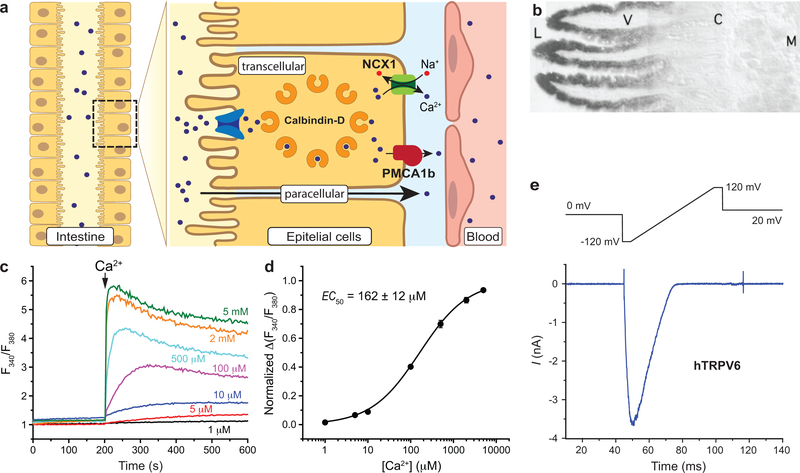
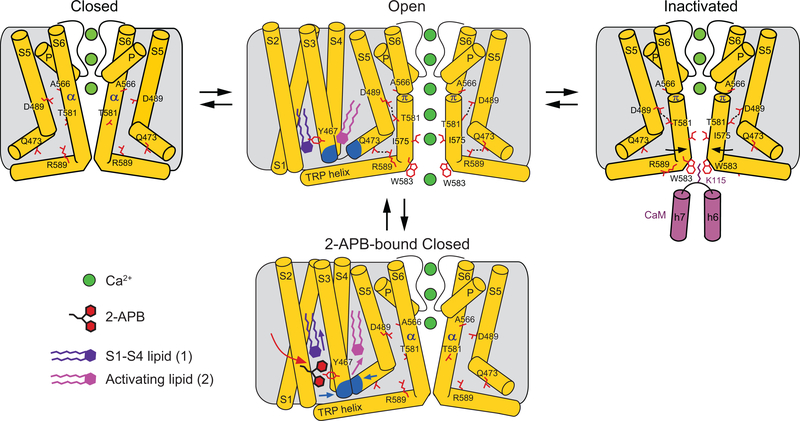
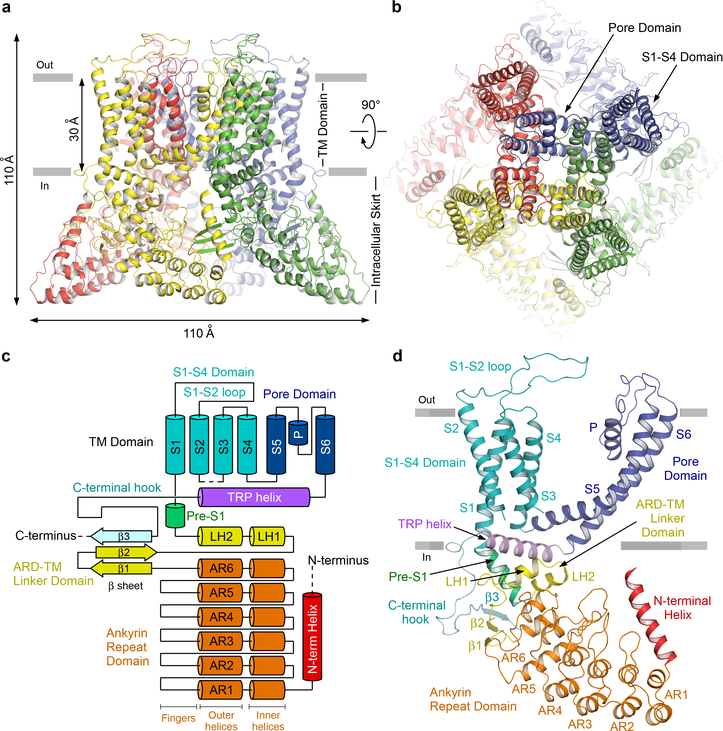
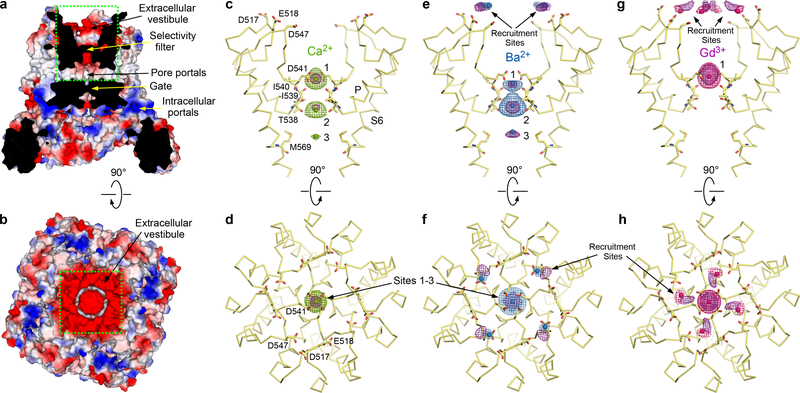
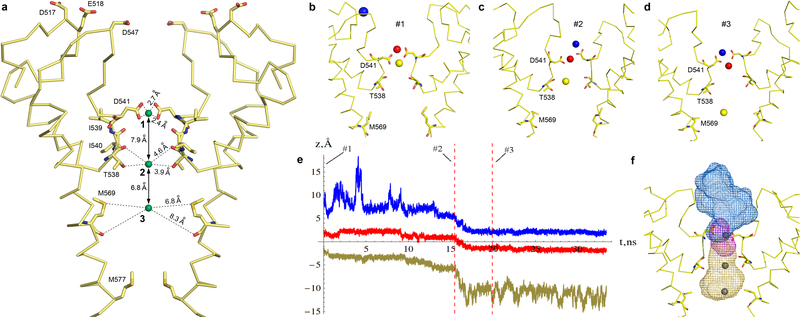
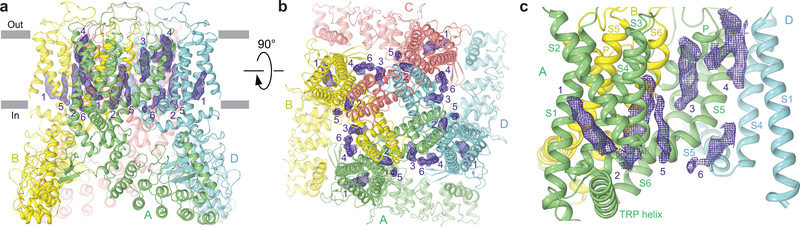
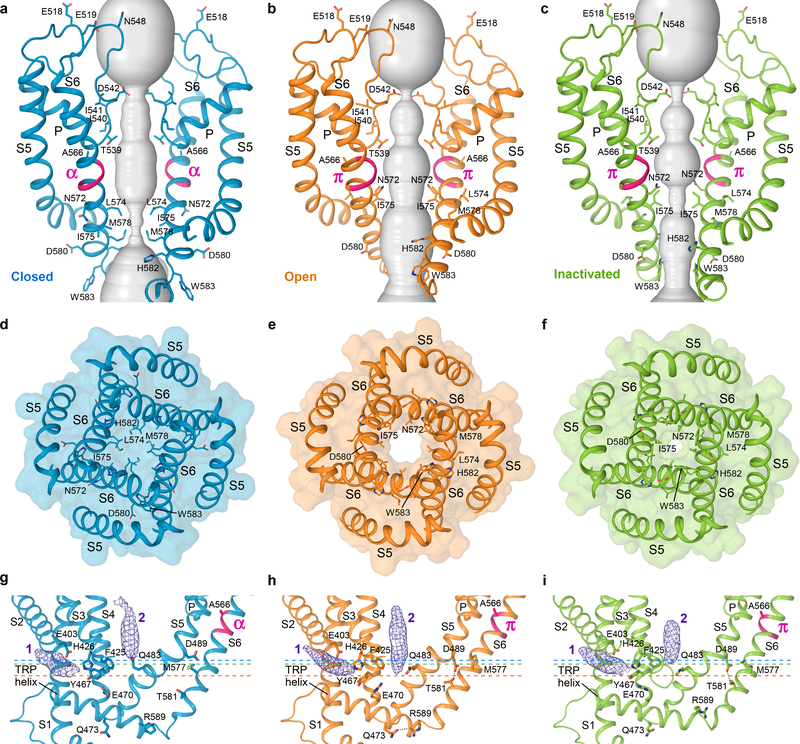
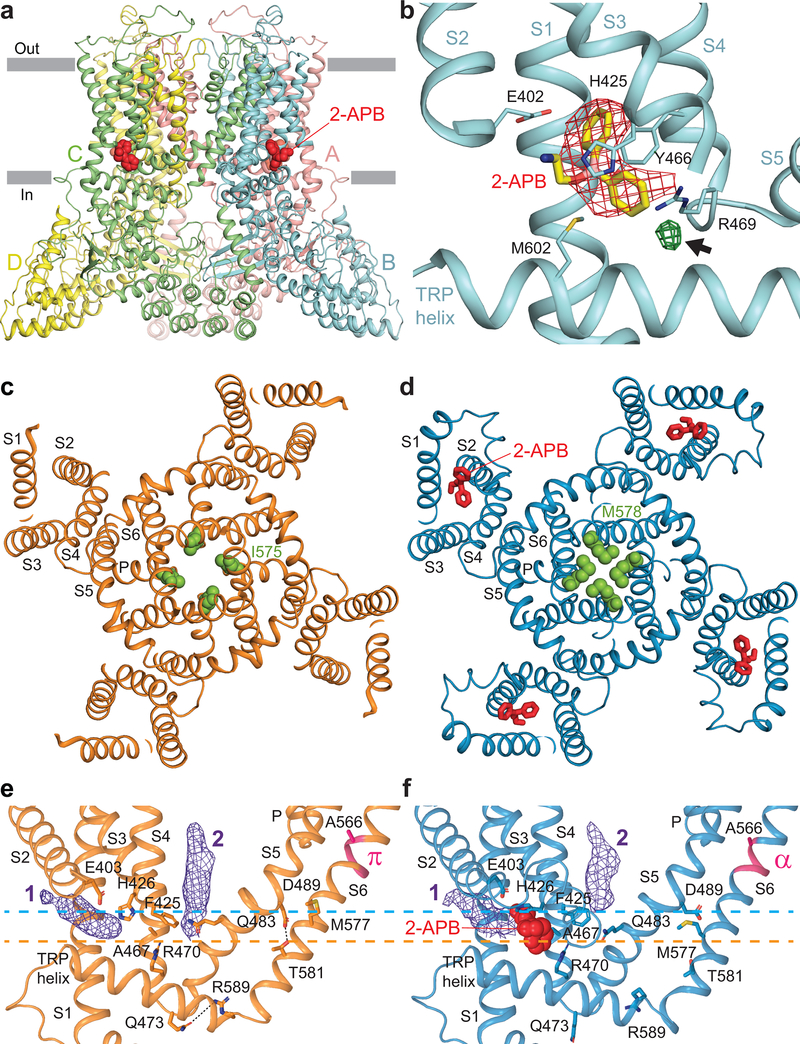
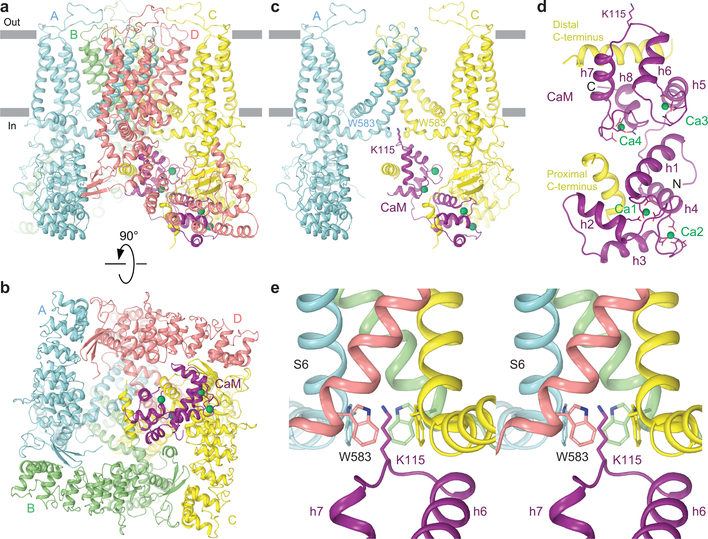
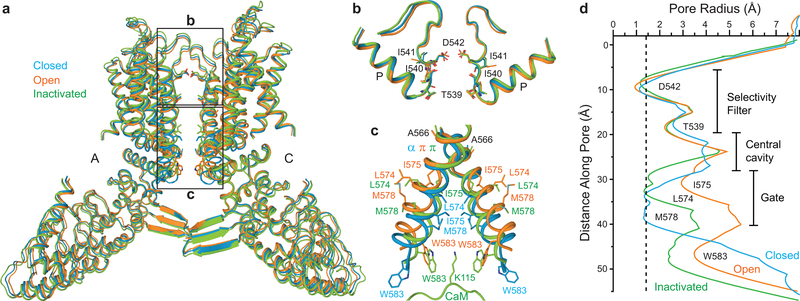
Epithelial calcium channel TRPV6 is a member of the vanilloid subfamily of TRP channels that is permeable to cations and highly selective to Ca ; it shows constitutive activity regulated negatively by Ca and positively by phosphoinositol and cholesterol lipids. In this review, we describe the molecular structure of TRPV6 and discuss how its structural elements define its unique functional properties. High Ca selectivity of TRPV6 originates from the narrow selectivity filter, where Ca ions are directly coordinated by a ring of anionic aspartate side chains. Divalent cations Ca and Ba permeate TRPV6 pore according to the knock-off mechanism, while tight binding of Gd to the aspartate ring blocks the channel and prevents Na from permeating the pore. The iris-like channel opening is accompanied by an α-to-π helical transition in the pore-lining transmembrane helix S6. As a result of this transition, the intracellular halves of the S6 helices bend and rotate by about 100 deg, exposing different residues to the channel pore in the open and closed states. Channel opening is also associated with changes in occupancy of the transmembrane domain lipid binding sites. The inhibitor 2-aminoethoxydiphenyl borate (2-APB) binds to TRPV6 in a pocket formed by the cytoplasmic half of the S1-S4 transmembrane helical bundle and shifts open-closed channel equilibrium towards the closed state by outcompeting lipids critical for activation. Ca inhibits TRPV6 via binding to calmodulin (CaM), which mediates Ca -dependent inactivation. The TRPV6-CaM complex exhibits 1:1 stoichiometry; one TRPV6 tetramer binds both CaM lobes, which adopt a distinct head-to-tail arrangement. The CaM C-terminal lobe plugs the channel through a unique cation-π interaction by inserting the side chain of lysine K115 into a tetra-tryptophan cage at the ion channel pore intracellular entrance. Recent studies of TRPV6 structure and function described in this review advance our understanding of the role of this channel in physiology and pathophysiology and inform new therapeutic design.
上皮钙通道 TRPV6 是香草素亚家族 TRP 通道的成员,对阳离子具有通透性,对 Ca 具有高度选择性;它表现出受 Ca 负调控和受肌醇磷脂和胆固醇脂质正调控的组成型活性。在这篇综述中,我们描述了 TRPV6 的分子结构,并讨论了其结构元件如何定义其独特的功能特性。TRPV6 的高 Ca 选择性源于狭窄的选择性过滤器,其中 Ca 离子直接由阴离子天冬氨酸侧链环配位。二价阳离子 Ca 和 Ba 根据敲除机制穿过 TRPV6 通道,而 Gd 与天冬氨酸环的紧密结合会阻塞通道并防止 Na 通过孔道渗透。虹膜样通道打开伴随着孔道衬里跨膜螺旋 S6 中的α-到-π 螺旋转变。由于这种转变,S6 螺旋的细胞内半部分弯曲并旋转约 100°,在打开和关闭状态下将不同的残基暴露于通道孔。通道打开还与跨膜结构域脂质结合位点的占据变化相关。抑制剂 2-氨基乙氧基二苯硼酸盐(2-APB)结合到由 S1-S4 跨膜螺旋束的细胞质半部分形成的口袋中,并通过与激活关键的脂质竞争将开-闭通道平衡推向关闭状态来抑制 TRPV6。Ca 通过与钙调蛋白(CaM)结合来抑制 TRPV6,CaM 介导 Ca 依赖性失活。TRPV6-CaM 复合物表现出 1:1 的化学计量关系;一个 TRPV6 四聚体结合两个 CaM 叶,它们采用独特的头到尾排列。CaM 的 C 端叶通过将赖氨酸 K115 的侧链插入离子通道孔细胞内入口处的四色氨酸笼中,通过独特的阳离子-π 相互作用堵塞通道。本综述中描述的 TRPV6 结构和功能的最新研究增进了我们对该通道在生理学和病理生理学中作用的理解,并为新的治疗设计提供了信息。