Venkatasubramanian Palamadai N, Pina-Crespo Juan C, Mathews Kiran, Rigby Paul H, Smith Matthew, Duckworth Josh L, Wyrwicz Alice M, Spiess Joachim
Northshore University Health System, 1001 University Place, Evanston, IL 60201.
Sanford Burnham Prebys Medical Discovery Institute, 10901 N. Torrey Pines Rd, La Jolla, CA 92037.
Mil Med. 2020 Jan 7;185(Suppl 1):243-247. doi: 10.1093/milmed/usz307.
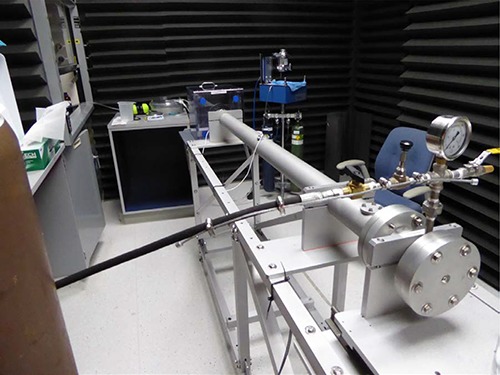
Blast-induced mild traumatic brain injury was generated in a mouse model using a shock tube to investigate recovery and axonal injury from single blast.
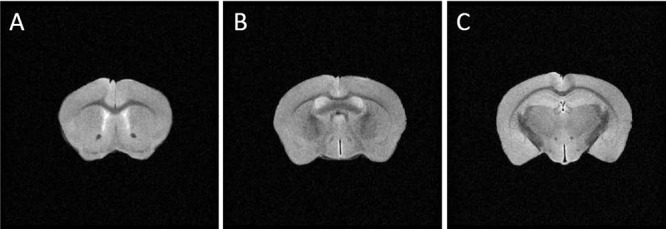
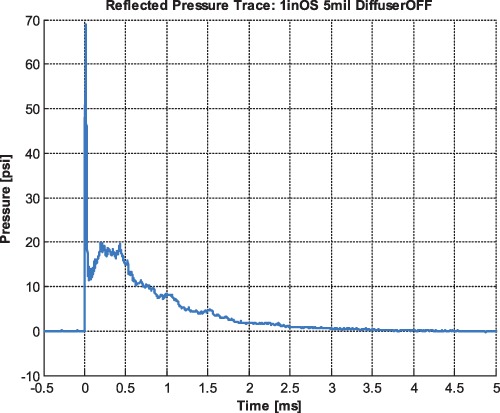
A supersonic helium wave hit the head of anesthetized male young adult mice with a reflected pressure of 69 psi for 0.2 ms on Day 1. Subsequently, the mice were cardioperfused on Days 2, 5, or 12. The isolated brains were subjected to diffusion tensor imaging. Reduced fractional anisotropy (FA) indicated axonal injury.
After single blast, FA showed a biphasic response in the corpus callosum with decrease on Days 2 and 12 and increase on Day 5.
Blast-induced mild traumatic brain injury in a mouse model follows a biphasic FA response within 12 days after a single blast similar to that reported for human subjects.
在小鼠模型中使用冲击管产生爆震性轻度创伤性脑损伤,以研究单次爆震后的恢复情况和轴突损伤。
在第1天,用反射压力为69磅力/平方英寸的超音速氦波冲击麻醉的雄性年轻成年小鼠头部,持续0.2毫秒。随后,在第2天、第5天或第12天对小鼠进行心脏灌注。对分离出的大脑进行扩散张量成像。分数各向异性(FA)降低表明存在轴突损伤。
单次爆震后,胼胝体中的FA呈现双相反应,在第2天和第12天降低,在第5天增加。
小鼠模型中的爆震性轻度创伤性脑损伤在单次爆震后12天内呈现与人类受试者报道相似的双相FA反应。