Macera Ludovico, Taglieri Giuliana, Daniele Valeria, Passacantando Maurizio, D'Orazio Franco
Department of Industrial and Information Engineering and Economics, University of L'Aquila, Piazzale E. Pontieri 1, 67100, Monteluco di Roio, Roio Poggio, I-67100 L'Aquila (AQ), Italy.
Department of Physical and Chemical Sciences, University of L'Aquila, via Vetoio, I-67100 L'Aquila (AQ), Italy.
Nanomaterials (Basel). 2020 Feb 14;10(2):323. doi: 10.3390/nano10020323.
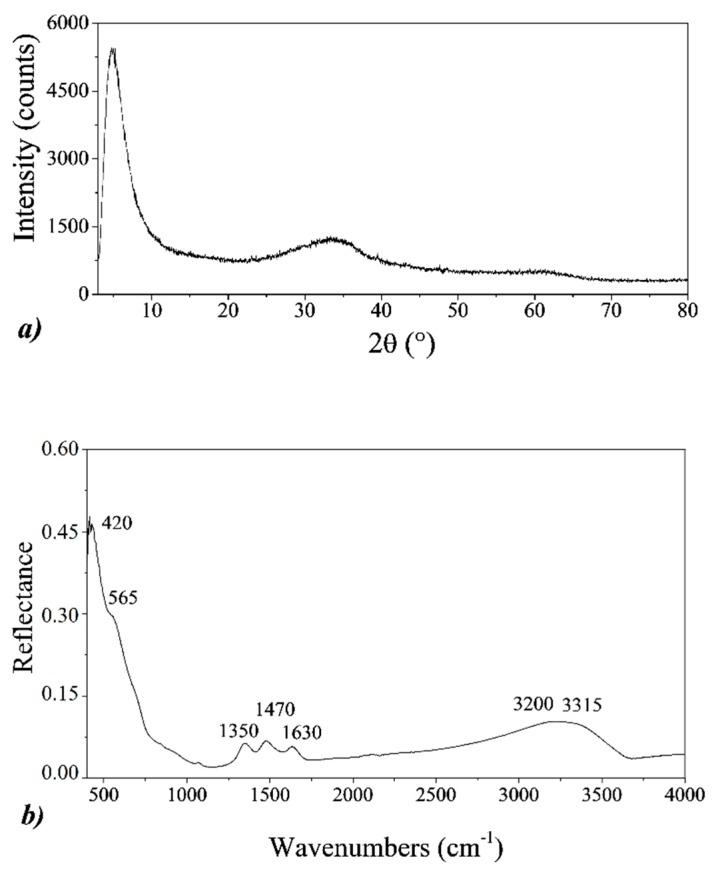
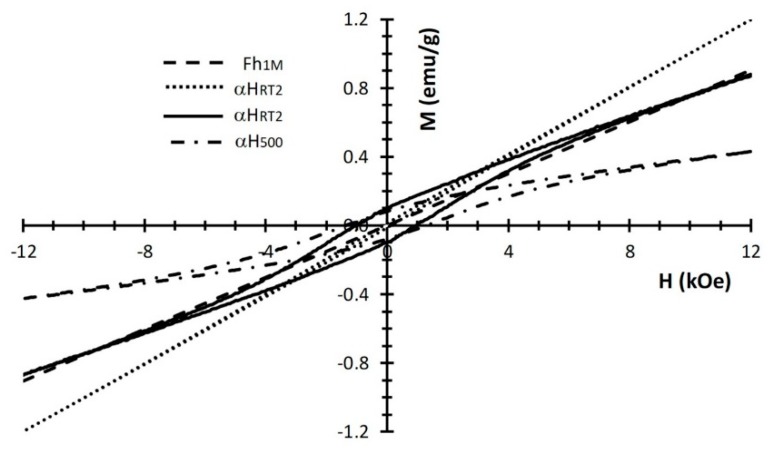
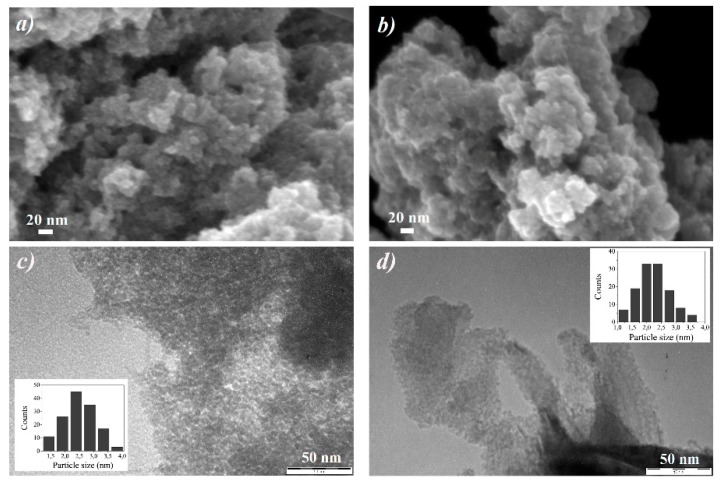
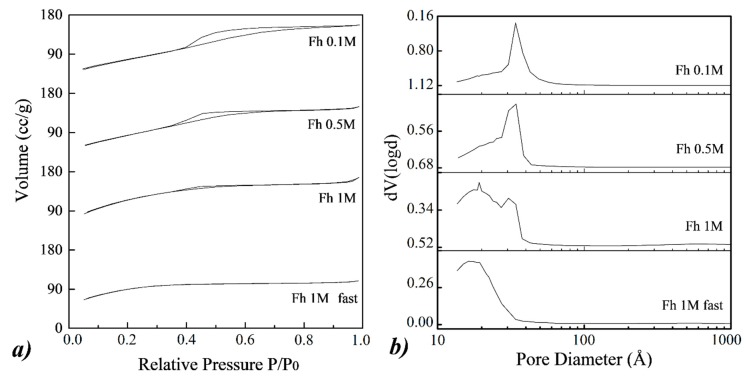
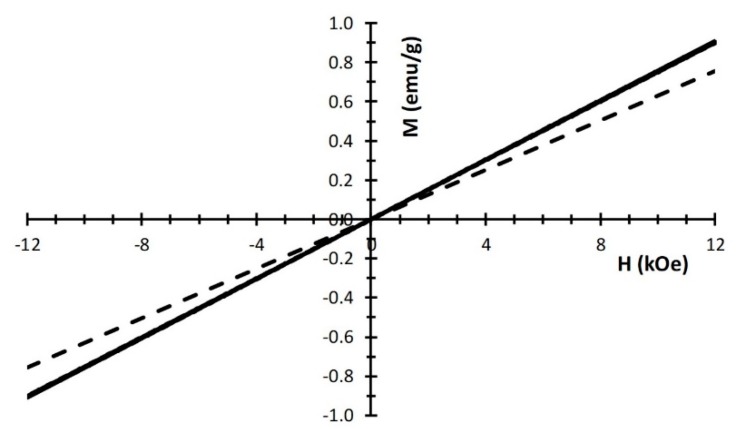
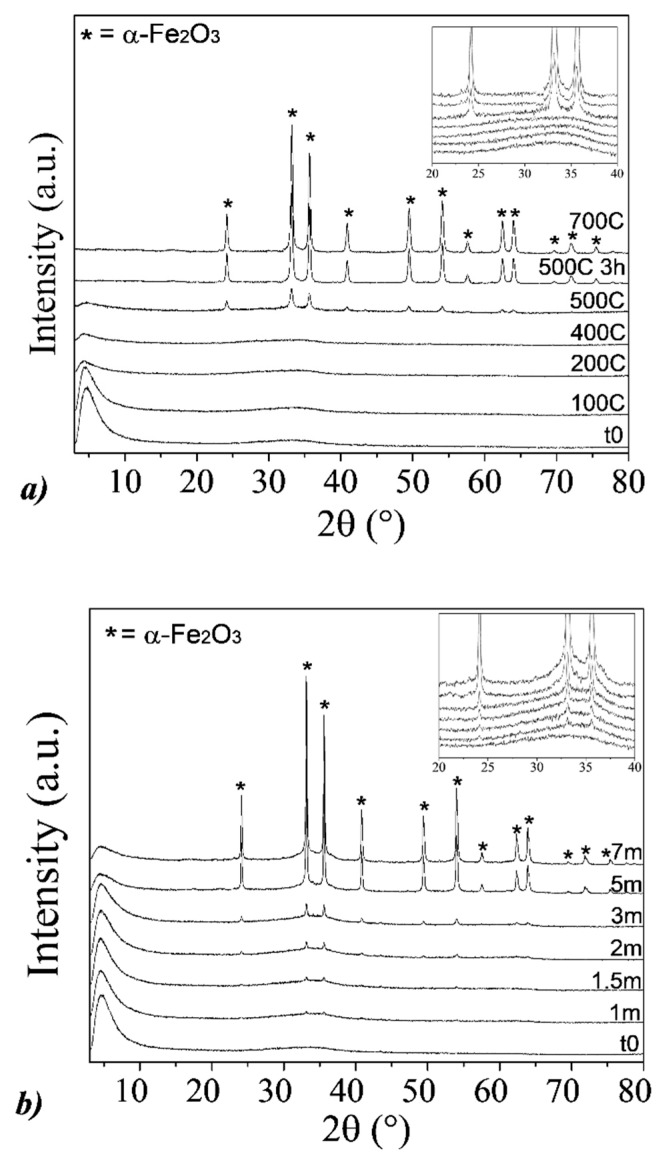
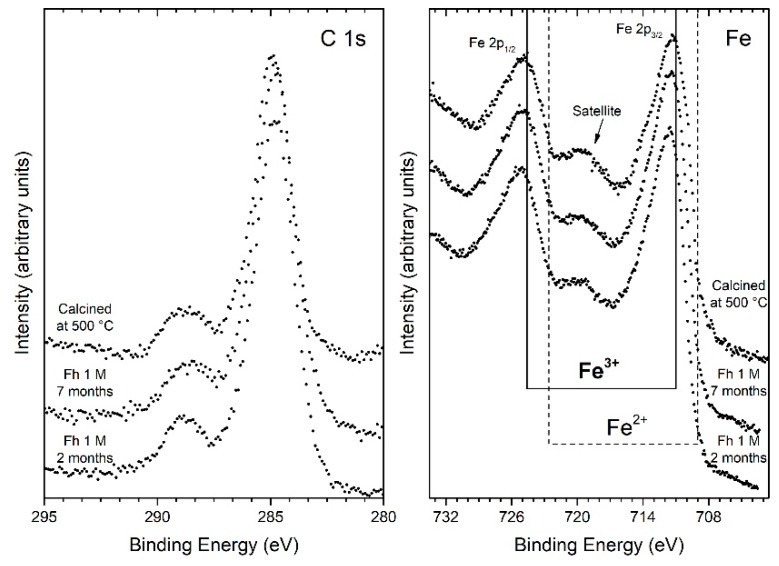
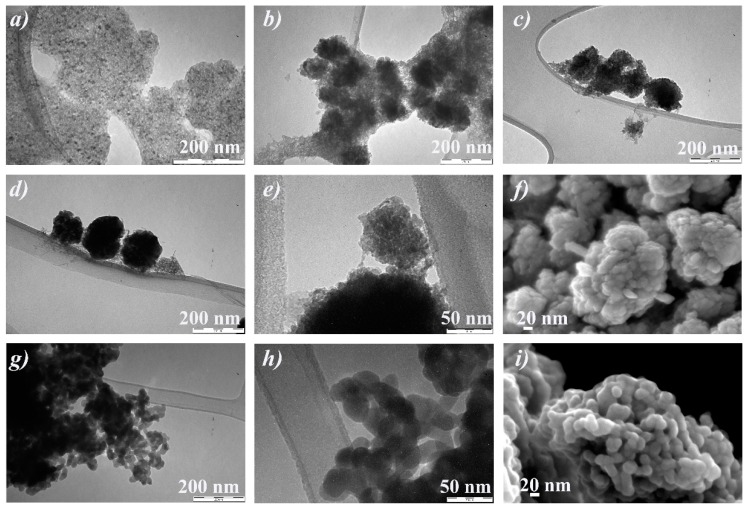
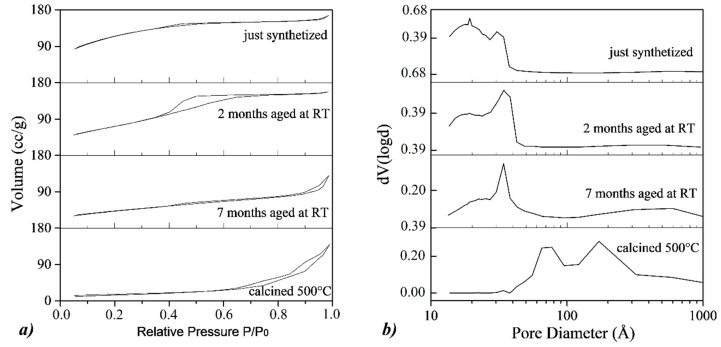
This paper introduces an original, eco-friendly and scalable method to synthesize ferrihydrite nanoparticles in aqueous suspensions, which can also be used as a precursor to produce α-hematite nanoparticles. The method, never used before to synthesize iron oxides, is based on an ion exchange process allowing to operate in one-step, with reduced times, at room temperature and ambient pressure, and using cheap or renewable reagents. The influence of reagent concentrations and time of the process on the ferrihydrite features is considered. The transformation to hematite is then analyzed and discussed in relation to different procedures: (1) A natural aging in the water at room temperature; and (2) heat treatments at different temperatures and times. Structural and morphological features of the obtained nanoparticles are investigated by means of several techniques, such as X-ray diffraction, X-ray photoelectron spectroscopy, attenuated total reflectance Fourier transform infrared spectroscopy, transmission and scanning electron microscopy, thermal analysis, nitrogen adsorption and magnetic measurements. Ferrihydrite shows the typical spherical morphology and a very high specific surface area of 420 m/g. Rhombohedral or plate-like hexagonal hematite nanoparticles are obtained by the two procedures, characterized by dimensions of 50 nm and 30 nm, respectively, and a specific surface area up to 57 m/g, which is among the highest values reported in the literature for hematite NPs.
本文介绍了一种在水悬浮液中合成水铁矿纳米颗粒的原创、环保且可扩展的方法,该方法还可作为制备α-赤铁矿纳米颗粒的前驱体。该方法基于离子交换过程,此前从未用于合成铁氧化物,它能一步操作,耗时缩短,在室温及常压下进行,且使用廉价或可再生试剂。研究了试剂浓度和反应时间对水铁矿特性的影响。随后针对不同程序分析并讨论了向赤铁矿的转变:(1)在室温下于水中自然老化;(2)在不同温度和时间下进行热处理。通过多种技术研究了所得纳米颗粒的结构和形态特征,如X射线衍射、X射线光电子能谱、衰减全反射傅里叶变换红外光谱、透射和扫描电子显微镜、热分析、氮吸附和磁性测量。水铁矿呈现出典型的球形形态,比表面积高达420 m/g。通过这两种程序获得了菱面体或板状六方赤铁矿纳米颗粒,其尺寸分别为50 nm和30 nm,比表面积高达57 m/g,这是文献中报道的赤铁矿纳米颗粒的最高值之一。