Jiangsu Key Laboratory of Atmospheric Environment Monitoring and Pollution Control (AEMPC), Collaborative Innovation Center of Atmospheric Environment and Equipment Technology (CIC-AEET), Nanjing University of Information Science &Technology, Nanjing 210044, China.
School of Environment, Nanjing Normal University, Jiangsu Engineering Lab of Water and Soil Eco-remediation, Wenyuan Road 1, Nanjing 210023, China.
Molecules. 2020 Feb 14;25(4):834. doi: 10.3390/molecules25040834.
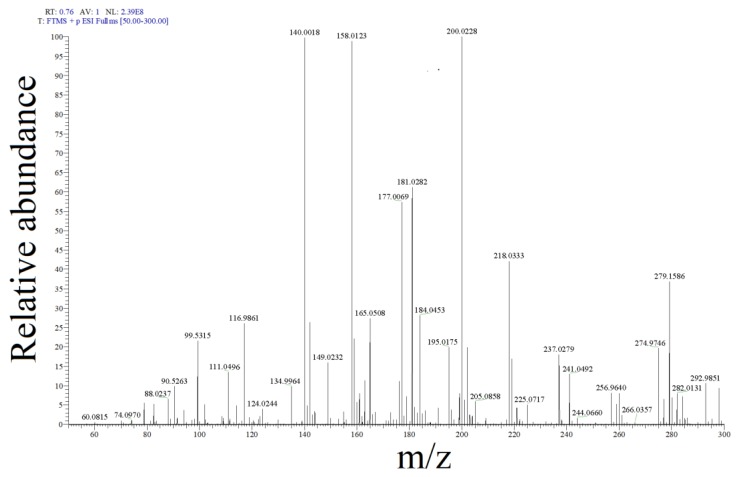
Constructed wetlands (CWs) could achieve high removal efficiency of antibiotics, but probably stimulate the spread of antibiotic resistance genes (ARGs). In this study, four CWs were established to treat synthetic wastewater containing sulfamethoxazole (SMX). SMX elimination efficiencies, SMX degradation mechanisms, dynamic fates of ARGs, and bacterial communities were evaluated during the treatment period (360 day). Throughout the whole study, the concentration of SMX in the effluent gradually increased ( < 0.05), but in general, the removal efficiency of SMX remained at a very high level (>98%). In addition, the concentration of SMX in the bottom layer was higher compared with that in the surface layer. The main byproducts of SMX degradation were found to be 4-amino benzene sulfinic acid, 3-amino-5-methylisoxazole, benzenethiol, and 3-hydroxybutan-1-aminium. Temporally speaking, an obvious increase of genes was observed, along with the increase of SMX concentration in the bottom and middle layers of CWs. Spatially speaking, the concentration of genes increased from the surface layer to the bottom layer.
人工湿地 (CWs) 可以实现抗生素的高效去除,但可能会刺激抗生素抗性基因 (ARGs) 的传播。本研究建立了四个 CWs 来处理含有磺胺甲恶唑 (SMX) 的合成废水。在处理期间 (360 天) 评估了 SMX 的去除效率、SMX 的降解机制、ARGs 的动态命运和细菌群落。在整个研究过程中,出水中 SMX 的浓度逐渐增加 ( < 0.05),但总体而言,SMX 的去除效率仍保持在很高的水平 (>98%)。此外,SMX 在底层的浓度比在表层的浓度高。发现 SMX 降解的主要副产物是 4-氨基苯磺酸、3-氨基-5-甲基异恶唑、苯硫醇和 3-羟基丁-1-铵。从时间上看,随着 CWs 底层和中层 SMX 浓度的增加, 基因明显增加。从空间上看, 基因的浓度从表层到底层逐渐增加。