Perrone Lorena, Sampaolo Simone, Melone Mariarosa Anna Beatrice
Department of Advanced Medical and Surgical Sciences, 2nd Division of Neurology, Center for Rare Diseases and InterUniversity Center for Research in Neurosciences, University of Campania "Luigi Vanvitelli", Via Sergio Pansini, 5 80131 Naples, Italy.
Department of Chemistry and Biology, University Grenoble Alpes, 38400 Saint-Martin-d'Hères, France.
Cancers (Basel). 2020 Feb 15;12(2):454. doi: 10.3390/cancers12020454.
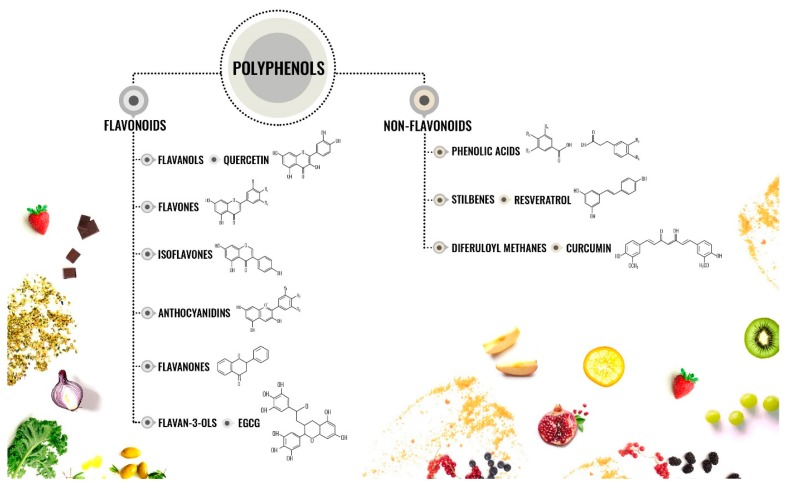
Efficacious therapies are not available for the cure of both gliomas and glioneuronal tumors, which represent the most numerous and heterogeneous primary cancers of the central nervous system (CNS), and for neoplasms of the peripheral nervous system (PNS), which can be divided into benign tumors, mainly represented by schwannomas and neurofibromas, and malignant tumors of the peripheral nerve sheath (MPNST). Increased cellular oxidative stress and other metabolic aspects have been reported as potential etiologies in the nervous system tumors. Thus polyphenols have been tested as effective natural compounds likely useful for the prevention and therapy of this group of neoplasms, because of their antioxidant and anti-inflammatory activity. However, polyphenols show poor intestinal absorption due to individual intestinal microbiota content, poor bioavailability, and difficulty in passing the blood-brain barrier (BBB). Recently, polymeric nanoparticle-based polyphenol delivery improved their gastrointestinal absorption, their bioavailability, and entry into defined target organs. Herein, we summarize recent findings about the primary polyphenols employed for nervous system tumor prevention and treatment. We describe the limitations of their application in clinical practice and the new strategies aimed at enhancing their bioavailability and targeted delivery.
目前尚无有效的疗法可治愈胶质瘤和神经胶质神经元肿瘤(它们是中枢神经系统(CNS)中数量最多且异质性最高的原发性癌症)以及周围神经系统(PNS)肿瘤(后者可分为主要由神经鞘瘤和神经纤维瘤代表的良性肿瘤以及周围神经鞘膜恶性肿瘤(MPNST))。细胞氧化应激增加和其他代谢方面已被报道为神经系统肿瘤的潜在病因。因此,由于多酚具有抗氧化和抗炎活性,它们已被测试为可能对预防和治疗这类肿瘤有用的有效天然化合物。然而,由于个体肠道微生物群含量、生物利用度差以及难以通过血脑屏障(BBB),多酚的肠道吸收较差。最近,基于聚合物纳米颗粒的多酚递送改善了它们的胃肠道吸收、生物利用度以及进入特定靶器官的能力。在此,我们总结了关于用于预防和治疗神经系统肿瘤的主要多酚的最新研究结果。我们描述了它们在临床实践中应用的局限性以及旨在提高其生物利用度和靶向递送的新策略。