Cerdeira Ana T S, Campos João B L M, Miranda João M, Araújo José D P
CEFT, Transport Phenomena Research Center, Chemical Engineering Department, Faculty of Engineering, University of Porto, Rua Dr. Roberto Frias, 4200-465 Porto, Portugal.
Micromachines (Basel). 2020 Feb 15;11(2):201. doi: 10.3390/mi11020201.
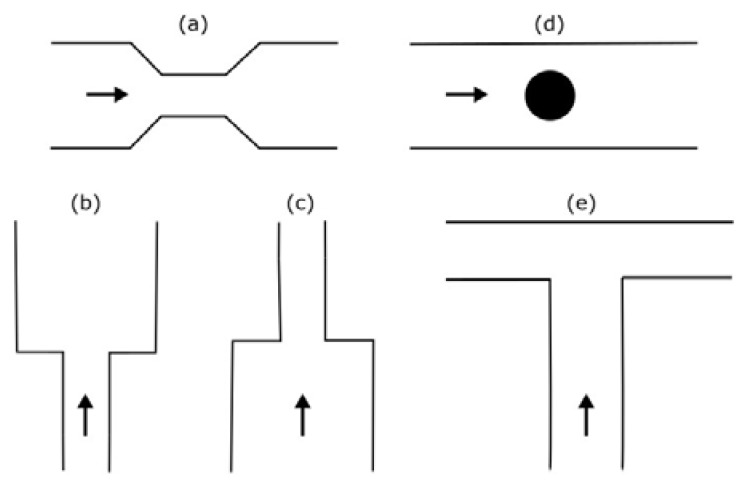
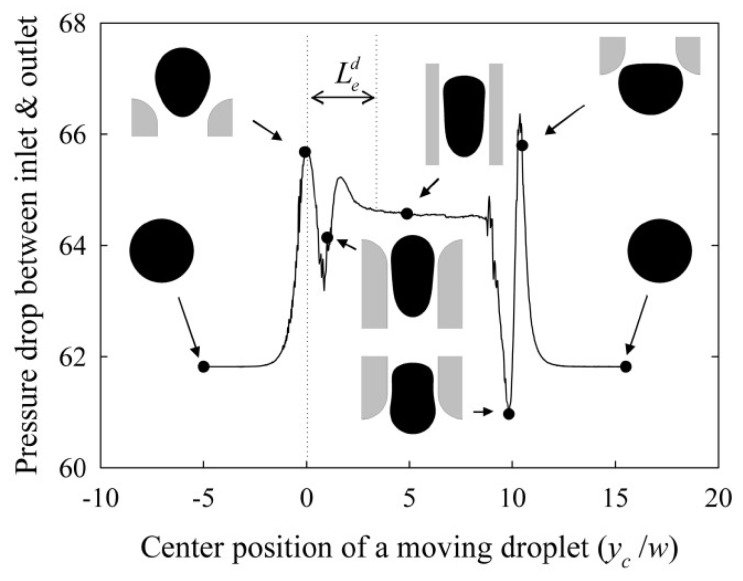
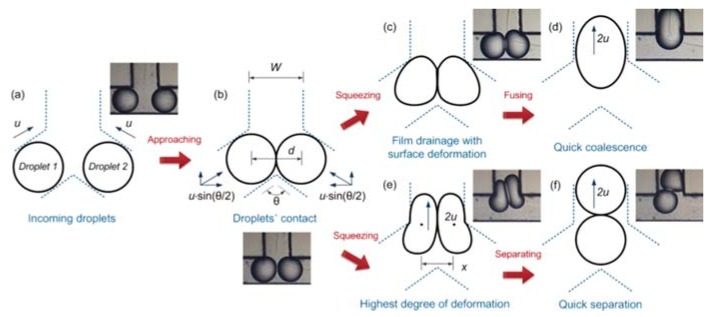
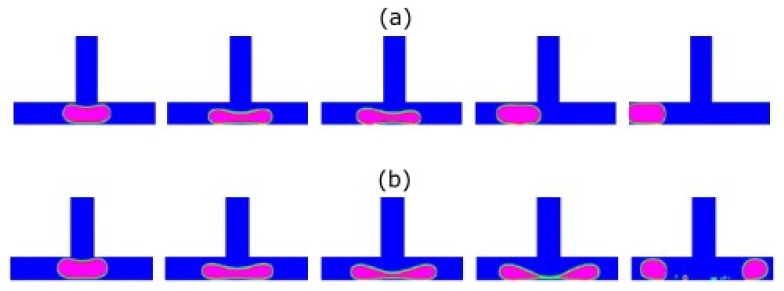
Two-phase flows are found in several industrial systems/applications, including boilers and condensers, which are used in power generation or refrigeration, steam generators, oil/gas extraction wells and refineries, flame stabilizers, safety valves, among many others. The structure of these flows is complex, and it is largely governed by the extent of interphase interactions. In the last two decades, due to a large development of microfabrication technologies, many microstructured devices involving several elements (constrictions, contractions, expansions, obstacles, or T-junctions) have been designed and manufactured. The pursuit for innovation in two-phase flows in these elements require an understanding and control of the behaviour of bubble/droplet flow. The need to systematize the most relevant studies that involve these issues constitutes the motivation for this review. In the present work, literature addressing gas-liquid and liquid-liquid flows, with Newtonian and non-Newtonian fluids, and covering theoretical, experimental, and numerical approaches, is reviewed. Particular focus is given to the deformation, coalescence, and breakup mechanisms when bubbles and droplets pass through the aforementioned microfluidic elements.
两相流存在于多个工业系统/应用中,包括用于发电或制冷的锅炉和冷凝器、蒸汽发生器、油气开采井和炼油厂、火焰稳定器、安全阀等等。这些流动的结构很复杂,并且在很大程度上受相间相互作用程度的支配。在过去二十年中,由于微制造技术的巨大发展,许多包含多种元件(收缩、收缩、扩张、障碍物或T型接头)的微结构装置被设计和制造出来。在这些元件中追求两相流的创新需要理解和控制气泡/液滴流的行为。将涉及这些问题的最相关研究系统化的需求构成了本综述的动机。在本工作中,对涉及气液和液液流动、使用牛顿流体和非牛顿流体、涵盖理论、实验和数值方法的文献进行了综述。特别关注气泡和液滴通过上述微流体元件时的变形、聚并和破碎机制。