Department of Biosystems Engineering, Zhejiang University, 866 Yuhangtang Road, Hangzhou 310058, China.
College of Materials and Environmental Engineering, Hangzhou Dianzi University, 1158 Baiyang Street, Hangzhou 310018, China.
Sensors (Basel). 2020 Feb 15;20(4):1065. doi: 10.3390/s20041065.
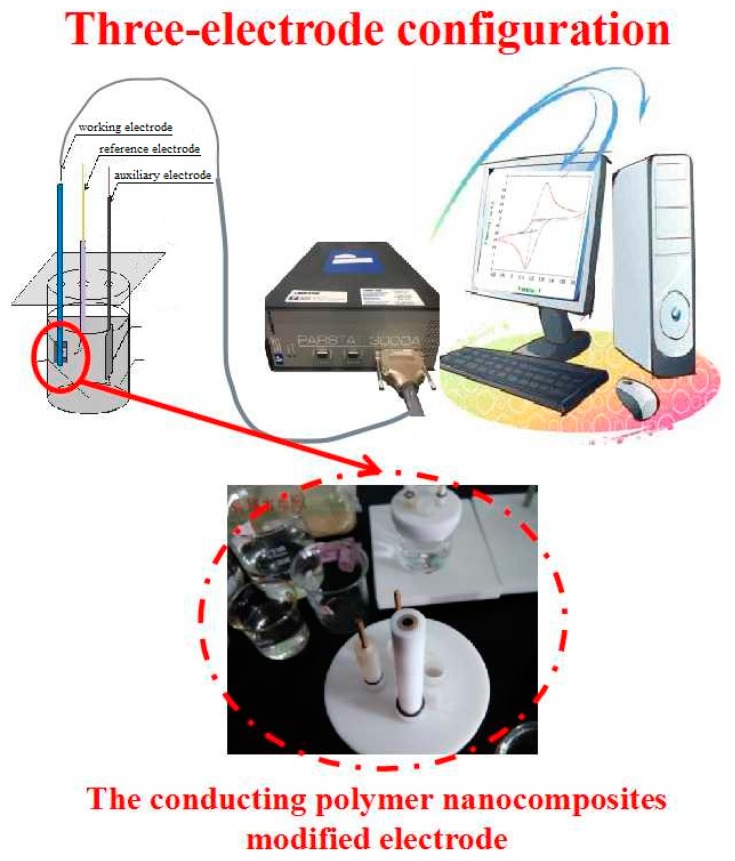
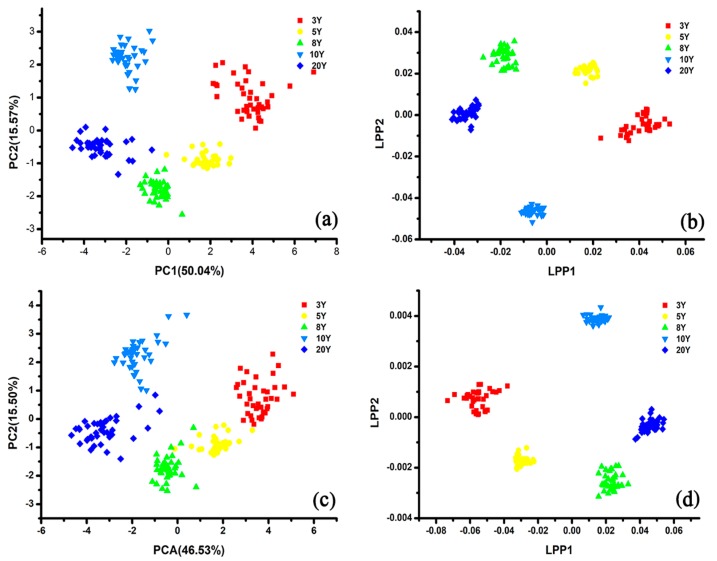
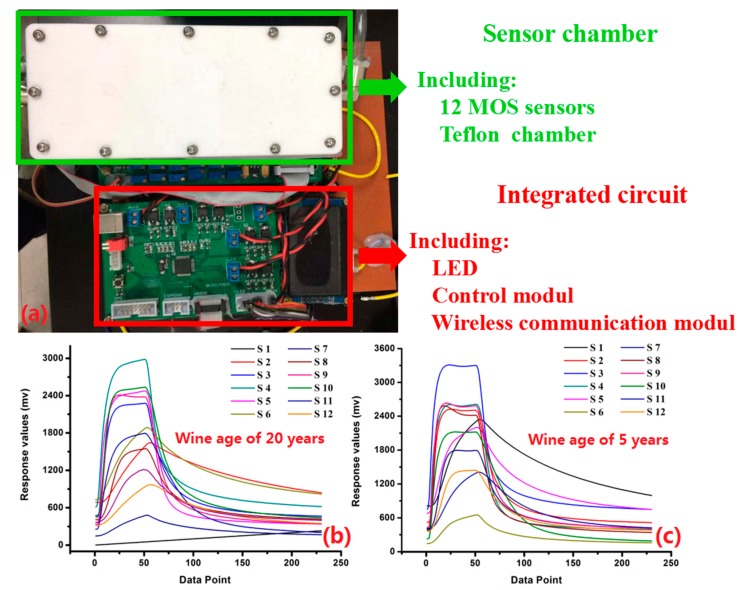
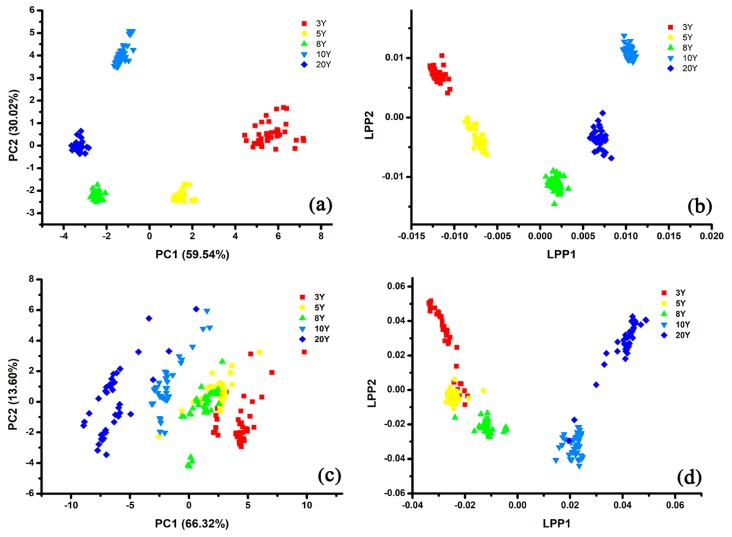
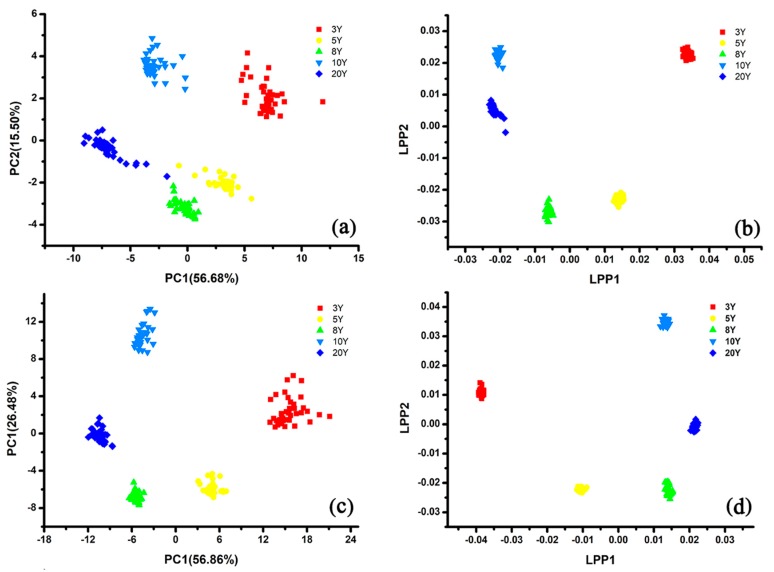
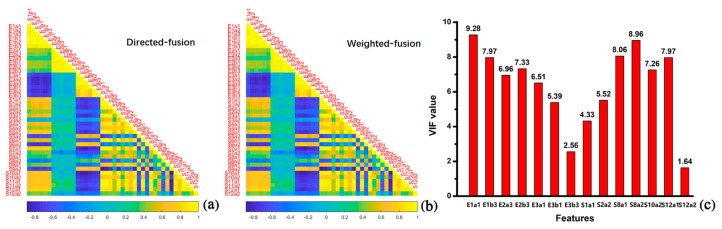
Aroma and taste are the most important attributes of alcoholic beverages. In the study, the self-developed electronic tongue (e-tongue) and electronic nose (e-nose) were used for evaluating the marked ages of rice wines. Six types of feature data sets (e-tongue data set, e-nose data set, direct-fusion data set, weighted-fusion data set, optimized direct-fusion data set, and optimized weighted-fusion data set) were used for identifying rice wines with different wine ages. Pearson coefficient analysis and variance inflation factor (VIF) analysis were used to optimize the fusion matrixes by removing the multicollinear information. Two types of discrimination methods (principal component analysis (PCA) and locality preserving projections (LPP)) were used for classifying rice wines, and LPP performed better than PCA in the discrimination work. The best result was obtained by LPP based on the weighted-fusion data set, and all the samples could be classified clearly in the LPP plot. Therefore, the weighted-fusion data were used as independent variables of partial least squares regression, extreme learning machine, and support vector machines (LIBSVM) for evaluating wine ages, respectively. All the methods performed well with good prediction results, and LIBSVM presented the best correlation coefficient (R ≥ 0.9998).
香气和味道是酒精饮料最重要的属性。在本研究中,自行开发的电子舌(e-tongue)和电子鼻(e-nose)被用于评估米酒的显著陈酿年份。使用了六种特征数据集(e-tongue 数据集、e-nose 数据集、直接融合数据集、加权融合数据集、优化直接融合数据集和优化加权融合数据集)来识别不同陈酿年份的米酒。通过去除多重共线性信息,使用 Pearson 系数分析和方差膨胀因子(VIF)分析对融合矩阵进行了优化。使用两种判别方法(主成分分析(PCA)和局部保持投影(LPP))对米酒进行分类,在判别工作中 LPP 比 PCA 表现更好。在基于加权融合数据集的 LPP 中得到了最佳结果,在 LPP 图中可以清楚地对所有样本进行分类。因此,加权融合数据被用作偏最小二乘回归、极限学习机和支持向量机(LIBSVM)的自变量,分别用于评估酒龄。所有方法都表现良好,具有良好的预测结果,而 LIBSVM 呈现出最佳的相关系数(R≥0.9998)。