Department of Pharmacology and Experimental Neuroscience, University of Nebraska Medical Center, Omaha, NE, United States.
Molecular Biology and Genetics Unit, Jawaharlal Nehru Center for Advanced Scientific Research, Bangalore, India.
Front Immunol. 2020 Jan 31;11:95. doi: 10.3389/fimmu.2020.00095. eCollection 2020.
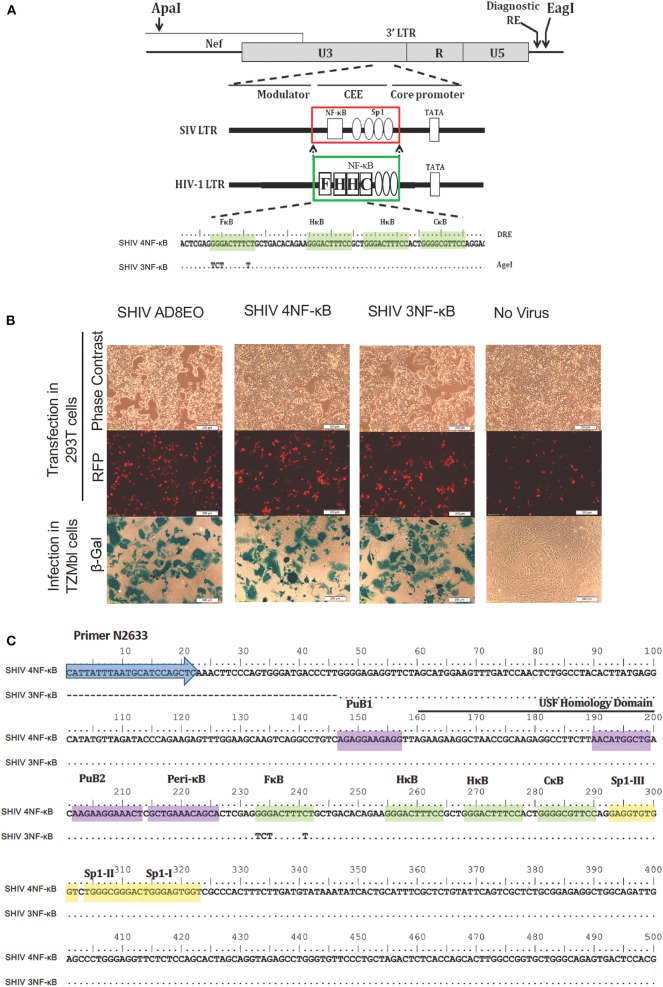
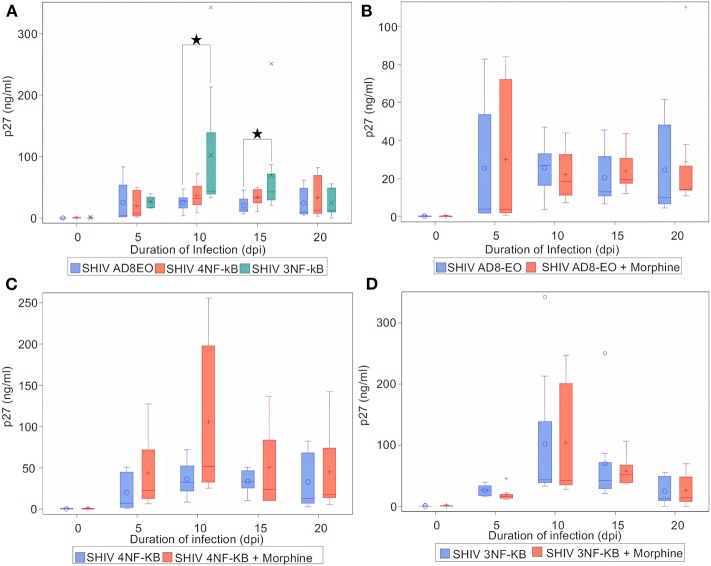
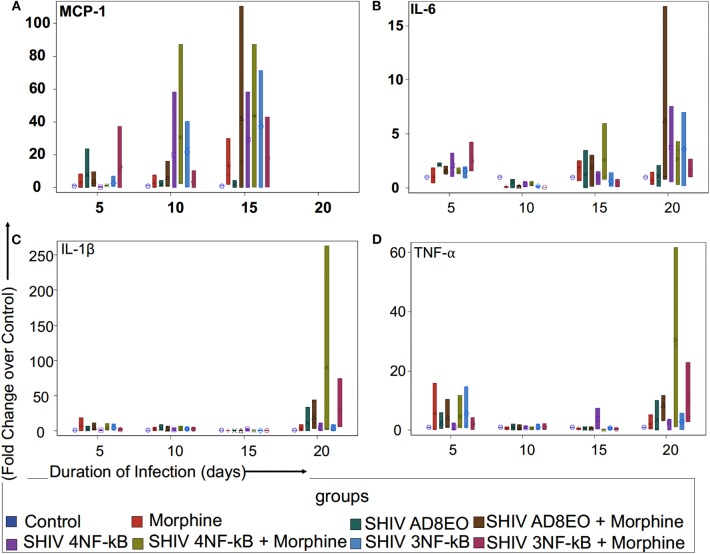
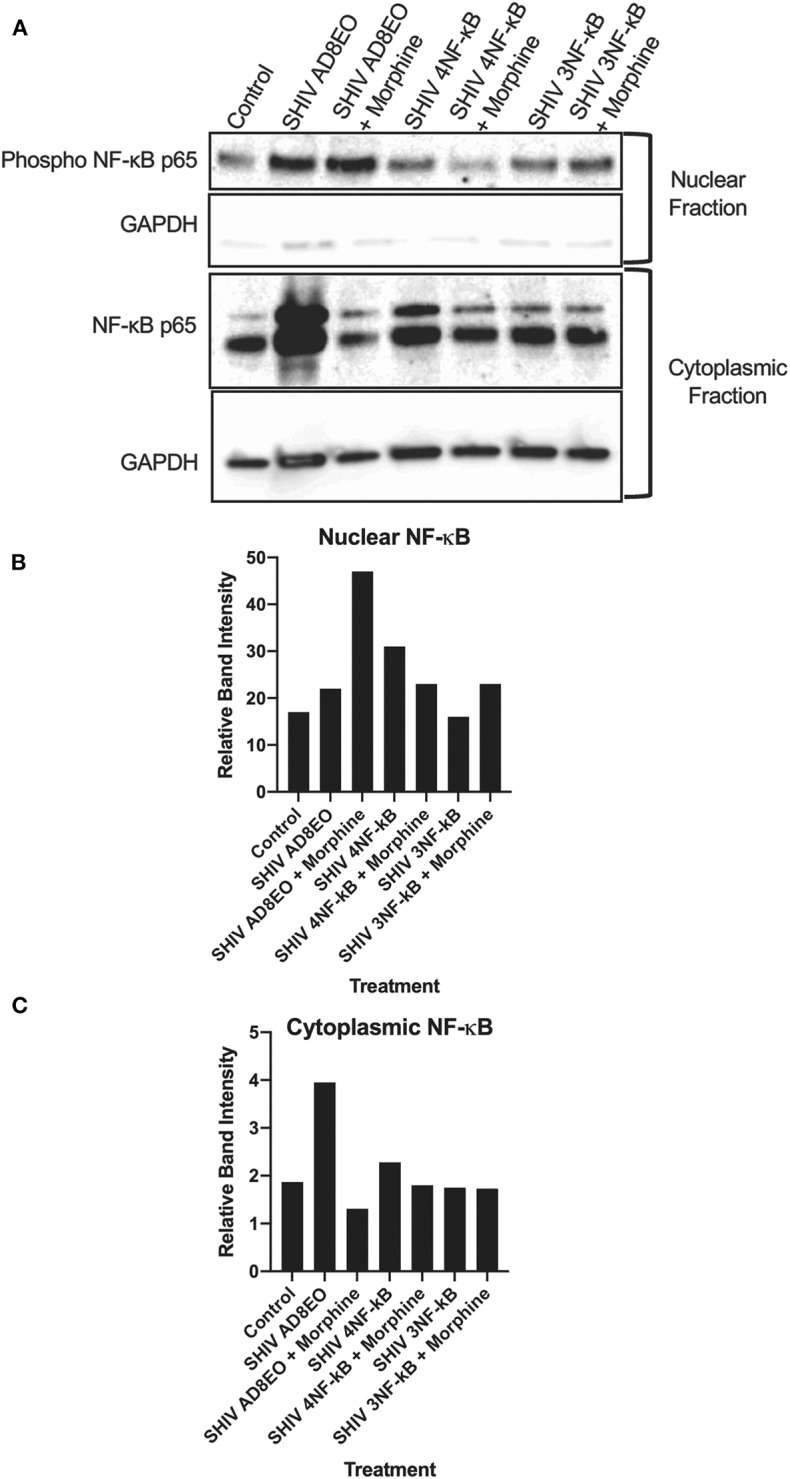
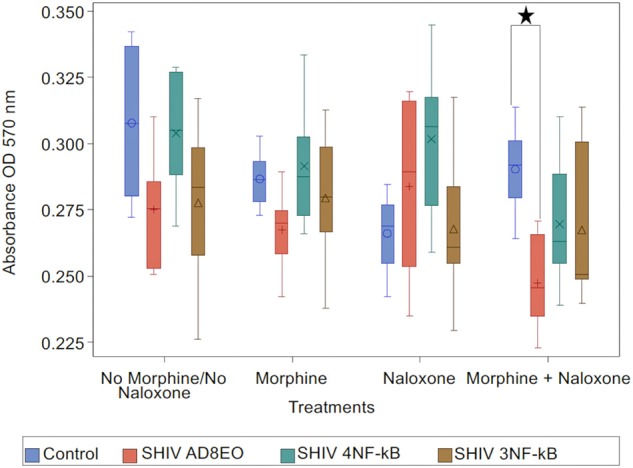
Recent spread of the promoter variant (4-κB) Human immunodeficiency virus-1 clade C (HIV-1C) strain is attributed to duplication of the Nuclear Factor Kappa B (NF-κB) binding sites and potential increased heroin consumption in India. To study the underlying biology of 4-κB HIV-1C in rhesus macaques, we engineered a promoter-chimera variant (4NF-κB) Simian Human Immunodeficiency Virus (SHIV) by substituting the HIV-1C Long Terminal Repeat (LTR) region consisting of 4 NF-κB and 3 Sp-1 sites with the corresponding segment in the LTR of SHIV AD8EO. The wild-type (3NF-κB) promoter-chimera SHIV was generated by inactivating the 5' proximal NF-κB binding site in SHIV 4NF-κB. CD8-depleted rhesus macaque PBMCs (RM-PBMCs) were infected with the promoter-chimera and AD8EO SHIVs to determine the effects of opioid-exposure on inflammation, NF-κB activation, neurotoxicity in neuronal cells and viral replication. Morphine-exposure of RM-PBMCs infected with SHIVs 4NF-κB, 3NF-κB, and AD8EO altered cellular transcript levels of monocyte chemoattractant protein 1, interleukin 6, interleukin 1β, and Tumor Necrosis Factor α. Of note, divergent alteration of the cytokine transcript levels was observed with these promoter-chimera wild-type and variant SHIVs. NF-κB activation was observed during infection of all three SHIVs with morphine-exposure. Finally, we observed that SHIV AD8EO infection and exposure to both morphine and naloxone had the greatest impact on the neurotoxicity. The promoter-chimera SHIV 4NF-κB and SHIV 3NF-κB did not have a similar effect on neurotoxicity as compared to SHIV AD8EO. All SHIVs replicated efficiently at comparable levels in RM-PBMCs and morphine-exposure did not alter viral replication kinetics. Future studies in rhesus macaques will provide greater understanding of 4-κB HIV-1C viral immunopathogenesis and onset of disease in the central nervous system during morphine-exposure.
最近,促进子变异体(4-κB)人类免疫缺陷病毒 1 型 C 组(HIV-1C)株的传播归因于核因子 Kappa B(NF-κB)结合位点的重复和印度潜在的海洛因消费增加。为了研究恒河猴中 4-κB HIV-1C 的潜在生物学机制,我们通过用 SIV AD8EO 的 LTR 中相应的片段替代 HIV-1C LTR 区域中包含的 4 个 NF-κB 和 3 个 Sp-1 位点,构建了一个启动子嵌合体变异体(4NF-κB) SIV。野生型(3NF-κB)启动子嵌合体 SIV 通过失活 SIV 4NF-κB 中 5'近端 NF-κB 结合位点而产生。用启动子嵌合体和 AD8EO SIV 感染 CD8 耗尽的恒河猴 PBMC(RM-PBMC),以确定阿片类药物暴露对炎症、NF-κB 激活、神经元细胞神经毒性和病毒复制的影响。用吗啡处理感染 SIV 4NF-κB、3NF-κB 和 AD8EO 的 RM-PBMC 改变了单核细胞趋化蛋白 1、白细胞介素 6、白细胞介素 1β 和肿瘤坏死因子α 的细胞转录水平。值得注意的是,与这些启动子嵌合体野生型和变异型 SIV 相比,细胞因子转录水平的变化也不同。用吗啡处理时,所有三种 SIV 感染均观察到 NF-κB 激活。最后,我们观察到 SIV AD8EO 感染以及吗啡和纳洛酮暴露对神经毒性的影响最大。与 SIV AD8EO 相比,启动子嵌合体 SIV 4NF-κB 和 SIV 3NF-κB 对神经毒性没有类似的影响。所有 SIV 在 RM-PBMC 中均高效复制,吗啡处理并未改变病毒复制动力学。在恒河猴中的进一步研究将提供对 4-κB HIV-1C 病毒免疫发病机制的更深入了解,并在吗啡暴露期间了解中枢神经系统疾病的发病机制。