Woollard Shawna M, Olwenyi Omalla A, Dutta Debashis, Dave Rajnish S, Mathews Saumi, Gorantla Santhi, Johnson Noel, Giavedoni Luis, Norgren Robert B, Byrareddy Siddappa N
Department of Pharmacology and Experimental Neuroscience, University of Nebraska Medical Center, Omaha, NE 68198-5800, USA.
Department of Pathology and Microbiology, University of Nebraska Medical Center, Omaha, NE 68198-5800, USA.
Pathogens. 2018 Aug 20;7(3):70. doi: 10.3390/pathogens7030070.
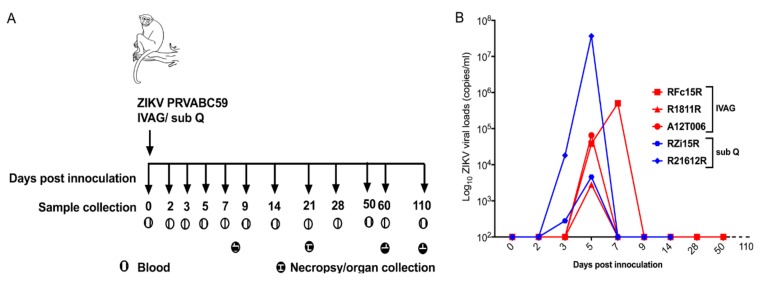
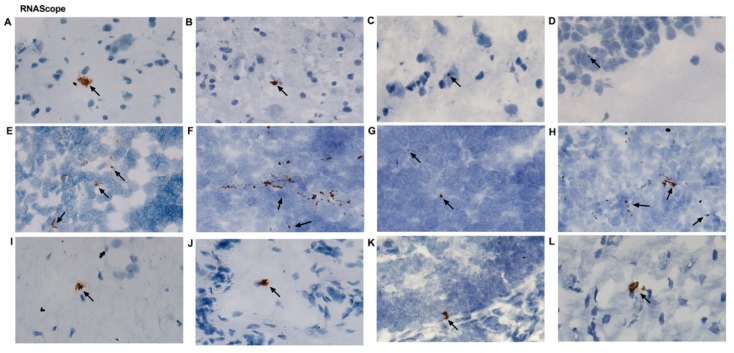
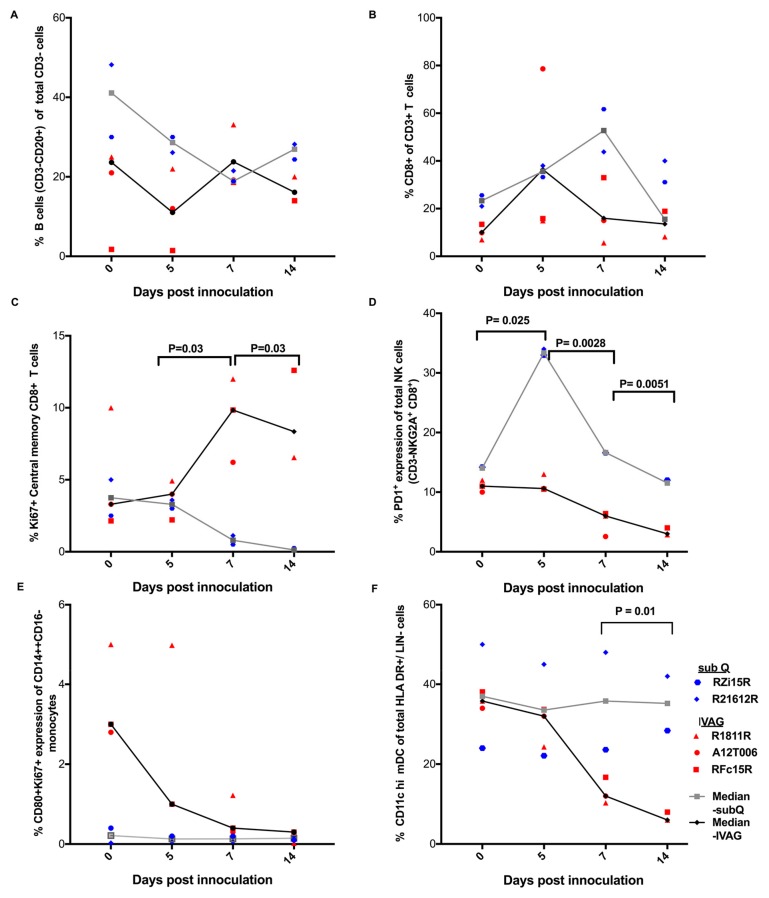
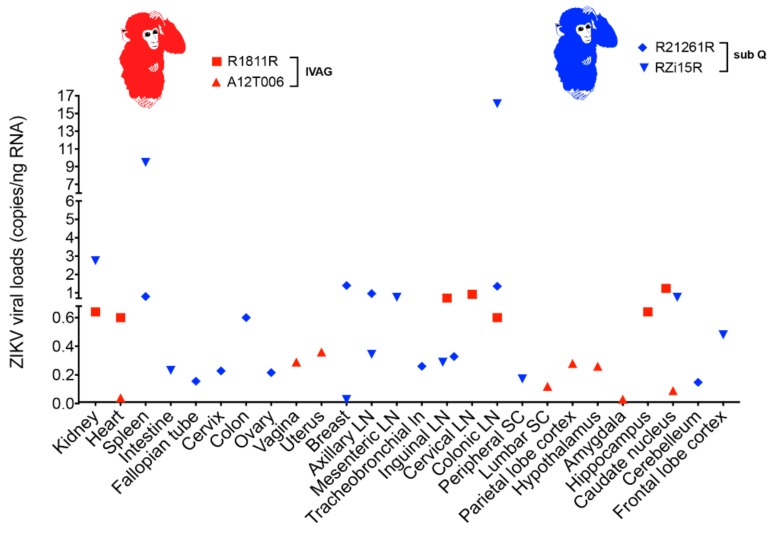
Zika Virus (ZIKV) is primarily transmitted through mosquito bites. It can also be transmitted during sexual intercourse and in utero from mother to fetus. To gain preliminary insight into ZIKV pathology and immune responses on route of transmission, rhesus macaques (RMs) were inoculated with ZIKV (PRVABC59) via intravaginal (IVAG) ( = 3) or subcutaneous (sub Q) ( = 2) routes. Systemic ZIKV infection was observed in all RMs, regardless of the route of inoculation. After 9 days postinfection (dpi), ZIKV was not detected in the plasma of IVAG- and sub-Q-inoculated RMs. Importantly, RMs harbored ZIKV up to 60 dpi in various anatomical locations. Of note, ZIKV was also present in several regions of the brain, including the caudate nucleus, parietal lobe, cortex, and amygdala. These observations appear to indicate that ZIKV infection may be systemic and persistent regardless of route of inoculation. In addition, we observed changes in key immune cell populations in response to ZIKV infection. Importantly, IVAG ZIKV infection of RMs is associated with increased depletion of CD11C hi myeloid cells, reduced PD-1 expression in NK cells, and elevated frequencies of Ki67⁺ CD8⁺ central memory cells as compared to sub Q ZIKV-infected RMs. These results need to interpreted with caution due to the small number of animals utilized in this study. Future studies involving large groups of animals that have been inoculated through both routes of transmission are needed to confirm our findings.
寨卡病毒(ZIKV)主要通过蚊虫叮咬传播。它也可在性交过程中以及经子宫从母亲传播给胎儿。为了初步了解寨卡病毒在传播途径上的病理学和免疫反应,将恒河猴(RMs)经阴道(IVAG)(n = 3)或皮下(sub Q)(n = 2)途径接种寨卡病毒(PRVABC59)。无论接种途径如何,在所有恒河猴中均观察到全身性寨卡病毒感染。感染后9天(dpi),在经阴道和皮下接种的恒河猴血浆中未检测到寨卡病毒。重要的是,恒河猴在长达60 dpi的时间里在各个解剖部位都携带寨卡病毒。值得注意的是,寨卡病毒也存在于大脑的几个区域,包括尾状核、顶叶、皮质和杏仁核。这些观察结果似乎表明,无论接种途径如何,寨卡病毒感染可能是全身性的且具有持续性。此外,我们观察到了关键免疫细胞群体对寨卡病毒感染的反应变化。重要的是,与皮下接种寨卡病毒的恒河猴相比,经阴道接种寨卡病毒的恒河猴感染后CD11C高表达髓样细胞的耗竭增加、自然杀伤细胞中PD - 1表达降低以及Ki67⁺ CD8⁺中央记忆细胞频率升高。由于本研究中使用的动物数量较少,这些结果需要谨慎解读。未来需要进行涉及通过两种传播途径接种的大量动物群体的研究来证实我们的发现。