Immunology Division, Hospital Universitari Vall d'Hebron (HUVH), Vall d'Hebron Research Institute (VHIR), Department of Cell Biology, Physiology and Immunology, Autonomous University of Barcelona (UAB), Barcelona, Spain.
Jeffrey Model Foundation Excellence Center, Barcelona, Spain.
Front Immunol. 2020 Jan 31;11:107. doi: 10.3389/fimmu.2020.00107. eCollection 2020.
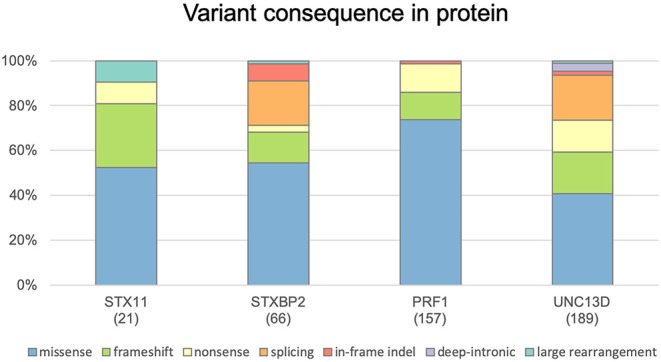
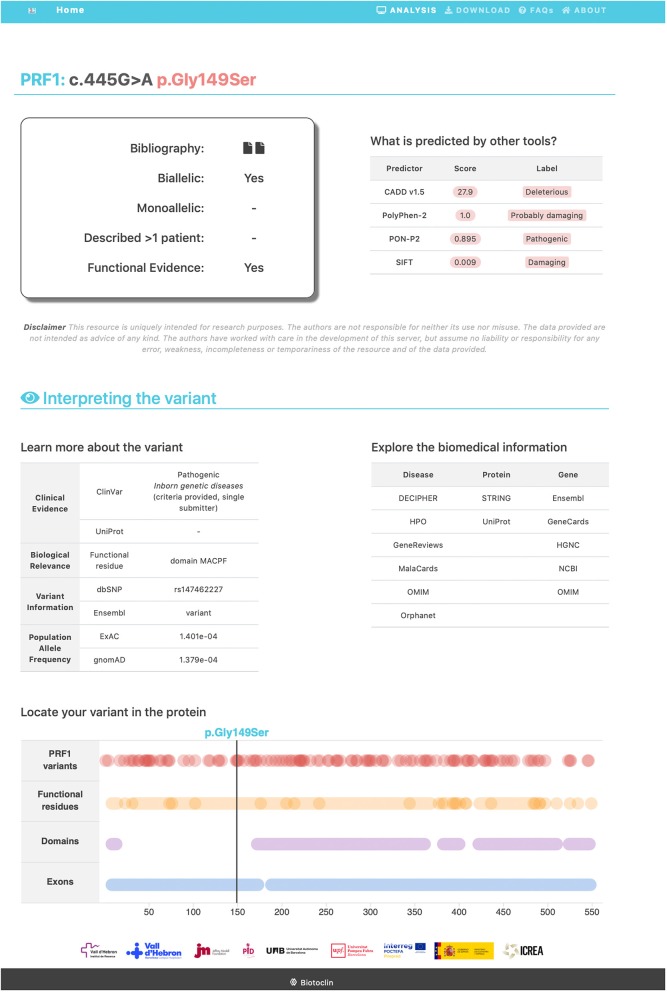
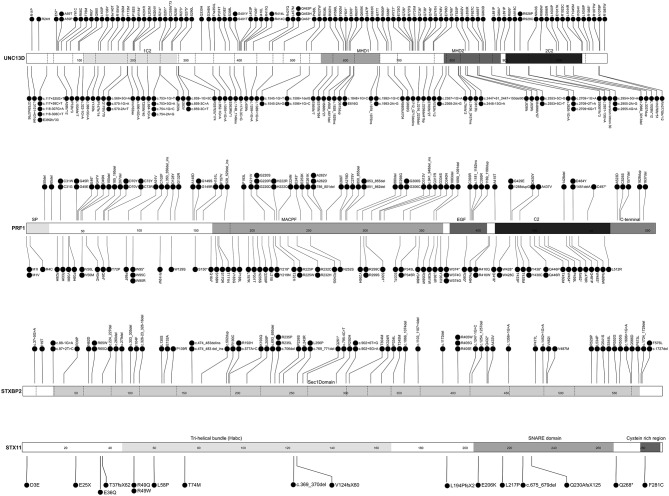
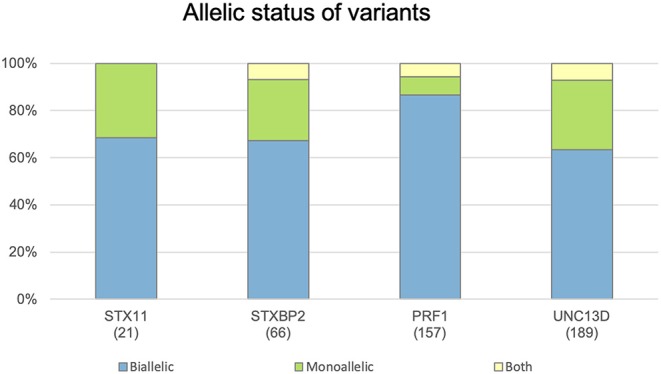
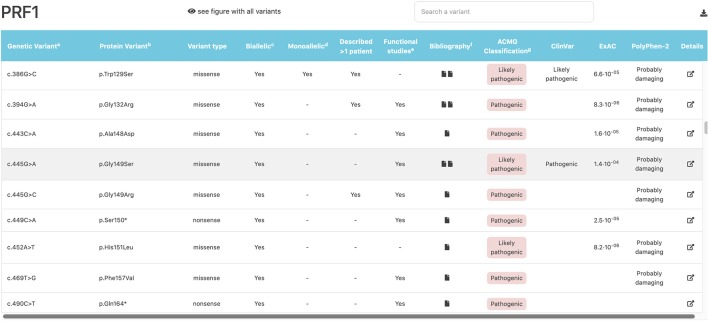
Primary immunodeficiencies (PIDs) are a heterogeneous group of disorders. The lack of comprehensive disease-specific mutation databases may hinder or delay classification of the genetic variants found in samples from these patients. This is especially true for familial hemophagocytic lymphohistiocytosis (FHL), a life-threatening PID classically considered an autosomal recessive condition, but with increasingly demonstrated genetic heterogeneity. The aim of this study was to build an open-access repository to collect detailed information on the known genetic variants reported in FHL. We manually reviewed more than 120 articles to identify all reported variants related to FHL. We retrieved relevant information about the allelic status, the number of patients with the same variant, and whether functional assays were done. We stored all the data retrieved in a PostgreSQL database and then built a website on top of it, using the Django framework. The database designed (FHLdb) (https://www.biotoclin.org/FHLdb) contains comprehensive information on reported variants in the 4 genes related to FHL (). It comprises 240 missense, 69 frameshift, 51 nonsense, 51 splicing, 10 in-frame indel, 7 deep intronic, and 5 large rearrangement variants together with their allelic status, carrier(s) information, and functional evidence. All genetic variants have been classified as pathogenic, likely pathogenic, uncertain significance, likely benign or benign, according to the American College of Medical Genetics guidelines. Additionally, it integrates information from other relevant databases: clinical evidence from ClinVar and UniProt, population allele frequency from ExAC and gnomAD, and pathogenicity predictions from well-recognized tools (e.g., PolyPhen-2, SIFT). Finally, a diagram depicts the location of the variant relative to the gene exon and protein domain structures. FHLdb includes a broad range of data on the reported genetic variants in familial HLH genes. It is a free-access and easy-to-use resource that will facilitate the interpretation of molecular results of FHL patients, and it illustrates the potential value of disease-specific databases for other PIDs.
原发性免疫缺陷病(PIDs)是一组异质性疾病。缺乏全面的疾病特异性突变数据库可能会阻碍或延迟对这些患者样本中发现的遗传变异的分类。对于家族性噬血细胞性淋巴组织细胞增生症(FHL)尤其如此,这是一种危及生命的 PID,经典地被认为是一种常染色体隐性疾病,但遗传异质性越来越明显。本研究的目的是建立一个开放获取的存储库,以收集有关 FHL 中报道的已知遗传变异的详细信息。我们手动审查了 120 多篇文章,以确定与 FHL 相关的所有报道变异。我们检索了有关等位基因状态、具有相同变异的患者数量以及是否进行功能检测的相关信息。我们将检索到的所有数据存储在 PostgreSQL 数据库中,然后使用 Django 框架在其之上构建了一个网站。设计的数据库(FHLdb)(https://www.biotoclin.org/FHLdb)包含与 FHL 相关的 4 个基因中报道的变异的综合信息()。它包括 240 个错义、69 个移码、51 个无义、51 个剪接、10 个框内缺失、7 个深内含子和 5 个大重排变异,以及它们的等位基因状态、携带者信息和功能证据。根据美国医学遗传学学院的指南,所有遗传变异均被分类为致病性、可能致病性、意义不明、可能良性或良性。此外,它还整合了来自其他相关数据库的信息:来自 ClinVar 和 UniProt 的临床证据、来自 ExAC 和 gnomAD 的人群等位基因频率,以及来自公认工具(例如 PolyPhen-2、SIFT)的致病性预测。最后,一个图表描绘了变异相对于基因外显子和蛋白质结构域的位置。FHLdb 包含有关家族性 HLH 基因中报道的遗传变异的广泛数据。它是一个免费访问且易于使用的资源,将有助于解释 FHL 患者的分子结果,并说明了针对其他 PID 的疾病特异性数据库的潜在价值。