Huang Jian, Hao HongFei
Institute of Desert Meteorology China Meteorological Administration Urumqi China.
Central Asian Research Center for Atmospheric Sciences Urumqi China.
Ecol Evol. 2020 Jan 9;10(3):1324-1338. doi: 10.1002/ece3.5986. eCollection 2020 Feb.
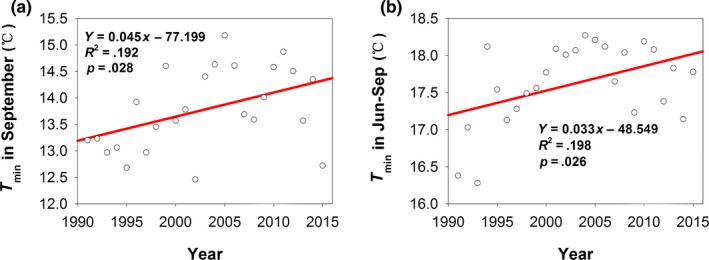
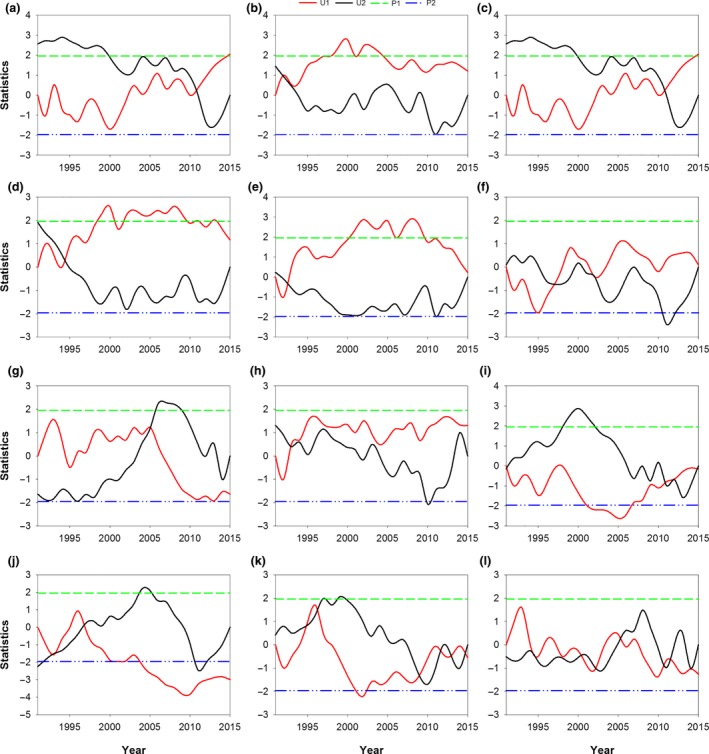
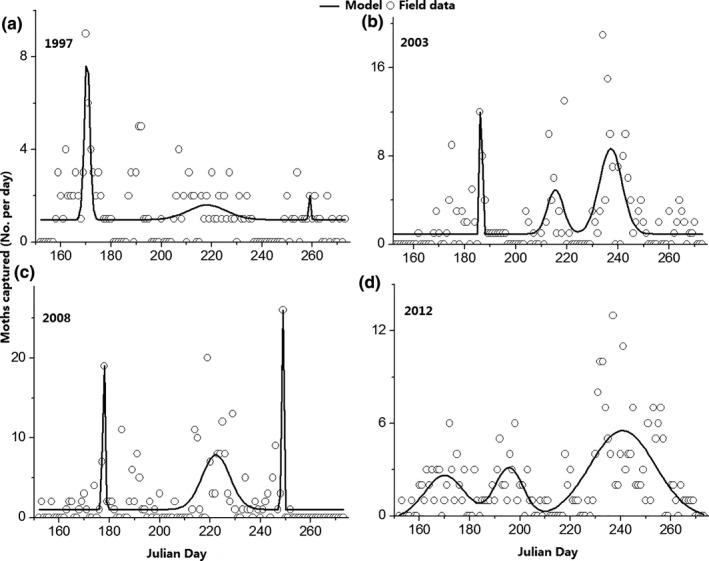
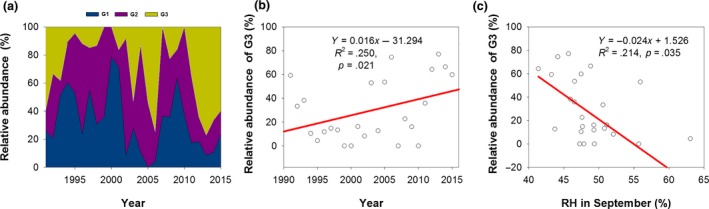
The interactions between plants and insects play an important role in ecosystems. Climate change and cropping patterns can affect herbivorous pest insect dynamics. Understanding the reasons for population fluctuations can help improve integrated pest management strategies. Here, a 25-year dataset on climate, cropping planting structure, and the population dynamics of cotton bollworms () from Bachu County, south Xinjiang, China, was analyzed to assess the effects of changes in climate and crop planting structure on the population dynamics of . The three generations of showed increasing trends in population size with climate warming, especially in the third generation. The relative abundances of the first and second generations decreased, but that of the third generation increased. Rising temperature and precipitation produced different impacts on the development of different generations. The population numbers of increased with the increase in the non- (Bt) cotton-planted area. Asynchrony of abrupt changes existed among climate change, crop flowering dates, and the phenology of moths. The asynchronous responses in crop flowering dates and phenology of to climate warming would expand in the future. The primary factors affecting the first, second, and third generations of moths were in June, the last appearance date of the second generation of moths, and the duration of the third generation of moths, respectively. To reduce the harm to crops caused by , Bt cotton should be widely planted.
植物与昆虫之间的相互作用在生态系统中起着重要作用。气候变化和种植模式会影响植食性害虫的动态。了解种群波动的原因有助于改进害虫综合治理策略。在此,分析了来自中国新疆南部巴楚县的一份长达25年的关于气候、种植结构以及棉铃虫(Helicoverpa armigera)种群动态的数据集,以评估气候和作物种植结构变化对棉铃虫种群动态的影响。棉铃虫的三代种群数量随着气候变暖呈增加趋势,尤其是第三代。第一代和第二代的相对丰度下降,但第三代的相对丰度增加。气温上升和降水对不同代的发育产生了不同影响。棉铃虫的种群数量随着非转基因(Bt)棉花种植面积的增加而增加。气候变化、作物开花日期和棉铃虫蛾物候之间存在突变的不同步性。作物开花日期和棉铃虫物候对气候变暖的不同步响应在未来将会扩大。影响棉铃虫第一代、第二代和第三代的主要因素分别是6月的温度、第二代蛾的最晚出现日期以及第三代蛾的持续时间。为减少棉铃虫对作物造成的危害,应广泛种植Bt棉花。