Li Shiyong, Wang Ye, Jiang Dawei, Ni Dalong, Kutyreff Christopher J, Barnhart Todd E, Engle Jonathan W, Cai Weibo
Department of Rehabilitation Second Affiliated Hospital of Nanchang University Nanchang Jiangxi 330006 China.
Department of Neurology Second Affiliated Hospital of Nanchang University Nanchang Jiangxi 330006 China.
Adv Sci (Weinh). 2019 Dec 19;7(4):1902600. doi: 10.1002/advs.201902600. eCollection 2020 Feb.
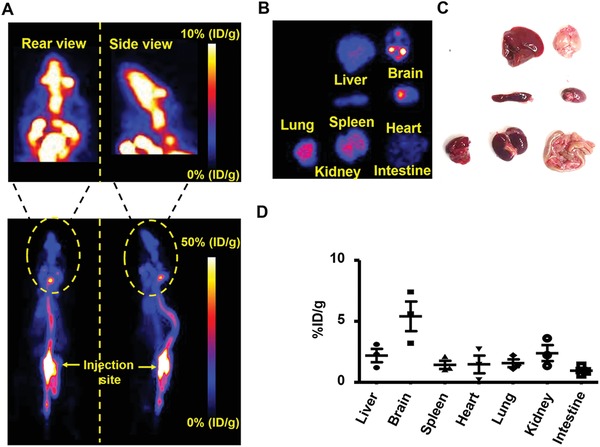
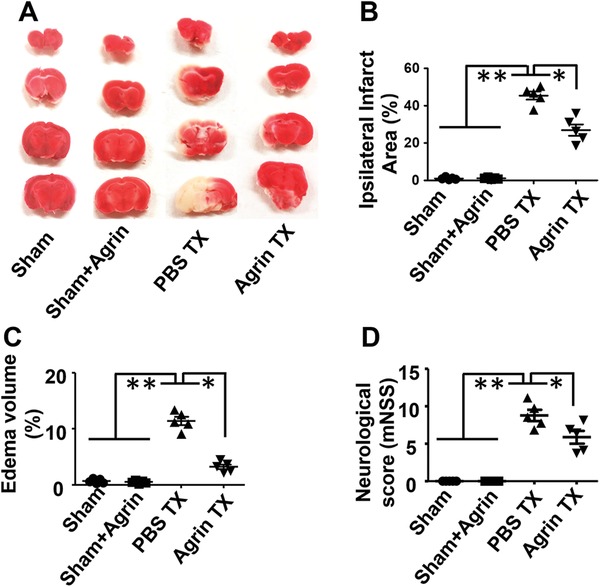
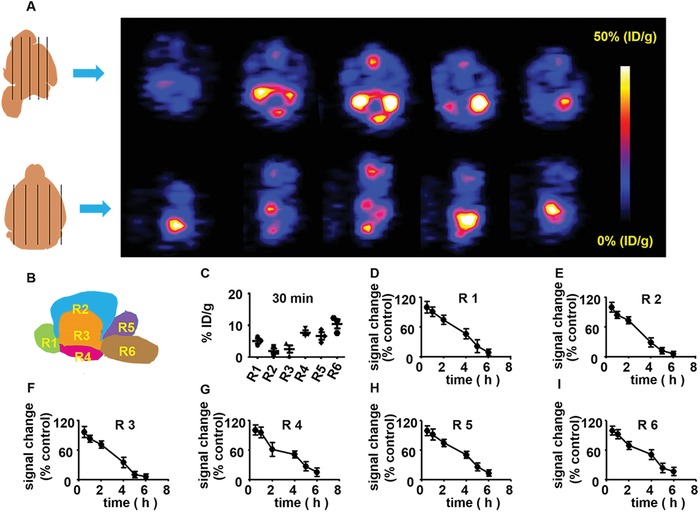
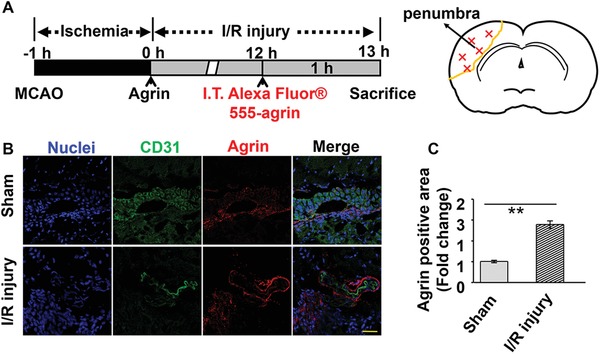
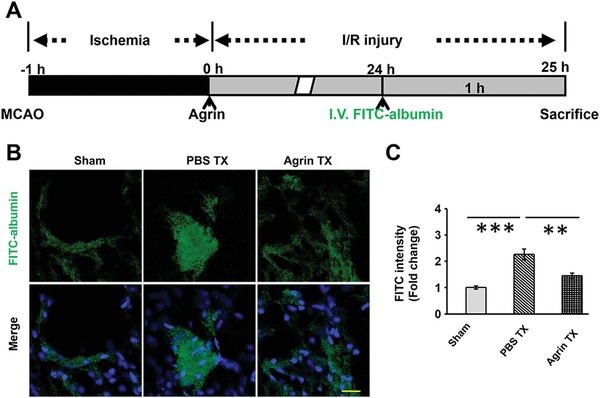
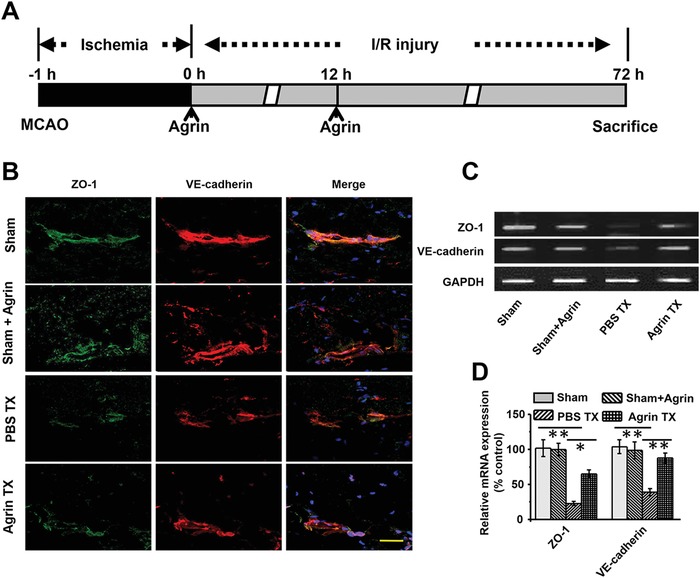
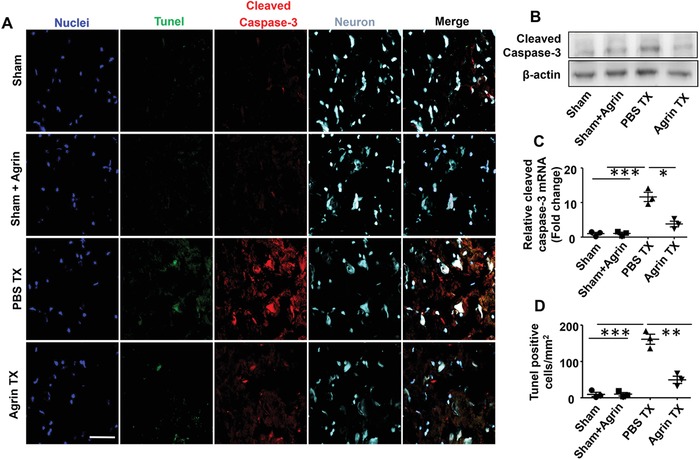
Intrathecal injection, drugs transporting along perivascular spaces, represents an important route for maintaining blood-brain barrier (BBB) integrity after cerebral ischemia/reperfusion (I/R) injury. However, after being directly injected into cerebrospinal fluid (CSF), the temporal and spatial changes in the distribution of therapeutic protein drugs have remained unknown. Here, with positron emission tomography (PET) imaging, the uptake of Zr-agrin is noninvasively and dynamically monitored. These data demonstrate the time-activity curve of drugs in the brain subregions and their spatial distribution in different organs after intrathecal administration. Furthermore, agrin treatment effectively inhibits BBB disruption by reducing the loss of tight-junctional proteins. Importantly, the infarct volume is reduced; the number of apoptotic neurons is decreased; and neurological function is improved in mouse I/R injury models. Thus, intrathecal injection of agrin provides the basis for a new strategy to research and develop protein drugs for reducing the aggravation of I/R injury.
鞘内注射,即药物沿血管周围间隙转运,是脑缺血/再灌注(I/R)损伤后维持血脑屏障(BBB)完整性的重要途径。然而,在直接注入脑脊液(CSF)后,治疗性蛋白质药物分布的时空变化仍不清楚。在此,通过正电子发射断层扫描(PET)成像,对Zr-集聚蛋白的摄取进行了无创动态监测。这些数据展示了鞘内给药后药物在脑亚区域的时间-活性曲线及其在不同器官中的空间分布。此外,集聚蛋白治疗可通过减少紧密连接蛋白的丢失有效抑制血脑屏障破坏。重要的是,在小鼠I/R损伤模型中,梗死体积减小,凋亡神经元数量减少,神经功能得到改善。因此,鞘内注射集聚蛋白为研发减轻I/R损伤加重的蛋白质药物的新策略提供了依据。