Instituto de Medicina Molecular João Lobo Antunes, Faculdade de Medicina, Universidade de Lisboa, Av Prof Egas Moniz, Edificio Egas Moniz, 1649-028 Lisboa, Portugal.
Department of Bioengineering and iBB-Institute for Bioengineering and Biosciences, Instituto Superior Técnico, Universidade de Lisboa, Av. Rovisco Pais, 1049-001 Lisboa, Portugal.
Int J Mol Sci. 2020 Feb 16;21(4):1329. doi: 10.3390/ijms21041329.
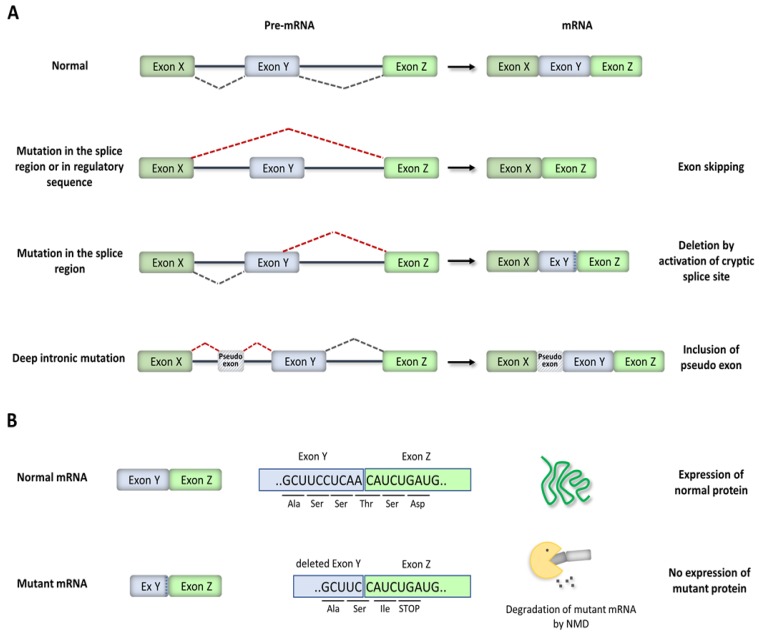
Hypertrophic cardiomyopathy (HCM), the most common inherited heart disease, is predominantly caused by mutations in genes that encode sarcomere-associated proteins. Effective gene-based diagnosis is critical for the accurate clinical management of patients and their family members. However, the introduction of high-throughput DNA sequencing approaches for clinical diagnostics has vastly expanded the number of variants of uncertain significance, leading to many inconclusive results that limit the clinical utility of genetic testing. More recently, developments in RNA analysis have been improving diagnostic outcomes by identifying new variants that interfere with splicing. This review summarizes recent discoveries of RNA mis-splicing in HCM and provides an overview of research that aims to apply the concept of RNA therapeutics to HCM.
肥厚型心肌病(HCM)是最常见的遗传性心脏病,主要由编码肌节相关蛋白的基因突变引起。有效的基于基因的诊断对于患者及其家庭成员的准确临床管理至关重要。然而,高通量 DNA 测序方法在临床诊断中的引入大大增加了意义不明的变异数量,导致许多不确定的结果,限制了基因检测的临床应用。最近,RNA 分析的发展通过鉴定新的剪接干扰变体来提高诊断结果。本综述总结了 HCM 中 RNA 错剪接的最新发现,并概述了旨在将 RNA 治疗学概念应用于 HCM 的研究。