Hira Vashendriya V V, Van Noorden Cornelis J F, Molenaar Remco J
Department of Genetic Toxicology and Cancer Biology, National Institute of Biology, 1000 Ljubljana, Slovenia.
Department of Medical Biology, Cancer Center Amsterdam, Amsterdam UMC at the Academic Medical Center, 1105 AZ Amsterdam, The Netherlands.
Biology (Basel). 2020 Feb 17;9(2):31. doi: 10.3390/biology9020031.
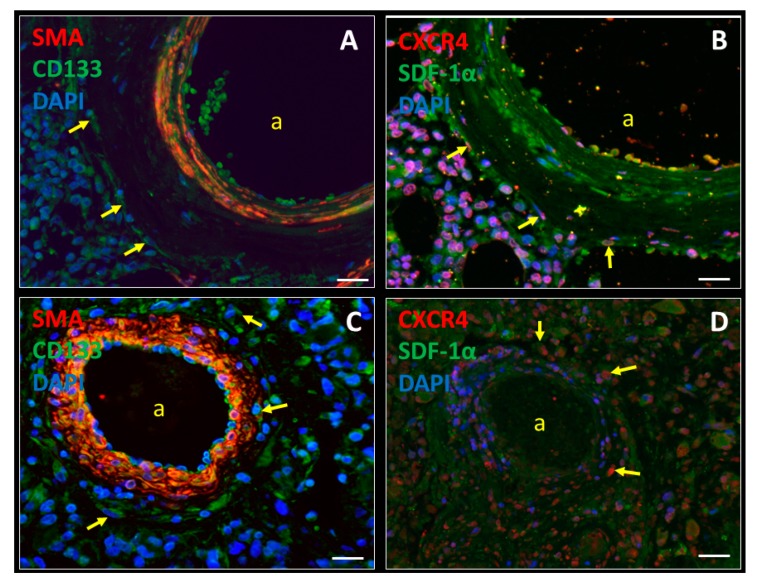
Glioblastoma is the most aggressive and malignant primary brain tumor in adults and has a poor patient survival of only 20 months after diagnosis. This poor patient survival is at least partly caused by glioblastoma stem cells (GSCs), which are slowly-dividing and therefore therapy-resistant. GSCs are localized in protective hypoxic peri-arteriolar niches where these aforementioned stemness properties are maintained. We previously showed that hypoxic peri-arteriolar GSC niches in human glioblastoma are functionally similar to hypoxic peri-arteriolar hematopoietic stem cell (HSC) niches in human bone marrow. GSCs and HSCs express the receptor C-X-C receptor type 4 (CXCR4), which binds to the chemoattractant stromal-derived factor-1α (SDF-1α), which is highly expressed in GSC niches in glioblastoma and HSC niches in bone marrow. This receptor-ligand interaction retains the GSCs/HSCs in their niches and thereby maintains their slowly-dividing state. In acute myeloid leukemia (AML), leukemic cells use the SDF-1α-CXCR4 interaction to migrate to HSC niches and become slowly-dividing and therapy-resistant leukemic stem cells (LSCs). In this communication, we aim to elucidate how disruption of the SDF-1α-CXCR4 interaction using the FDA-approved CXCR4 inhibitor plerixafor (AMD3100) may be used to force slowly-dividing cancer stem cells out of their niches in glioblastoma and AML. Ultimately, this strategy aims to induce GSC and LSC differentiation and their sensitization to therapy.
胶质母细胞瘤是成人中最具侵袭性和恶性的原发性脑肿瘤,患者诊断后的生存期仅为20个月,预后较差。这种较差的患者生存率至少部分是由胶质母细胞瘤干细胞(GSCs)引起的,这些干细胞分裂缓慢,因此对治疗具有抗性。GSCs定位于保护性缺氧的血管周围微环境中,在那里维持上述干细胞特性。我们之前表明,人类胶质母细胞瘤中缺氧的血管周围GSC微环境在功能上类似于人类骨髓中缺氧的血管周围造血干细胞(HSCs)微环境。GSCs和HSCs表达C-X-C趋化因子受体4型(CXCR4),该受体与趋化因子基质衍生因子-1α(SDF-1α)结合,SDF-1α在胶质母细胞瘤的GSC微环境和骨髓的HSC微环境中高度表达。这种受体-配体相互作用将GSCs/HSCs保留在其微环境中,从而维持它们的缓慢分裂状态。在急性髓系白血病(AML)中,白血病细胞利用SDF-1α-CXCR4相互作用迁移到HSC微环境中,成为分裂缓慢且对治疗具有抗性的白血病干细胞(LSCs)。在本通讯中,我们旨在阐明如何使用美国食品药品监督管理局(FDA)批准的CXCR4抑制剂普乐沙福(AMD3100)破坏SDF-1α-CXCR4相互作用,从而迫使胶质母细胞瘤和AML中分裂缓慢的癌症干细胞离开其微环境。最终,该策略旨在诱导GSC和LSC分化并使其对治疗敏感。