Deng Shu-Hao, Lu Hao, Li D Y
School of Materials Science and Engineering, Central South University, Changsha, 410083, China.
Department of Chemical and Materials Engineering, University of Alberta, Edmonton, Alberta, T6G 1H9, Canada.
Sci Rep. 2020 Feb 20;10(1):3049. doi: 10.1038/s41598-020-59420-6.
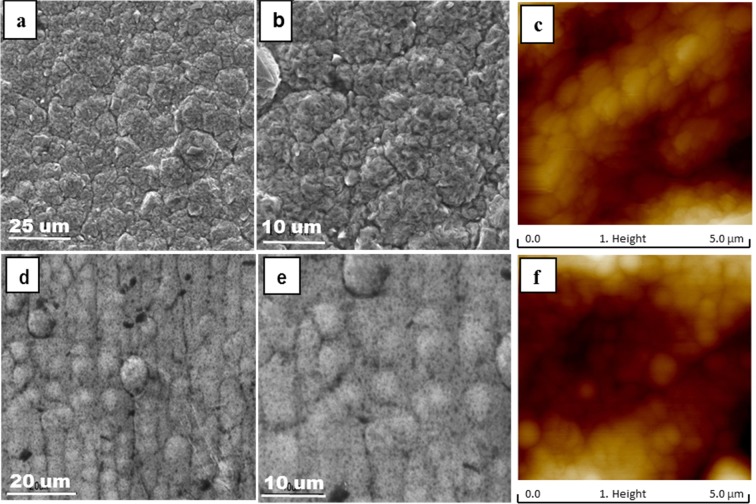
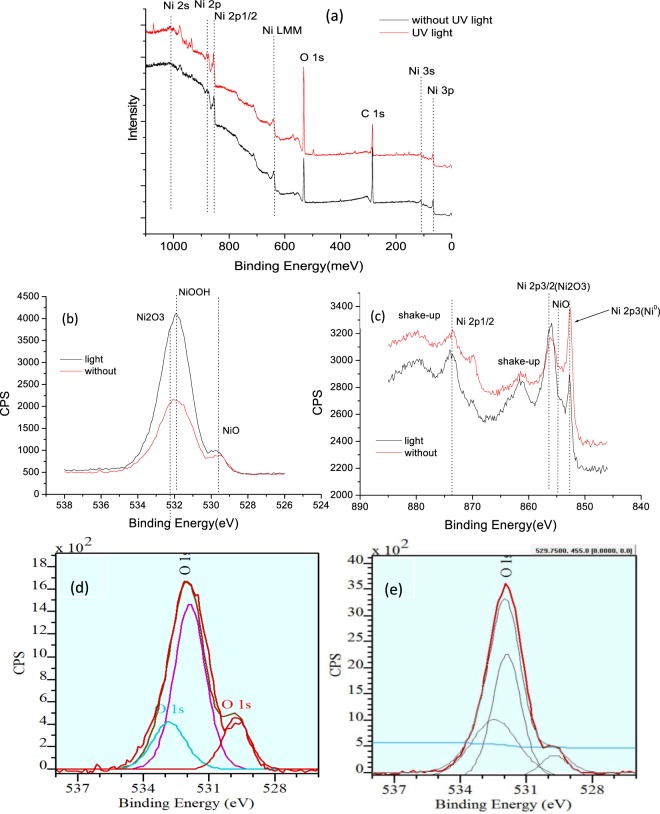
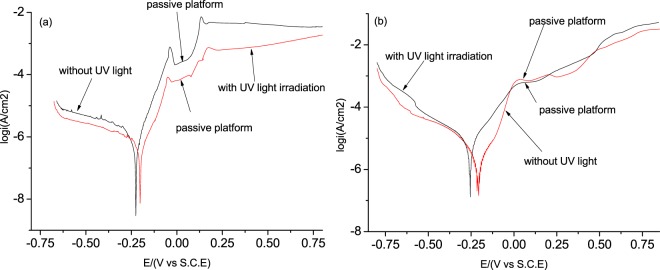
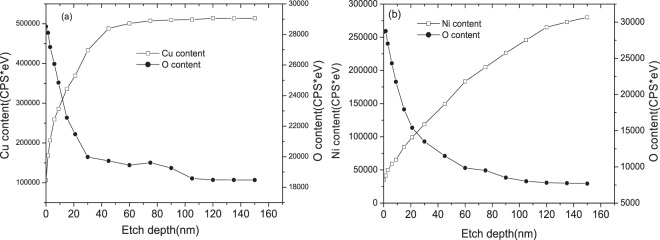
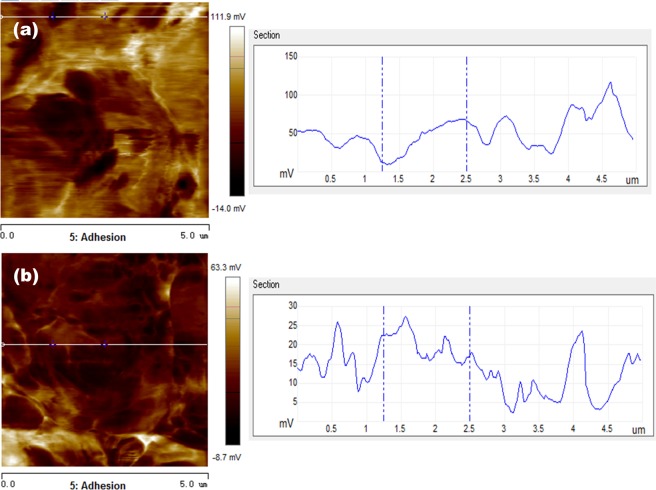
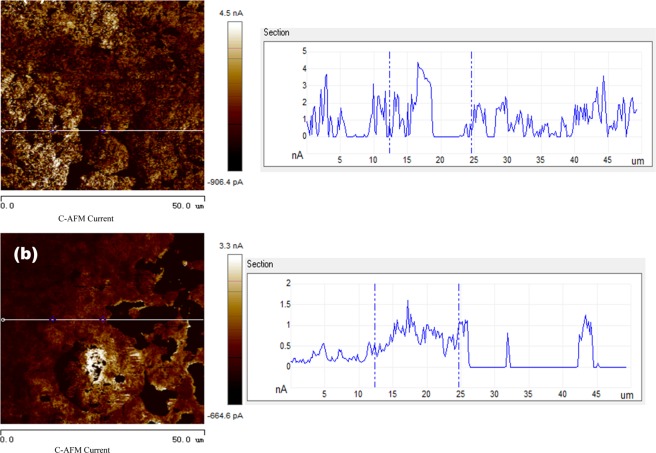
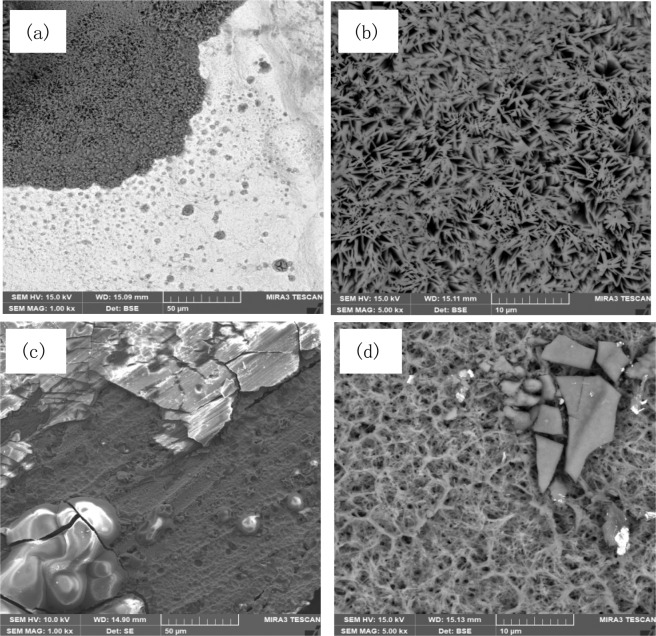
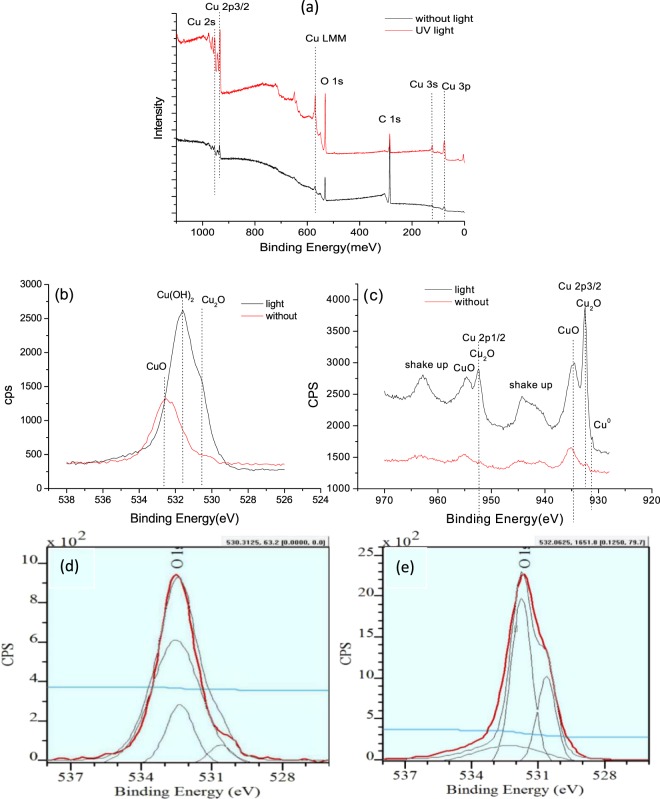
Influence of ultraviolet (UV) light irradiation on the corrosion behavior of electrodeposited Ni and Cu nanocrystalline foils in 3.5% NaCl solution was studied by means of electrochemical methods, electron work function (EWF) analysis, and characterization with atomic force microscopy (AFM) and X-ray photoelectron spectroscopy (XPS). It was demonstrated that the influence of solar light on corrosion of the metals was non-negligible, which could be very different for different materials. The UV light irradiation resulted in an increase in corrosion resistance of the Cu foil but showed an opposite influence on that of the Ni foil. Based on surface state analysis, it was concluded that the UV irradiation altered the surface oxide films. The UV light induced the formation of CuO on Cu, which is more stable and compacted than naturally formed CuO film. However, the UV light accelerated the formation of NiO which is loose, porous and brittle, compared to naturally formed NiO on Ni. The changes in oxide films were responsible for the opposite variations in the corrosion behavior of the Cu and Ni nanocrystalline foils caused by the UV light irradiation.
通过电化学方法、电子功函数(EWF)分析以及原子力显微镜(AFM)和X射线光电子能谱(XPS)表征,研究了紫外线(UV)照射对电沉积镍和铜纳米晶箔在3.5%氯化钠溶液中腐蚀行为的影响。结果表明,太阳光对金属腐蚀的影响不可忽略,不同材料的影响可能差异很大。紫外线照射使铜箔的耐腐蚀性增加,但对镍箔的影响则相反。基于表面状态分析,得出紫外线照射改变了表面氧化膜的结论。紫外线诱导铜表面形成氧化铜,其比自然形成的氧化铜膜更稳定、更致密。然而,与镍表面自然形成的氧化镍相比,紫外线加速了疏松、多孔且易碎的氧化镍的形成。氧化膜的变化是导致紫外线照射引起铜和镍纳米晶箔腐蚀行为出现相反变化的原因。