Clinic of Endocrinology, Diabetes and Metabolism, University Hospital Basel, Basel, Switzerland and Department of Biomedicine, University of Basel, Basel, Switzerland.
Division of Molecular and Systems Toxicology, Department of Pharmaceutical Sciences, University of Basel, Basel, Switzerland.
Sci Rep. 2020 Feb 20;10(1):3035. doi: 10.1038/s41598-020-59701-0.
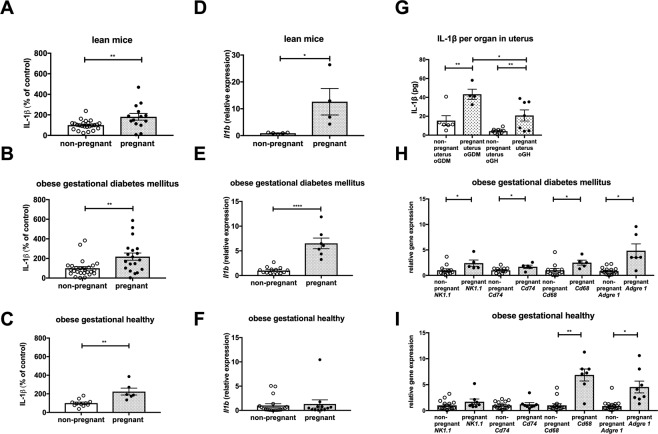
Gestational diabetes mellitus (GDM) is one of the most common diseases associated with pregnancy, however, the underlying mechanisms remain unclear. Based on the well documented role of inflammation in type 2 diabetes, the aim was to investigate the role of inflammation in GDM. We established a mouse model for GDM on the basis of its two major risk factors, obesity and aging. In these GDM mice, we observed increased Interleukin-1β (IL-1β) expression in the uterus and the placenta along with elevated circulating IL-1β concentrations compared to normoglycemic pregnant mice. Treatment with an anti-IL-1β antibody improved glucose-tolerance of GDM mice without apparent deleterious effects for the fetus. Finally, IL-1β antagonism showed a tendency for reduced plasma corticosterone concentrations, possibly explaining the metabolic improvement. We conclude that IL-1β is a causal driver of impaired glucose tolerance in GDM.
妊娠期糖尿病(GDM)是与妊娠相关的最常见疾病之一,但潜在机制尚不清楚。基于炎症在 2 型糖尿病中的明确作用,本研究旨在探讨炎症在 GDM 中的作用。我们基于肥胖和衰老这两个主要的危险因素,建立了 GDM 小鼠模型。在这些 GDM 小鼠中,与正常血糖妊娠小鼠相比,我们观察到子宫和胎盘内白细胞介素-1β(IL-1β)的表达增加,同时循环中 IL-1β 浓度升高。用抗 IL-1β 抗体治疗可改善 GDM 小鼠的葡萄糖耐量,而对胎儿无明显不良影响。最后,IL-1β 拮抗作用显示出降低血浆皮质酮浓度的趋势,这可能解释了代谢改善的原因。我们得出结论,IL-1β 是 GDM 患者葡萄糖耐量受损的一个因果驱动因素。