Department of Geography, Institute of Ecology & Earth Sciences, University of Tartu, Tartu, Estonia.
Department of Ecosystem Trace Gas Exchange, Global Change Research Institute of the Czech Academy of Sciences, Brno, Czech Republic.
Sci Rep. 2020 Feb 21;10(1):3204. doi: 10.1038/s41598-020-60058-7.
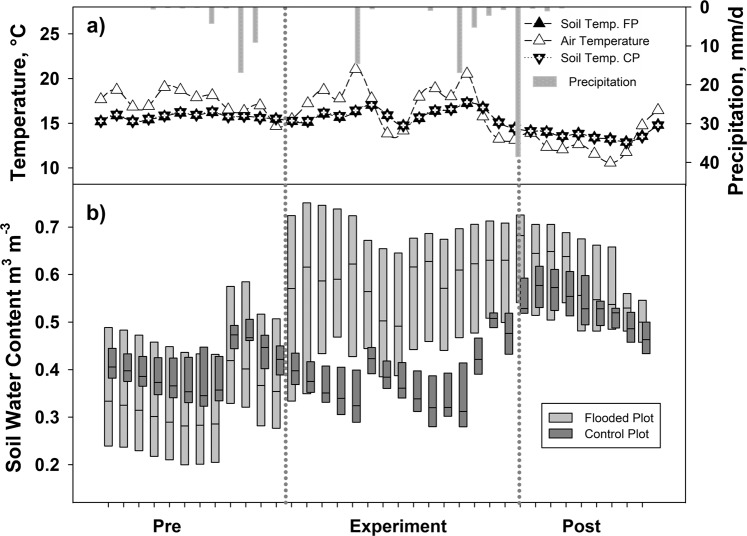
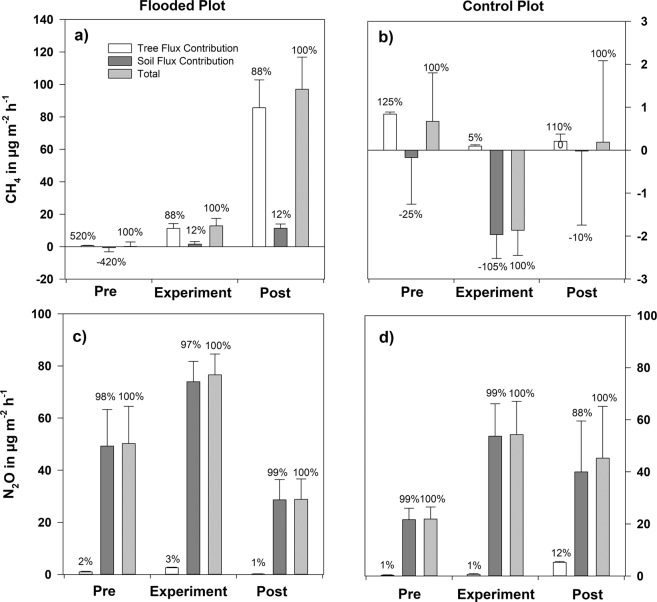
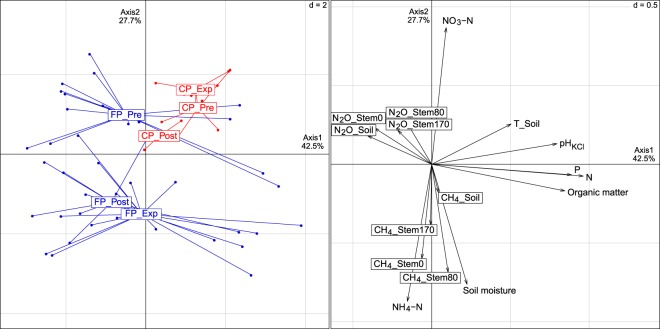
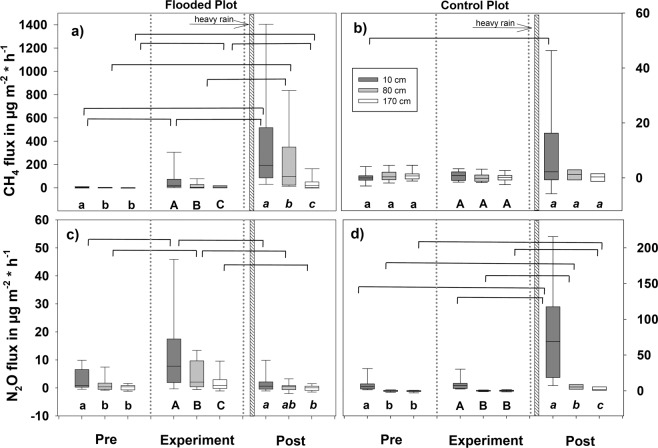
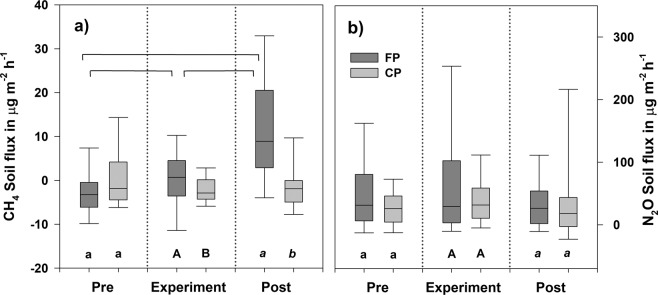
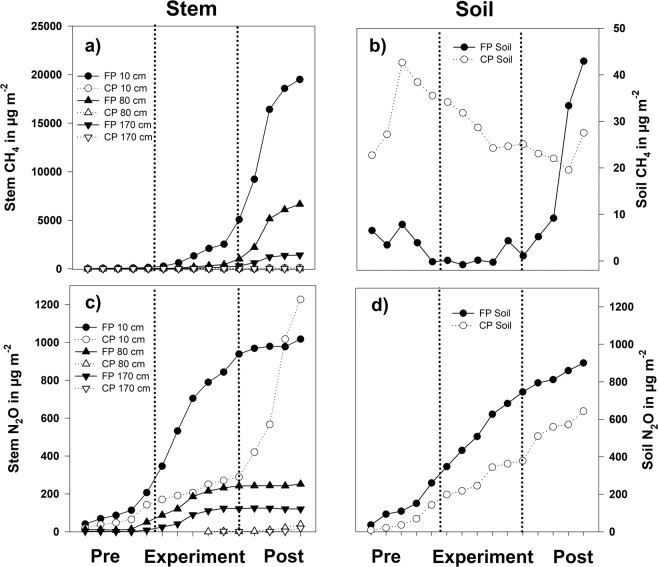
One of the characteristics of global climate change is the increase in extreme climate events, e.g., droughts and floods. Forest adaptation strategies to extreme climate events are the key to predict ecosystem responses to global change. Severe floods alter the hydrological regime of an ecosystem which influences biochemical processes that control greenhouse gas fluxes. We conducted a flooding experiment in a mature grey alder (Alnus incana (L.) Moench) forest to understand flux dynamics in the soil-tree-atmosphere continuum related to ecosystem NO and CH turn-over. The gas exchange was determined at adjacent soil-tree-pairs: stem fluxes were measured in vertical profiles using manual static chambers and gas chromatography; soil fluxes were measured with automated chambers connected to a gas analyser. The tree stems and soil surface were net sources of NO and CH during the flooding. Contrary to NO, the increase in CH fluxes delayed in response to flooding. Stem NO fluxes were lower although stem CH emissions were significantly higher than from soil after the flooding. Stem fluxes decreased with stem height. Our flooding experiment indicated soil water and nitrogen content as the main controlling factors of stem and soil NO fluxes. The stems contributed up to 88% of CH emissions to the stem-soil continuum during the investigated period but soil NO fluxes dominated (up to 16 times the stem fluxes) during all periods. Conclusively, stem fluxes of CH and NO are essential elements in forest carbon and nitrogen cycles and must be included in relevant models.
全球气候变化的特征之一是极端气候事件的增加,例如干旱和洪水。森林适应极端气候事件的策略是预测生态系统对全球变化反应的关键。严重的洪水改变了生态系统的水文状况,从而影响控制温室气体通量的生化过程。我们在成熟的灰桤木(Alnus incana(L.)Moench)林进行了洪水实验,以了解与生态系统 NO 和 CH 转化相关的土壤-树木-大气连续体中的通量动态。在相邻的土壤-树木对中测定气体交换:使用手动静态室和气相色谱法在垂直剖面中测量茎干通量;使用与气体分析仪相连的自动室测量土壤通量。在洪水期间,树干和土壤表面是 NO 和 CH 的净源。与 NO 相反,CH 通量的增加对洪水的响应延迟。尽管洪水后树干 CH 排放明显高于土壤,但树干 NO 通量较低。树干通量随树干高度降低。我们的洪水实验表明,土壤水分和氮含量是树干和土壤 NO 通量的主要控制因素。在研究期间,树干对茎-土连续体的 CH 排放贡献高达 88%,但在所有时期,土壤 NO 通量均占主导地位(高达树干通量的 16 倍)。总之,CH 和 NO 的树干通量是森林碳氮循环的重要组成部分,必须包含在相关模型中。