Inflammation & Allergic Diseases Research Unit, Affiliated Hospital of Southwest Medical University, Luzhou, 646000 Sichuan, China.
First Department of Respiratory Disease, Affiliated Hospital of Southwest Medical University, Luzhou, 646000 Sichuan, China.
Mediators Inflamm. 2019 Dec 31;2019:3153240. doi: 10.1155/2019/3153240. eCollection 2019.
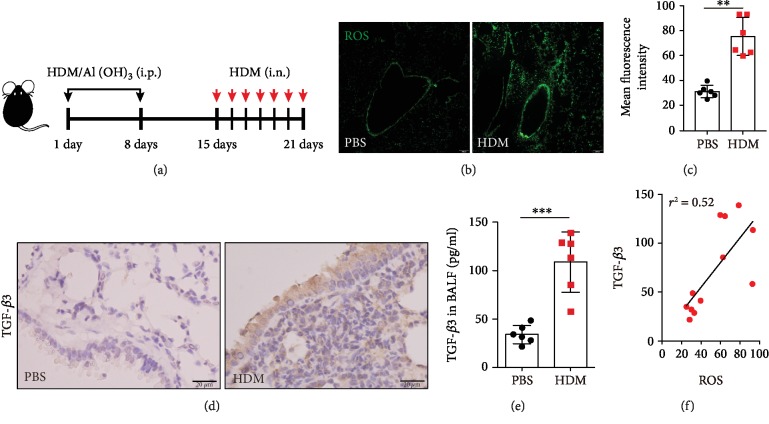
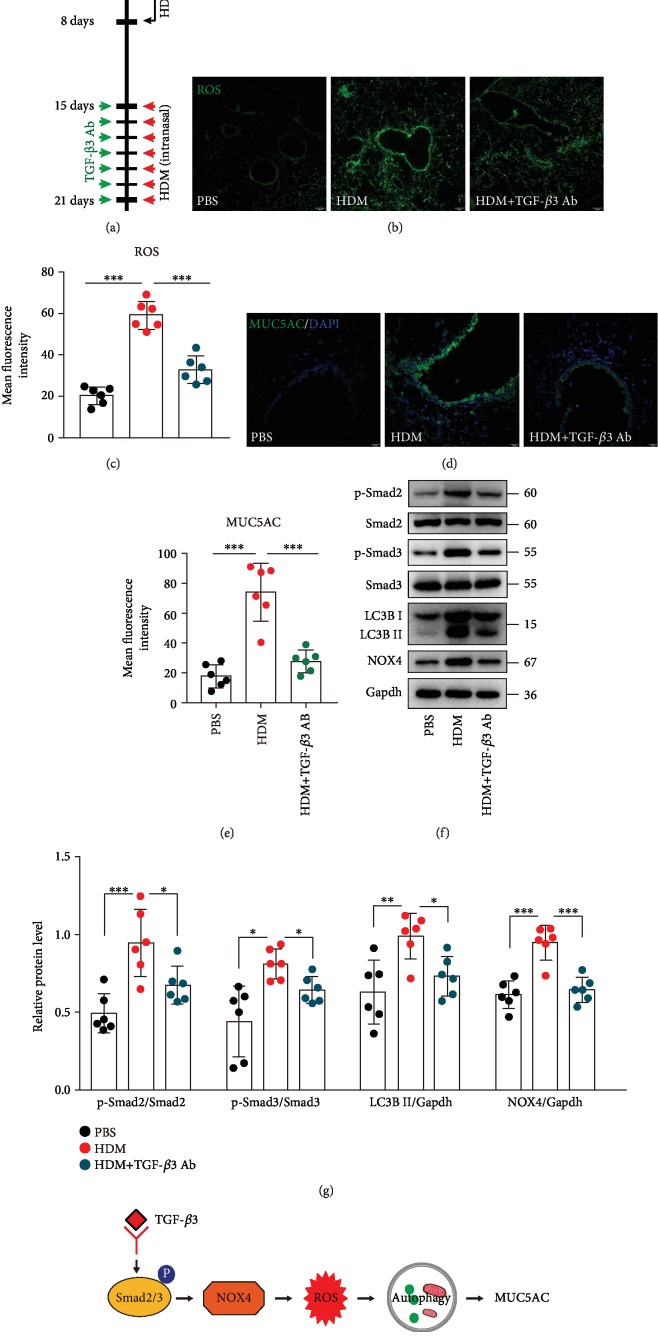
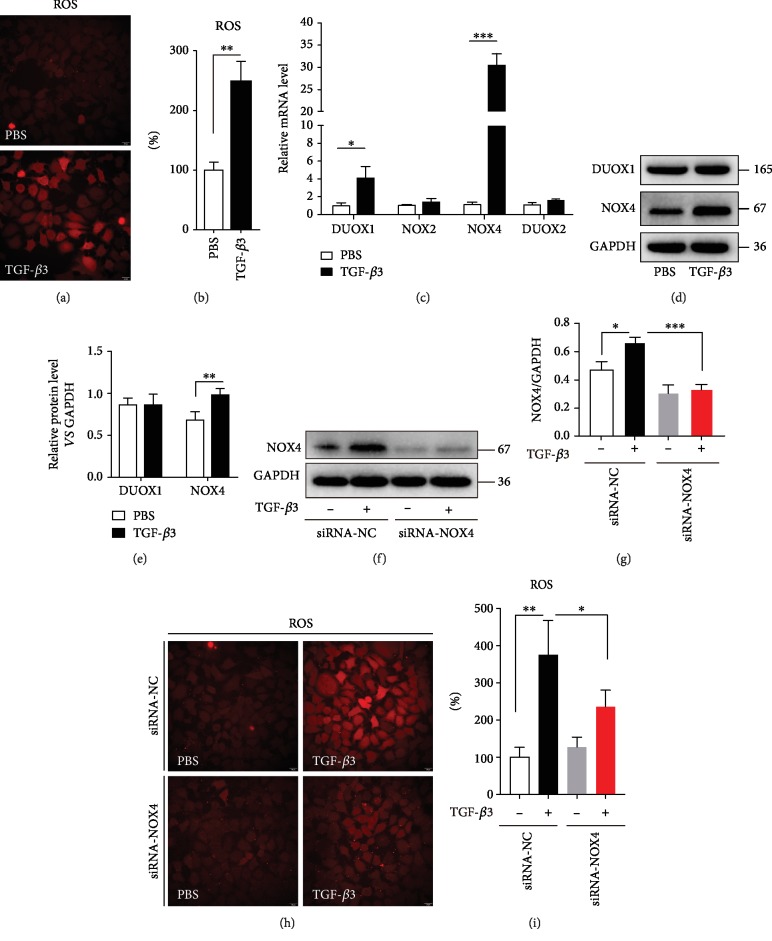
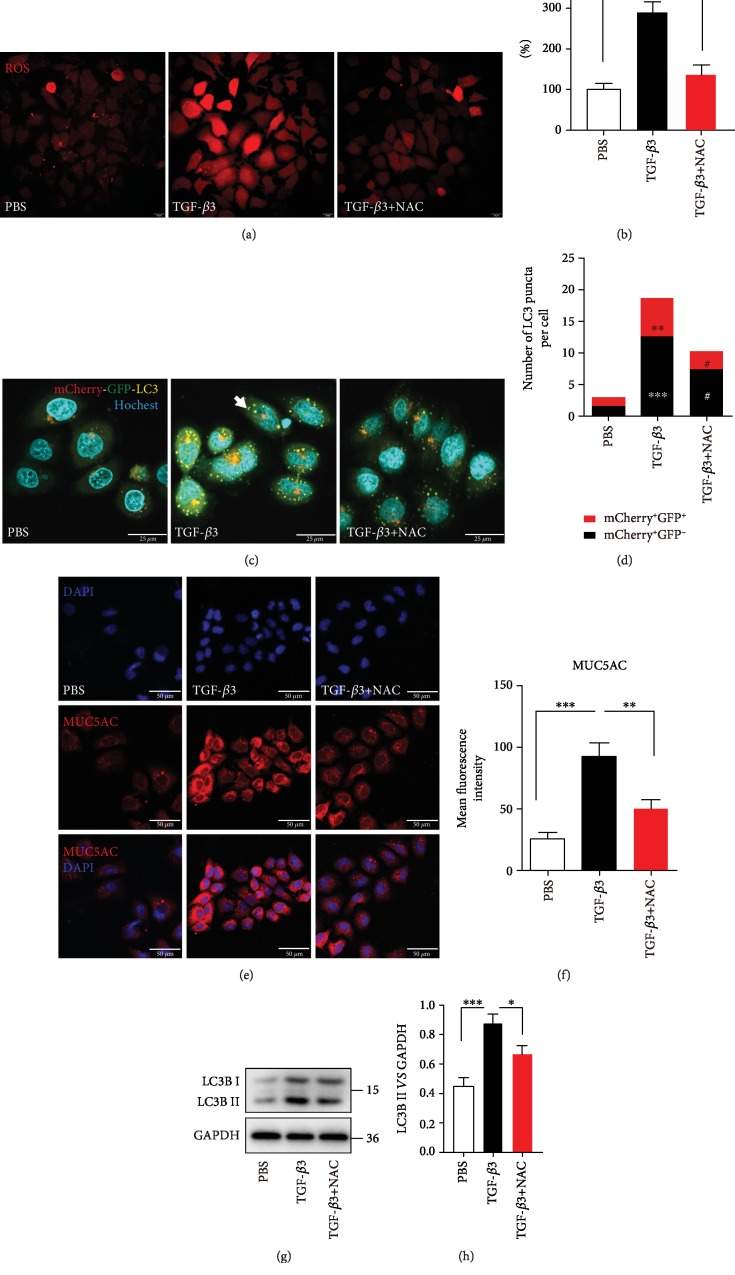
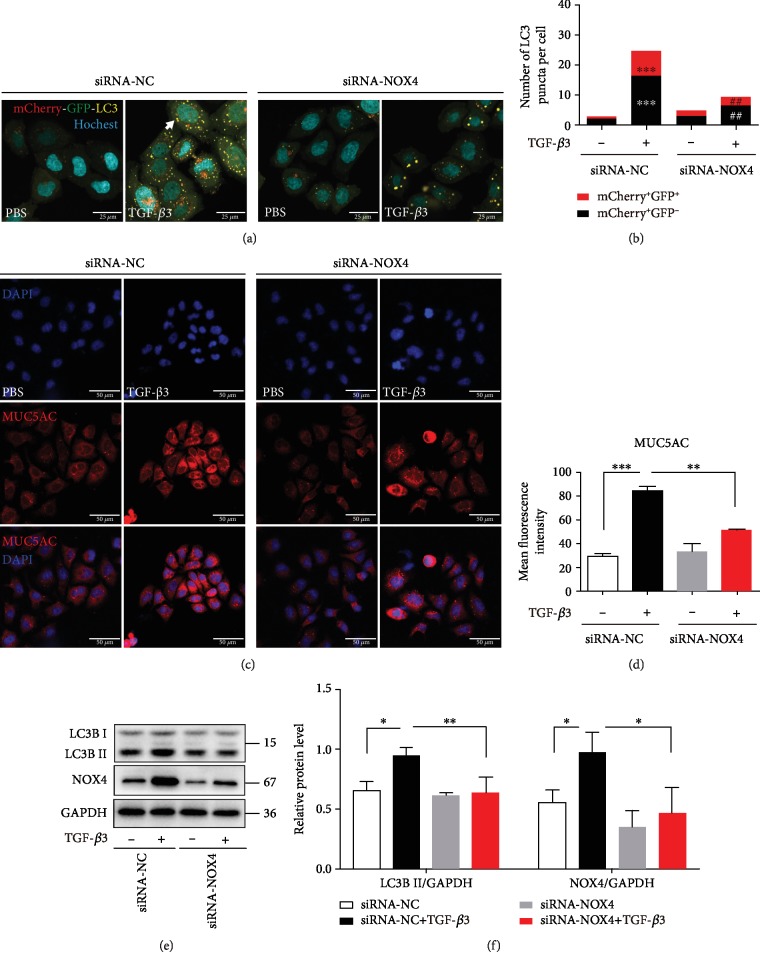
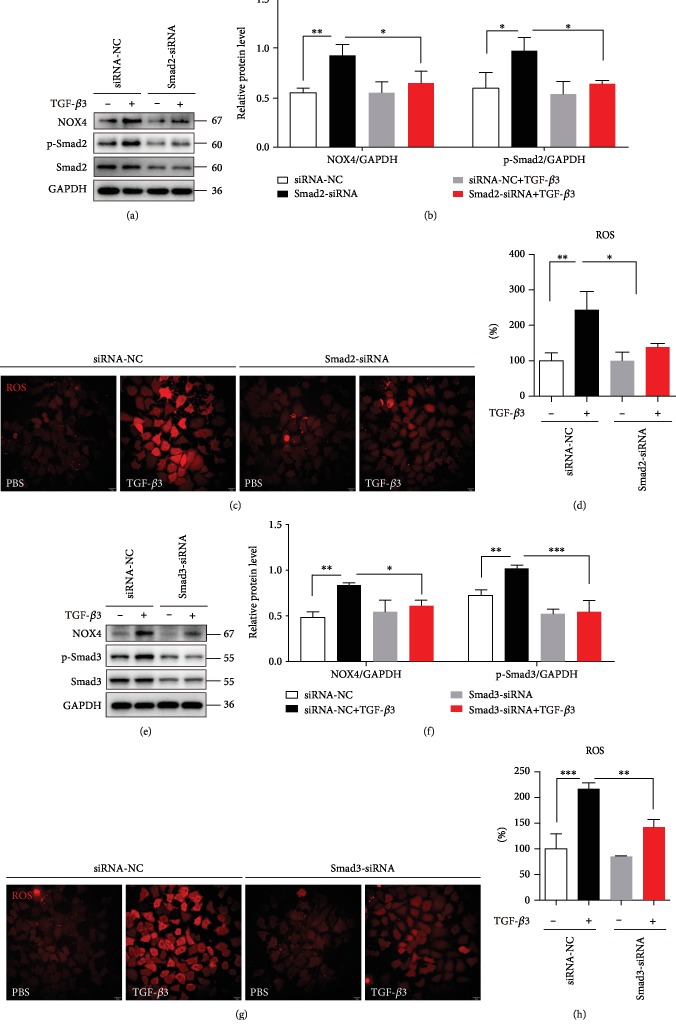
Higher concentrations of reactive oxygen species (ROS) have been associated with epithelial cell damage, cell shedding, and airway hyperresponsiveness. Previous studies have indicated that transforming growth factor-beta (TGF-) mediates ROS production and NADPH oxidase (NOX) activity. In our previous study, we also observed that TGF-3 increases mucus secretion in airway epithelial cells in an autophagy-dependent fashion. Although it is well known that the relationship between ROS and autophagy is cell context-dependent, the exact mechanism of action remains unclear. The following study examined whether ROS act as upstream of autophagy activation in response to TGF-3 induction. Using an allergic inflammation mouse model induced by house dust mite (HDM), we observed elevated lung amounts of TGF-3 accompanied by increased ROS levels. And we found that ROS levels were elevated and NOX4 expression was increased in TGF-3-induced epithelial cells, while the lack of NOX4 in the epithelial cells could reduce ROS generation and autophagy-dependent MUC5AC expression treated with TGF-3. Furthermore, our studies demonstrated that the Smad2/3 pathway was involved in TGF-3-induced ROS generation by promoting NOX4 expression. The inhibition of ROS generation by N-Acetyl-L-cysteine (NAC) resulted in a decrease in mucus expression and autophagy activity as well as . Finally, TGF-3-neutralizing antibody significantly reduced the ROS generation, mucus expression, and autophagy activity and also decreased the phosphorylation of Smad2 and Smad3. Taken together, the obtained results revealed that persistent TGF-3 activation increased ROS levels in a NOX4-dependent pathway and subsequently induced autophagy as well as MUC5AC expression in the epithelial cells.
较高浓度的活性氧(ROS)与上皮细胞损伤、细胞脱落和气道高反应性有关。先前的研究表明,转化生长因子-β(TGF-β)介导 ROS 的产生和 NADPH 氧化酶(NOX)活性。在我们之前的研究中,我们还观察到 TGF-β以自噬依赖的方式增加气道上皮细胞的黏液分泌。尽管众所周知 ROS 与自噬之间的关系依赖于细胞环境,但确切的作用机制尚不清楚。本研究旨在探讨 ROS 是否作为 TGF-β诱导自噬激活的上游信号。通过使用屋尘螨(HDM)诱导的过敏炎症小鼠模型,我们观察到肺组织中 TGF-β水平升高伴随 ROS 水平升高。并且我们发现,在 TGF-β诱导的上皮细胞中 ROS 水平升高和 NOX4 表达增加,而上皮细胞中 NOX4 的缺失可减少 ROS 生成和 TGF-β处理后的自噬依赖性 MUC5AC 表达。此外,我们的研究表明 Smad2/3 通路通过促进 NOX4 表达参与 TGF-β诱导的 ROS 生成。N-乙酰-L-半胱氨酸(NAC)抑制 ROS 生成导致黏液表达和自噬活性降低以及。最后,TGF-β中和抗体显著减少了 ROS 生成、黏液表达和自噬活性,并降低了 Smad2 和 Smad3 的磷酸化。总之,这些结果表明,持续的 TGF-β激活增加了上皮细胞中 NOX4 依赖性途径的 ROS 水平,随后诱导自噬以及 MUC5AC 表达。