Jeske S S, Schuler P J, Doescher J, Theodoraki M N, Laban S, Brunner C, Hoffmann T K, Wigand M C
Department of Oto-Rhino-Laryngology, Head and Neck Surgery, Ulm University Medical Center, Frauensteige 12, 89075 Ulm, Germany.
Immun Ageing. 2020 Feb 12;17:3. doi: 10.1186/s12979-020-0174-7. eCollection 2020.
The number of aging cancer patients has increased continuously and will do so further in the future. The immune system of elderly people experiences critical changes over the time. Therefore, tumor-induced changes in the immune system are believed to differ in young and elderly cancer patients as well.
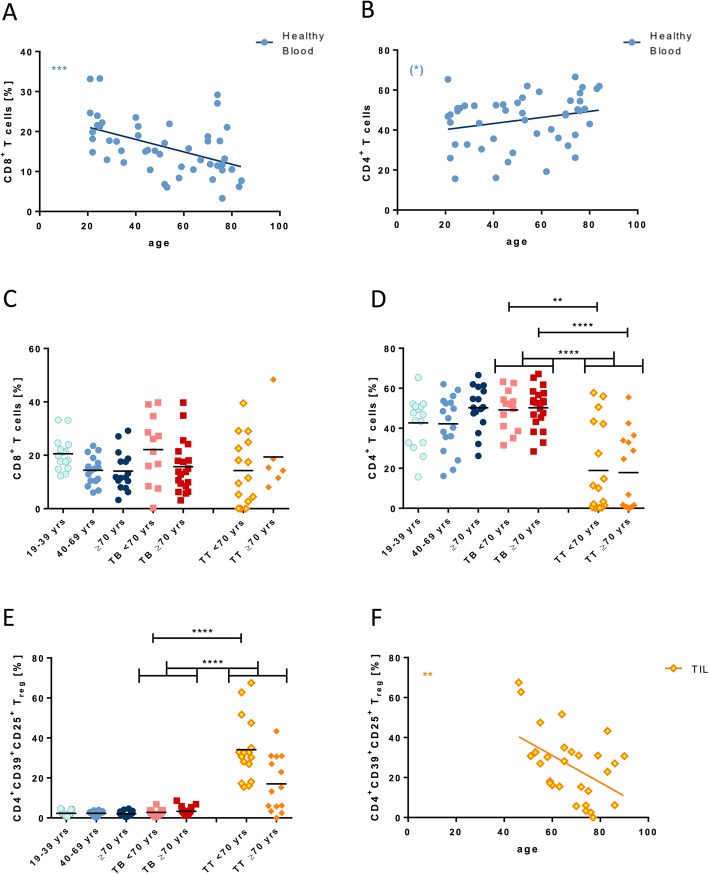
The effect of aging on the immune system was measured in peripheral blood lymphocytes (PBL) of healthy volunteers ( = 48, 21-84 yrs.) divided into three different age groups. Seventy years was set as a cut-off for defining subjects as elderly. Results were compared to two groups of adult cancer patients, which donated PBL and tumor infiltrating lymphocytes (TIL): young cancer patients (40-69 yrs.; blood: = 13; TIL: = 17) and elderly cancer patients (70-90 yrs.; blood: = 20; TIL: = 15) with head and neck squamous cell carcinoma (HNSCC). Frequencies and phenotypes of CD4 and CD8 T cells as well as regulatory T cells (T) were assessed by flow cytometry.
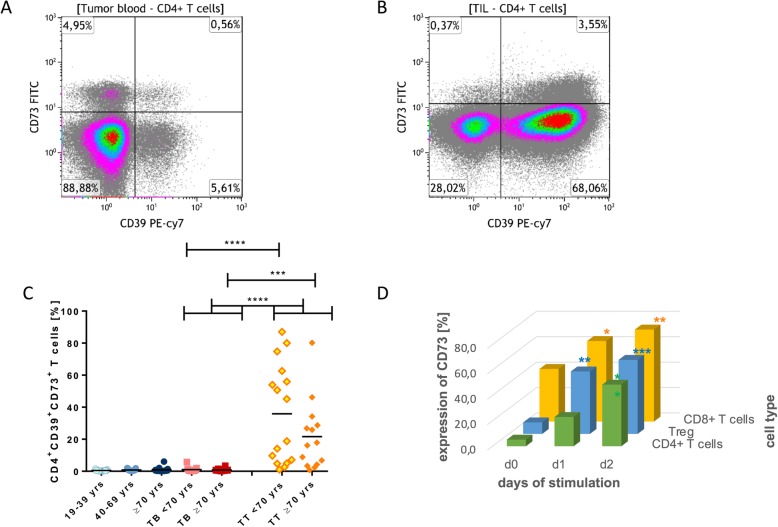
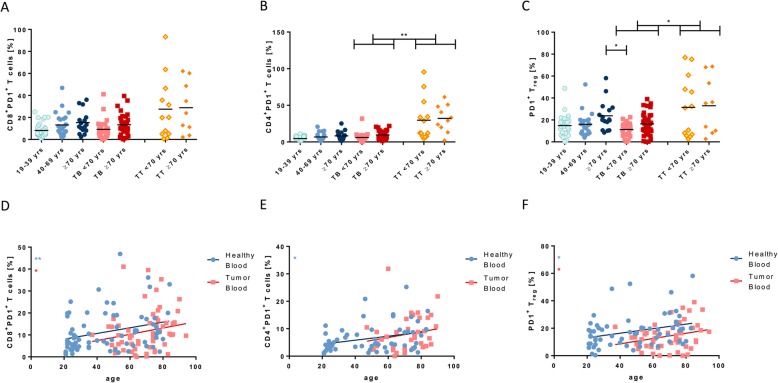
We observed lower frequencies of CD8 cytotoxic T cells during aging in both groups. Frequencies of tumor infiltrating regulatory T cells were significantly higher than in the peripheral blood but showed a significant decline in older tumor patients. With increasing age, expression of immunosuppressive CD73 and CCR7 was lower and expression of PD1 elevated on peripheral T cells in healthy volunteers and tumor patients.
Immunosenescence takes place in healthy donors and cancer patients. Our results suggest that in elderly tumor patients, the immune system is impaired and the tumor-induced immune escape is less pronounced. The increased expression of PD1 implies the potential for effective immunotherapies in elderly, as treatment with checkpoint inhibitors could be more beneficial for elderly HNSCC patients.
老年癌症患者数量持续增加,未来还会进一步增多。老年人的免疫系统会随时间发生重大变化。因此,肿瘤诱导的免疫系统变化在年轻和老年癌症患者中也被认为有所不同。
在分为三个不同年龄组的健康志愿者(n = 48,21 - 84岁)的外周血淋巴细胞(PBL)中测量衰老对免疫系统的影响。将70岁设定为定义老年人的界限。结果与两组成年癌症患者进行比较,这两组患者捐赠了PBL和肿瘤浸润淋巴细胞(TIL):患有头颈部鳞状细胞癌(HNSCC)的年轻癌症患者(40 - 69岁;血液:n = 13;TIL:n = 17)和老年癌症患者(70 - 90岁;血液:n = 20;TIL:n = 15)。通过流式细胞术评估CD4和CD8 T细胞以及调节性T细胞(Treg)的频率和表型。
我们观察到两组在衰老过程中CD8细胞毒性T细胞的频率较低。肿瘤浸润调节性T细胞的频率显著高于外周血,但在老年肿瘤患者中显著下降。随着年龄的增长,健康志愿者和肿瘤患者外周T细胞上免疫抑制性CD73和CCR7的表达较低,而PD1的表达升高。
免疫衰老发生在健康供体和癌症患者中。我们的结果表明,在老年肿瘤患者中,免疫系统受损,肿瘤诱导的免疫逃逸不太明显。PD1表达的增加意味着老年患者有效免疫治疗的潜力,因为使用检查点抑制剂进行治疗可能对老年HNSCC患者更有益。