Deng Huan, Tan Songwei, Gao Xueqin, Zou Chenming, Xu Chenfeng, Tu Kun, Song Qingle, Fan Fengjuan, Huang Wei, Zhang Zhiping
School of Pharmacy, Tongji Medical College, Huazhong University of Science and Technology, Wuhan 430030, China.
Institute of Hematology, Union Hospital, Tongji Medical College, Huazhong University of Science and Technology, Wuhan 430030, China.
Acta Pharm Sin B. 2020 Feb;10(2):358-373. doi: 10.1016/j.apsb.2019.07.004. Epub 2019 Jul 23.
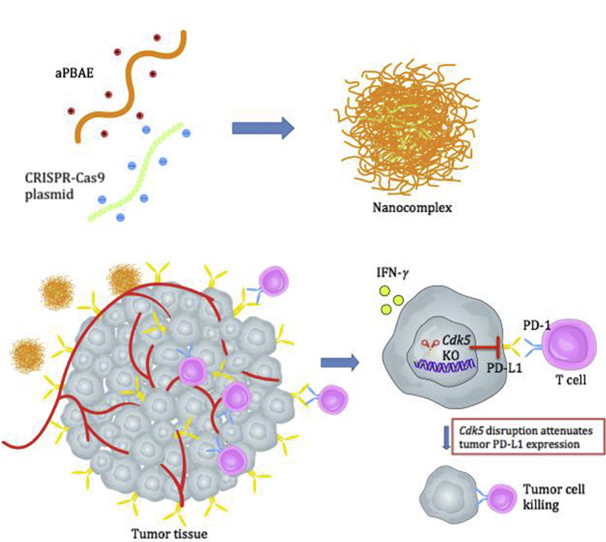
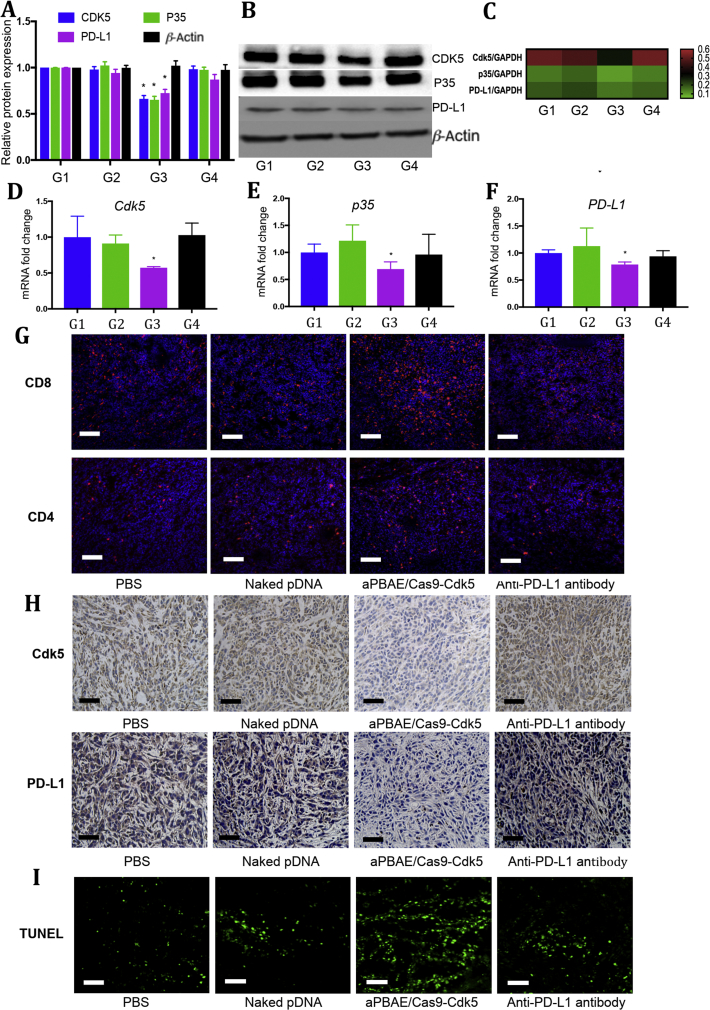
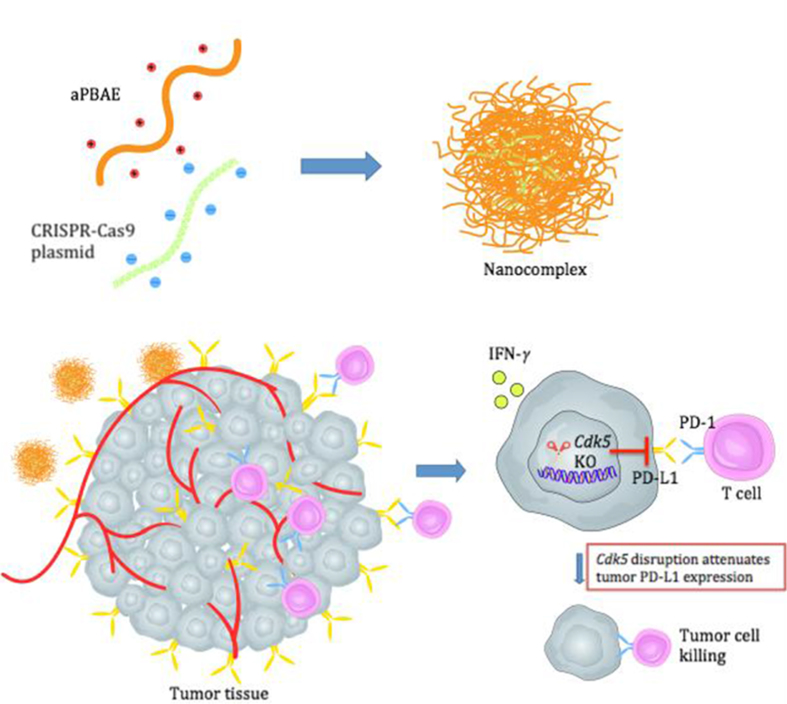
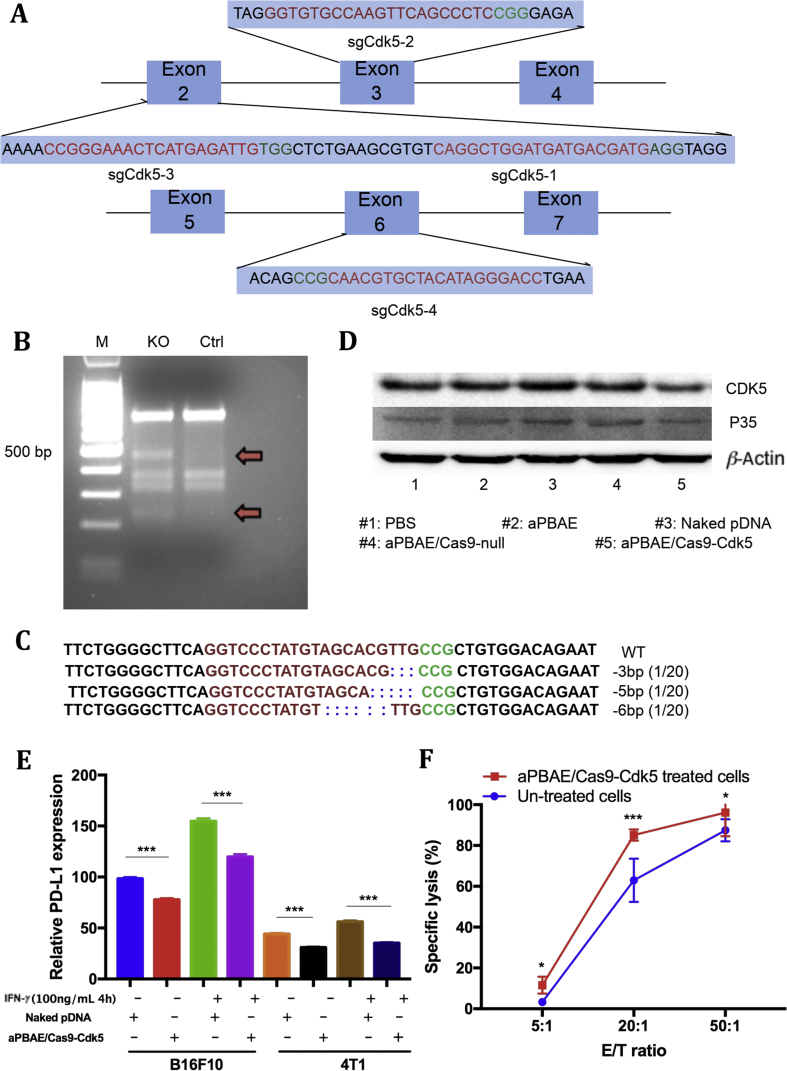
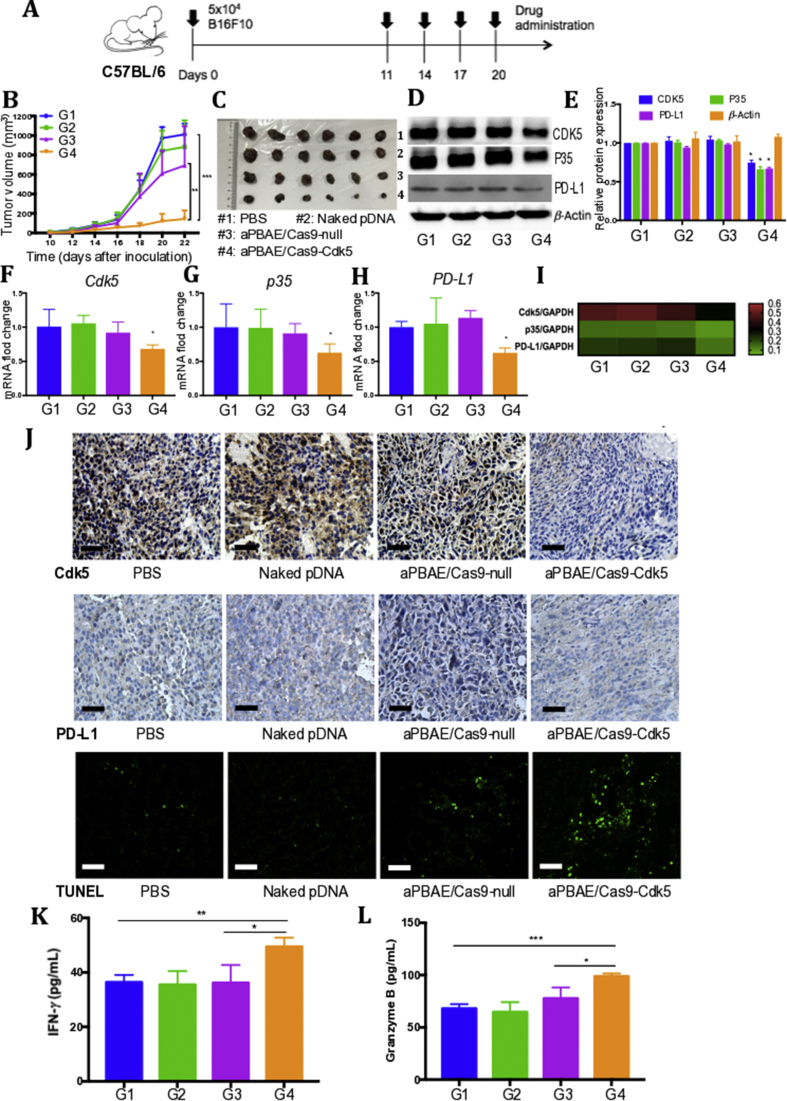
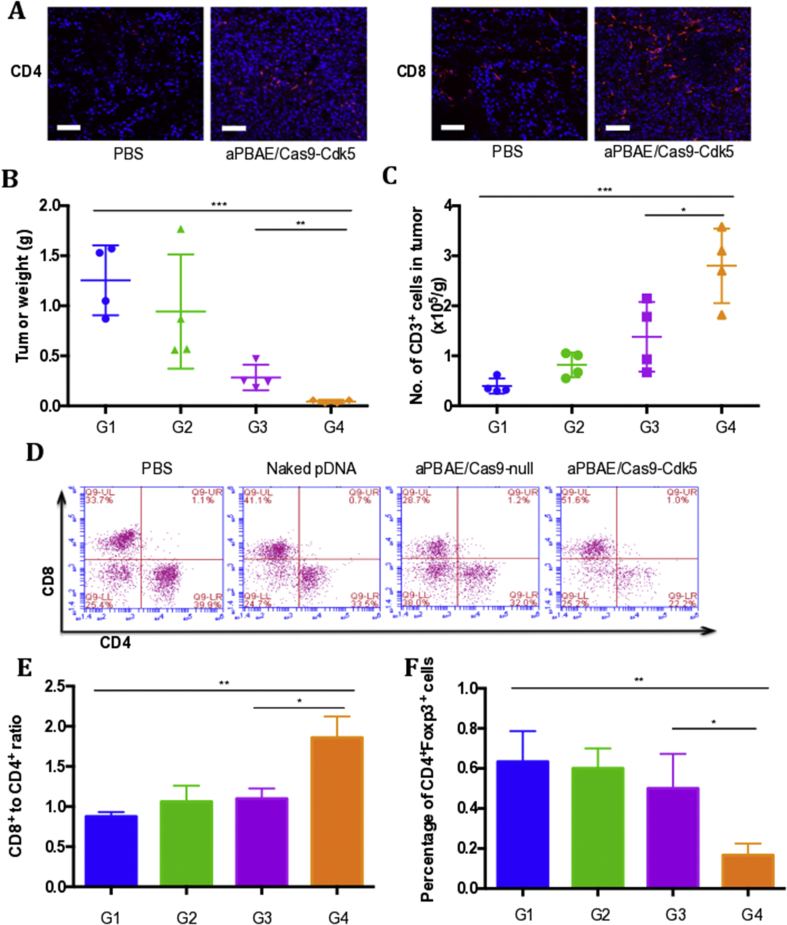
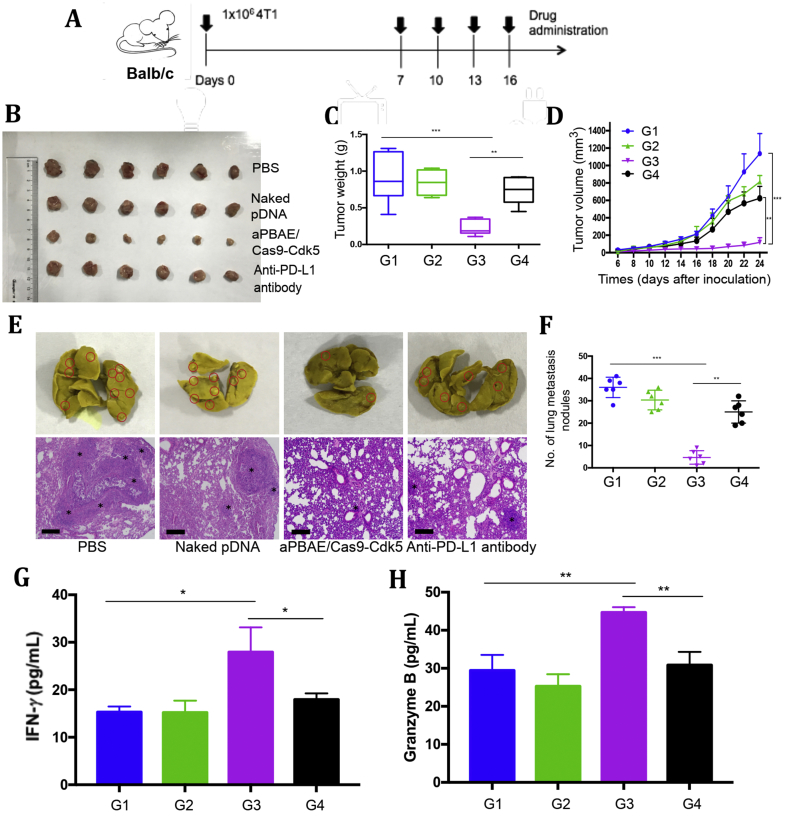
Blocking the programmed death-ligand 1 (PD-L1) on tumor cells with monoclonal antibody therapy has emerged as powerful weapon in cancer immunotherapy. However, only a minority of patients presented immune responses in clinical trials. To develop an alternative treatment method based on immune checkpoint blockade, we designed a novel and efficient CRISPR-Cas9 genome editing system delivered by cationic copolymer aPBAE to downregulate PD-L1 expression on tumor cells specifically knocking out Cyclin-dependent kinase 5 () gene . The expression of PD-L1 on tumor cells was significantly attenuated by knocking out , leading to effective tumor growth inhibition in murine melanoma and lung metastasis suppression in triple-negative breast cancer. Importantly, we demonstrated that aPBAE/Cas9-Cdk5 treatment elicited strong T cell-mediated immune responses in tumor microenvironment that the population of CD8 T cells was significantly increased while regulatory T cells (Tregs) was decreased. It may be the first case to exhibit direct PD-L1 downregulation CRISPR-Cas9 genome editing technology for cancer therapy. It will provide promising strategy for preclinical antitumor treatment through the combination of nanotechnology and genome engineering.
用单克隆抗体疗法阻断肿瘤细胞上的程序性死亡配体1(PD-L1)已成为癌症免疫治疗中的有力武器。然而,在临床试验中只有少数患者出现免疫反应。为了开发一种基于免疫检查点阻断的替代治疗方法,我们设计了一种新型高效的CRISPR-Cas9基因组编辑系统,该系统由阳离子共聚物aPBAE递送,以特异性敲除细胞周期蛋白依赖性激酶5(Cdk5)基因来下调肿瘤细胞上PD-L1的表达。通过敲除Cdk5,肿瘤细胞上PD-L1的表达显著减弱,从而有效抑制小鼠黑色素瘤的肿瘤生长并抑制三阴性乳腺癌的肺转移。重要的是,我们证明aPBAE/Cas9-Cdk5治疗在肿瘤微环境中引发了强烈的T细胞介导的免疫反应,CD8 + T细胞群体显著增加,而调节性T细胞(Tregs)减少。这可能是首例展示通过CRISPR-Cas9基因组编辑技术直接下调PD-L1用于癌症治疗的案例。它将为通过纳米技术和基因组工程相结合的临床前抗肿瘤治疗提供有前景的策略。