Xiong Xiong, Tu Yenan, Chen Xianchuan, Jiang Xiaoming, Shi Huahong, Wu Chenxi, Elser James J
State Key Laboratory of Freshwater Ecology and Biotechnology, Institute of Hydrobiology, Chinese Academy of Sciences, Wuhan, 430072, China.
Flathead Lake Biological Station, University of Montana, Polson, MT, 59860, USA.
Heliyon. 2019 Dec 24;5(12):e03063. doi: 10.1016/j.heliyon.2019.e03063. eCollection 2019 Dec.
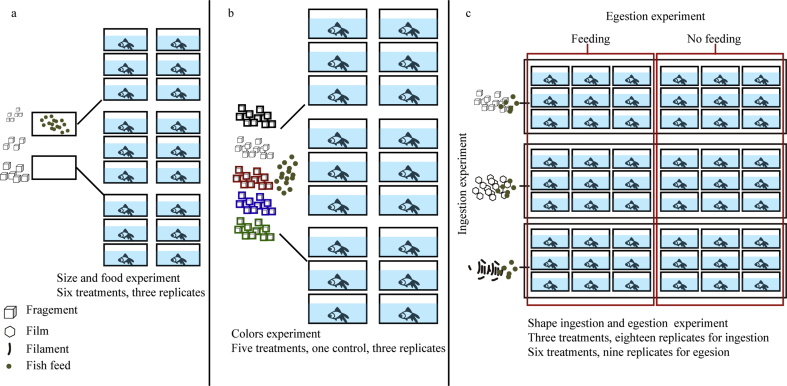
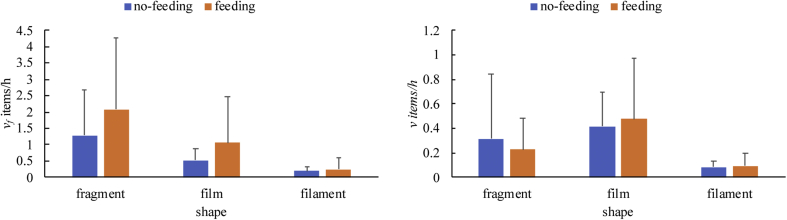
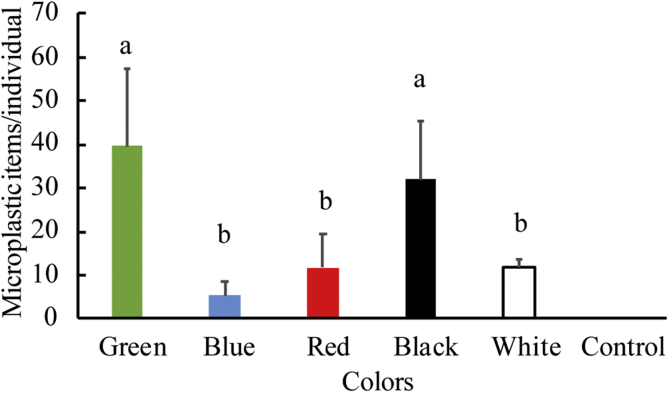
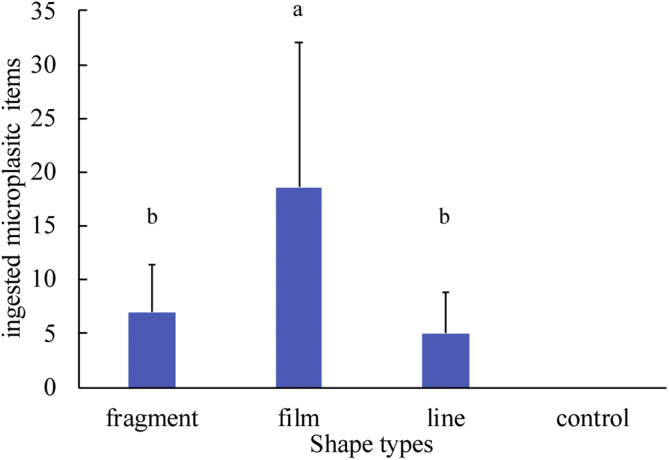
It is vital to understand processes of microplastic ingestion and egestion by aquatic organisms in order to evaluate the potential effects and impacts of microplastics in aquatic ecosystems. In this study, goldfish () was used to investigate ingestion and egestion of polyethylene (PE) microplastics and how these processes were affected by size, color, and shape of microplastics. Results showed that goldfish ingested white PE microplastics only in the presence of fish feed and that microplastics larger than 2 mm were rejected even after being ingested. However, in the presence of food, more green and black microplastics were ingested compared with red, blue, and white microplastics while significantly higher amounts of microplastic films were ingested compared with fragments and filaments. Microplastics ingested by goldfish were egested within 72 h. However, the egestion rate of filaments was the lowest among all tested microplastic shapes. The presence of food appeared to reduce film and filament residues in fish after 72 h. Results of this study imply that different features of microplastics result in different exposure risks for fish. Thus, the specific features of microplastics (e.g. their shape, color, and size) should be considered in future ecotoxicological studies.
为了评估微塑料在水生生态系统中的潜在影响,了解水生生物摄入和排出微塑料的过程至关重要。在本研究中,金鱼( )被用于研究聚乙烯(PE)微塑料的摄入和排出情况,以及这些过程如何受到微塑料的大小、颜色和形状的影响。结果表明,金鱼仅在有鱼饲料的情况下摄入白色PE微塑料,且大于2毫米的微塑料即使被摄入后也会被排出。然而,在有食物的情况下,与红色、蓝色和白色微塑料相比,金鱼摄入了更多的绿色和黑色微塑料,同时与碎片和细丝相比,摄入的微塑料薄膜数量显著更高。金鱼摄入的微塑料在72小时内被排出。然而,在所有测试的微塑料形状中,细丝的排出率最低。食物的存在似乎降低了72小时后鱼体内薄膜和细丝的残留量。本研究结果表明,微塑料的不同特征会导致鱼类面临不同的暴露风险。因此,在未来的生态毒理学研究中应考虑微塑料的具体特征(如形状、颜色和大小)。