Armentano Biagio, Curcio Rosita, Brindisi Matteo, Mancuso Raffaella, Rago Vittoria, Ziccarelli Ida, Frattaruolo Luca, Fiorillo Marco, Dolce Vincenza, Gabriele Bartolo, Cappello Anna Rita
Department of Pharmacy, Health and Nutritional Sciences, University of Calabria, Via P. Bucci, 87036 Rende (CS), Italy.
Laboratory of Industrial and Synthetic Organic Chemistry (LISOC), Department of Chemistry and Chemical Technologies, University of Calabria, Via Pietro Bucci 12/C, 87036 Arcavacata di Rende (CS), Italy.
Biomedicines. 2020 Feb 18;8(2):35. doi: 10.3390/biomedicines8020035.
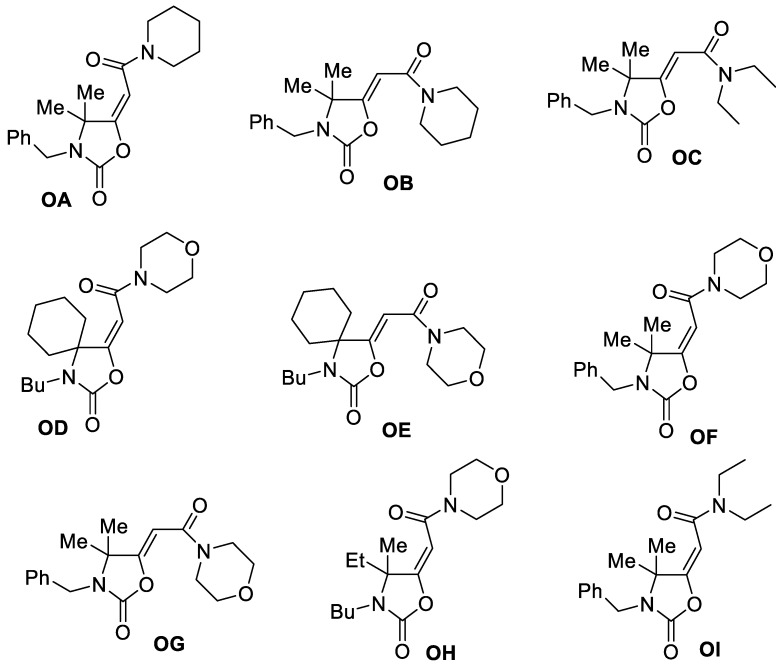
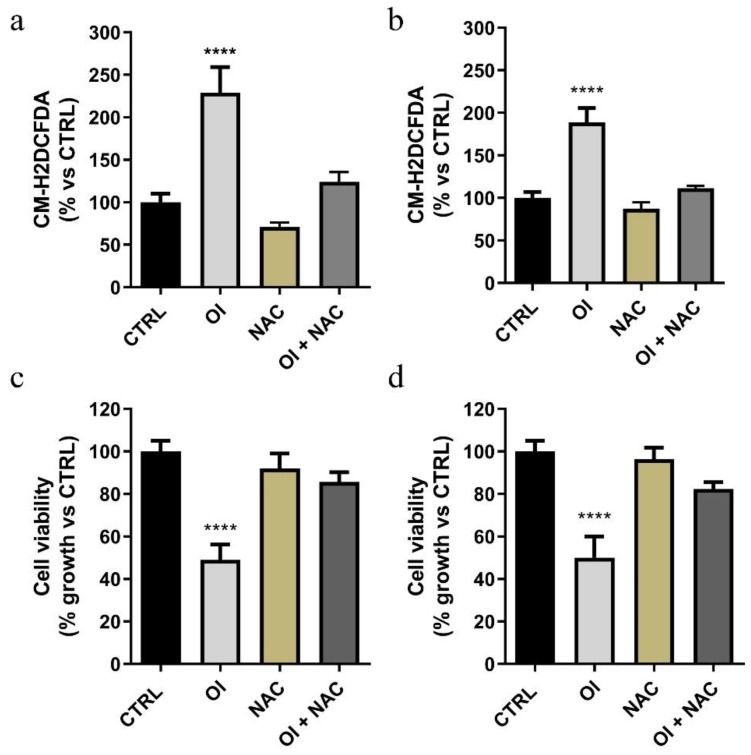
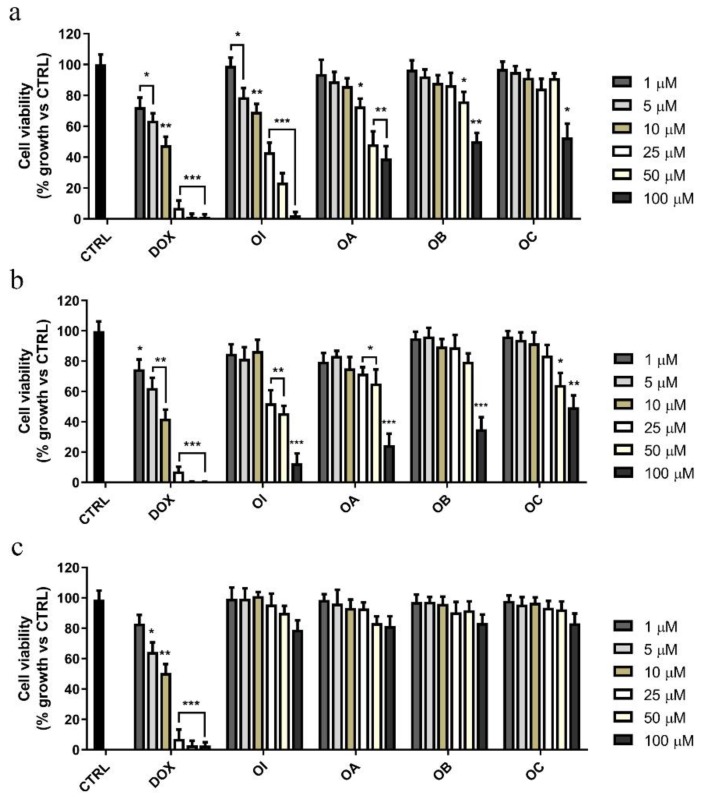
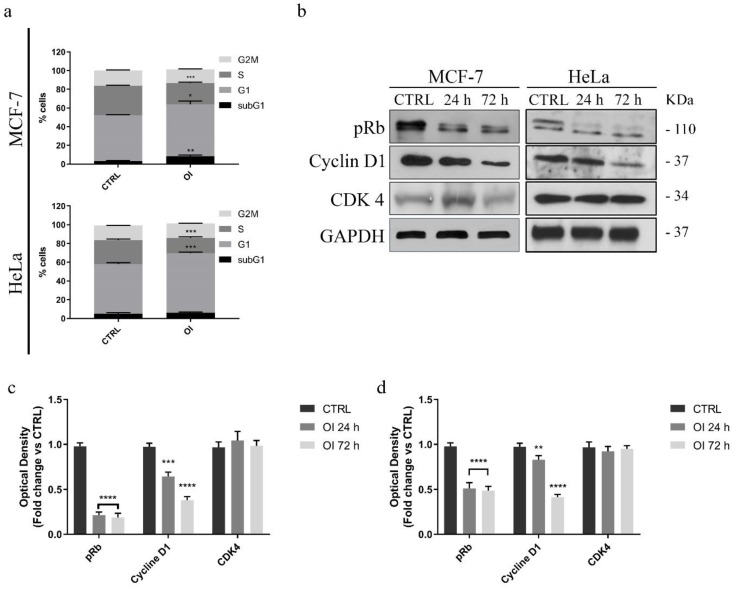
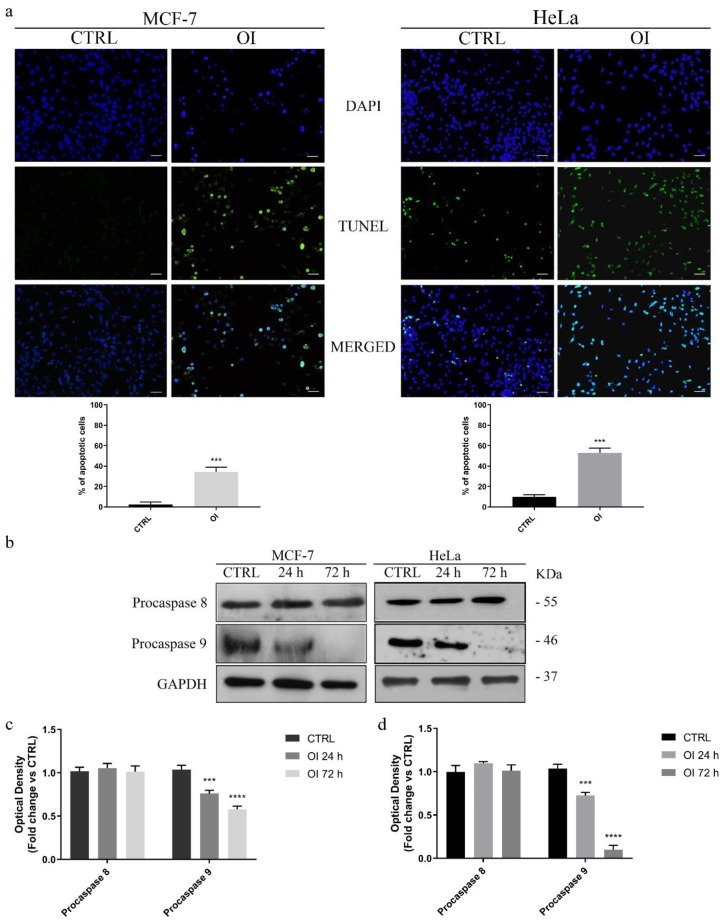
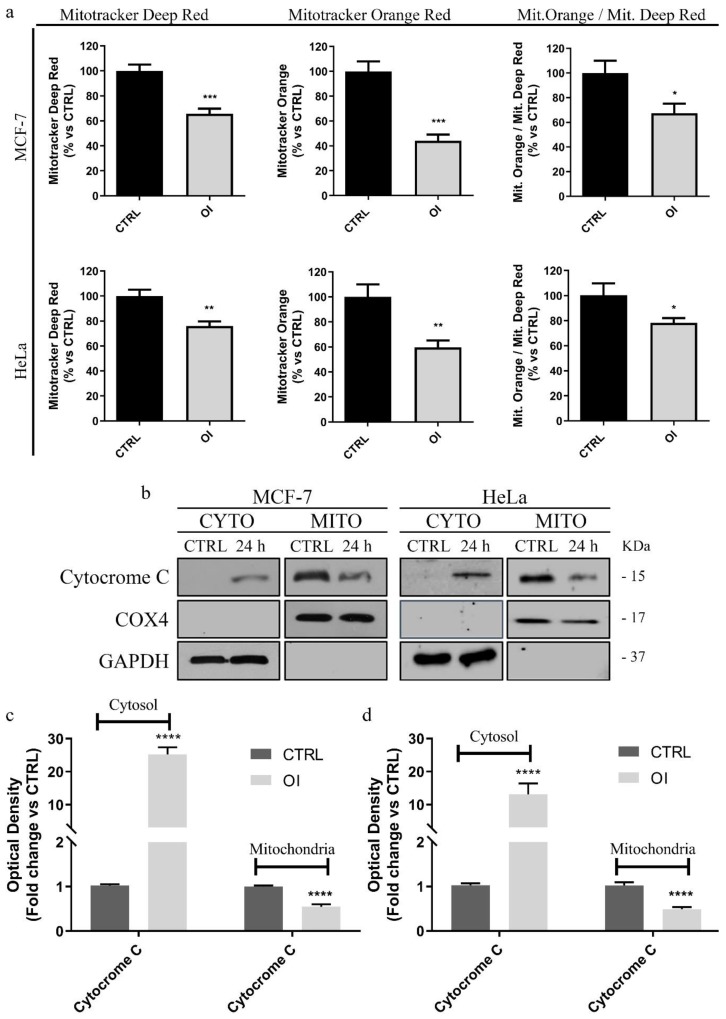
Oxazolidinones are antibiotics that inhibit protein synthesis by binding the 50S ribosomal subunit. Recently, numerous worldwide researches focused on their properties and possible involvement in cancer therapy have been conducted. Here, we evaluated in vitro the antiproliferative activity of some 5-(carbamoylmethylene)-oxazolidin-2-ones on MCF-7 and HeLa cells. The tested compounds displayed a wide range of cytotoxicity on these cancer cell lines, measured by MTT assay, exhibiting no cytotoxicity on non-tumorigenic MCF-10A cells. Among the nine tested derivatives, four displayed a good anticancer potential. Remarkably, compound showed IC values of 17.66 and 31.10 µM for MCF-7 and HeLa cancer cells, respectively. Furthermore, we assessed effect on the cell cycle by FACS analysis, highlighting a G1 phase arrest after 72 h, supported by a low expression level of Cyclin D1 protein. Moreover, mitochondrial membrane potential was reduced after treatment driven by high levels of ROS. These findings demonstrate that treatment can inhibit MCF-7 and HeLa cell proliferation and induce apoptosis by caspase-9 activation and cytochrome c release in the cytosol. Hence, 5-(carbamoylmethylene)-oxazolidin-2-ones have a promising anticancer activity, in particular, derivative could represent a good candidate for in vivo further studies and potential clinical use.
恶唑烷酮类是一类通过结合50S核糖体亚基来抑制蛋白质合成的抗生素。最近,全球范围内针对其特性以及在癌症治疗中可能的作用开展了大量研究。在此,我们在体外评估了一些5-(氨甲酰基亚甲基)-恶唑烷-2-酮对MCF-7和HeLa细胞的抗增殖活性。通过MTT法检测,受试化合物对这些癌细胞系表现出广泛的细胞毒性,而对非致瘤性MCF-10A细胞无细胞毒性。在九种受试衍生物中,有四种显示出良好的抗癌潜力。值得注意的是,该化合物对MCF-7和HeLa癌细胞的IC值分别为17.66和31.10 μM。此外,我们通过流式细胞术分析评估了其对细胞周期的影响,结果表明72小时后出现G1期阻滞,这与细胞周期蛋白D1蛋白的低表达水平相关。而且,处理后线粒体膜电位因高水平的活性氧而降低。这些发现表明,该处理可通过激活caspase-9和促使细胞色素c释放到细胞质中,从而抑制MCF-7和HeLa细胞增殖并诱导细胞凋亡。因此,5-(氨甲酰基亚甲基)-恶唑烷-2-酮具有良好的抗癌活性,特别是该衍生物可能是进一步体内研究和潜在临床应用的良好候选物。