West China School of Pharmacy, State Key Laboratory of Biotherapy and Cancer Center, Department of Gastrointestinal Surgery, West China Hospital, Sichuan University, Chengdu, 610041, China.
State Key Laboratory of Southwestern Chinese Medicine Resources, Hospital of Chengdu University of Traditional Chinese Medicine, School of Pharmacy, Chengdu University of Traditional Chinese Medicine, Chengdu, 611137, China.
Signal Transduct Target Ther. 2022 Aug 13;7(1):286. doi: 10.1038/s41392-022-01110-y.
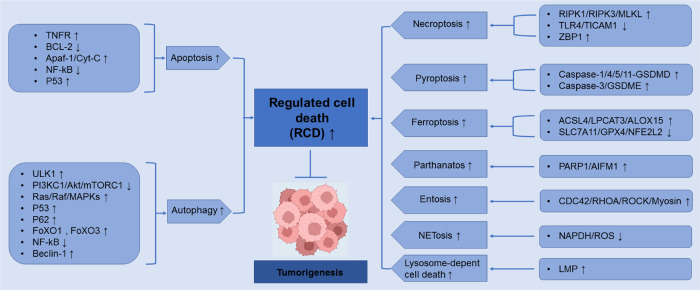
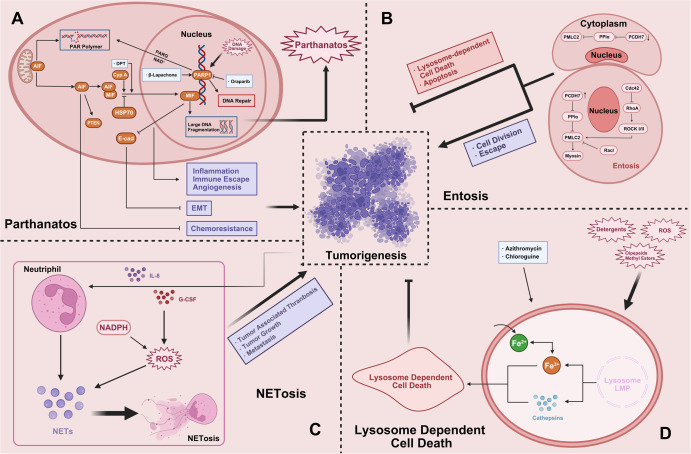
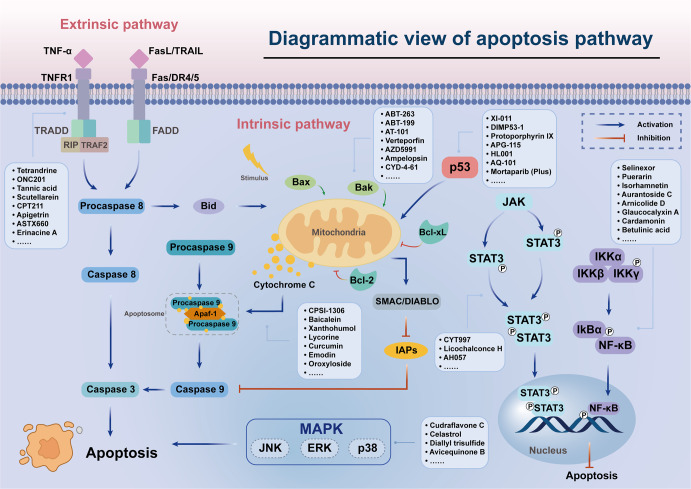
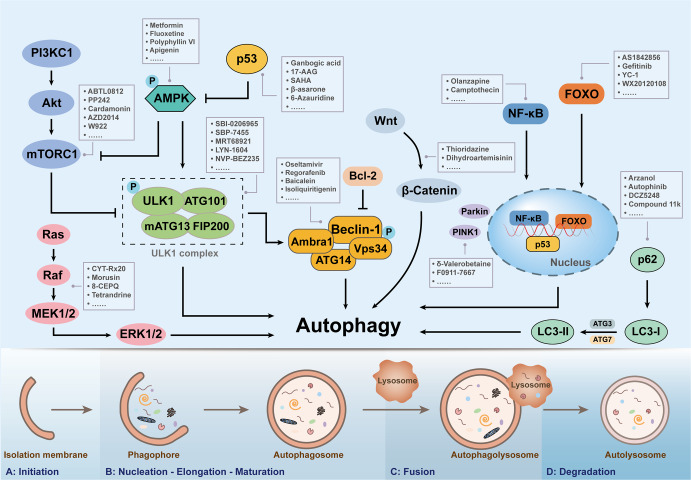
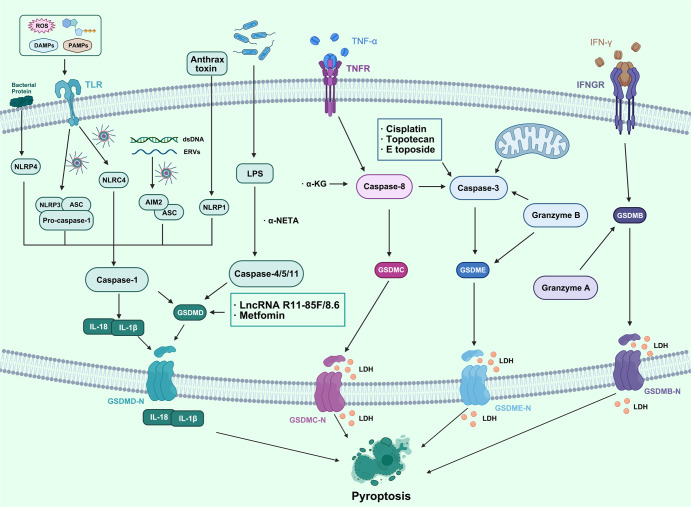
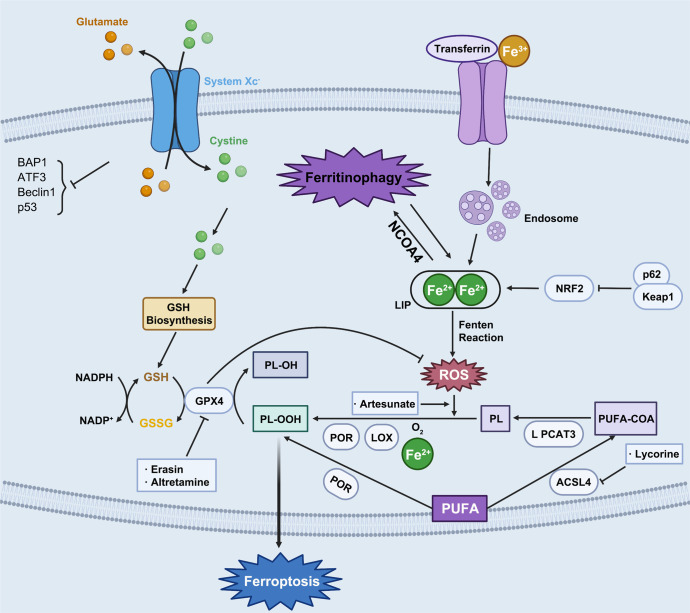
Regulated cell death (RCD), also well-known as programmed cell death (PCD), refers to the form of cell death that can be regulated by a variety of biomacromolecules, which is distinctive from accidental cell death (ACD). Accumulating evidence has revealed that RCD subroutines are the key features of tumorigenesis, which may ultimately lead to the establishment of different potential therapeutic strategies. Hitherto, targeting the subroutines of RCD with pharmacological small-molecule compounds has been emerging as a promising therapeutic avenue, which has rapidly progressed in many types of human cancers. Thus, in this review, we focus on summarizing not only the key apoptotic and autophagy-dependent cell death signaling pathways, but the crucial pathways of other RCD subroutines, including necroptosis, pyroptosis, ferroptosis, parthanatos, entosis, NETosis and lysosome-dependent cell death (LCD) in cancer. Moreover, we further discuss the current situation of several small-molecule compounds targeting the different RCD subroutines to improve cancer treatment, such as single-target, dual or multiple-target small-molecule compounds, drug combinations, and some new emerging therapeutic strategies that would together shed new light on future directions to attack cancer cell vulnerabilities with small-molecule drugs targeting RCD for therapeutic purposes.
调控细胞死亡(RCD),又称程序性细胞死亡(PCD),是指能够被多种生物大分子调控的细胞死亡形式,与意外细胞死亡(ACD)不同。越来越多的证据表明,RCD 子程序是肿瘤发生的关键特征,这可能最终导致不同潜在治疗策略的建立。迄今为止,用药理小分子化合物靶向 RCD 子程序已成为一种很有前途的治疗途径,在许多类型的人类癌症中迅速发展。因此,在这篇综述中,我们不仅重点总结了关键的凋亡和自噬依赖性细胞死亡信号通路,还总结了其他 RCD 子程序的关键途径,包括坏死性凋亡、细胞焦亡、铁死亡、PARthanatos、entosis、NETosis 和溶酶体依赖性细胞死亡(LCD)在癌症中的作用。此外,我们进一步讨论了几种针对不同 RCD 子程序的小分子化合物的现状,以改善癌症治疗,如单靶点、双靶点或多靶点小分子化合物、药物组合,以及一些新出现的治疗策略,这些策略将共同为未来以小分子药物靶向 RCD 治疗癌症的方向提供新的思路。