Department of Mechanical Engineering, Yonsei University, 50 Yonsei-ro, Seodaemun-gu, Seoul, 03722, Republic of Korea.
Joint Reconstruction Center, Department of Orthopaedic Surgery, Yonsei Sarang Hospital, 10 Hyoryeong-ro, Seocho-gu, Seoul, 06698, Republic of Korea.
J Orthop Surg Res. 2020 Feb 21;15(1):63. doi: 10.1186/s13018-020-01597-7.
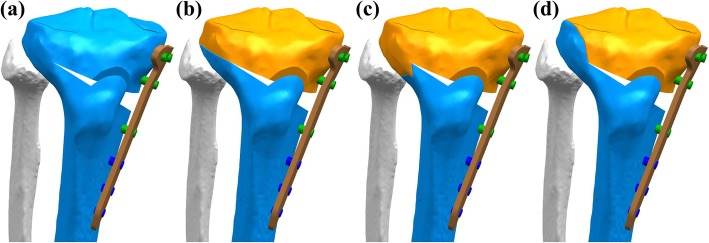
This study aimed to investigate the biomechanical effect on the Takeuchi classification of lateral hinge fracture (LHF) after an opening wedge high tibial osteotomy (HTO).
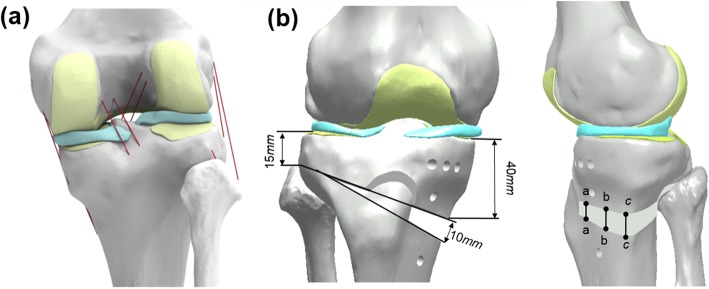
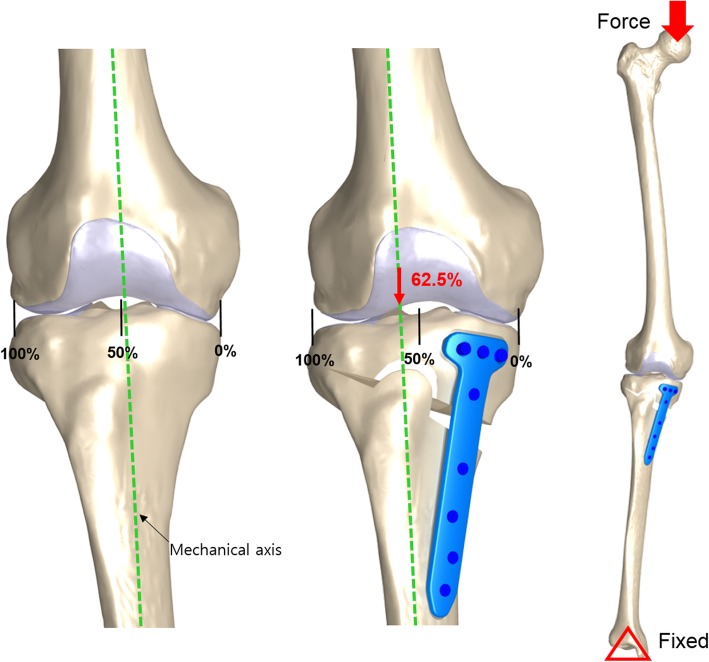
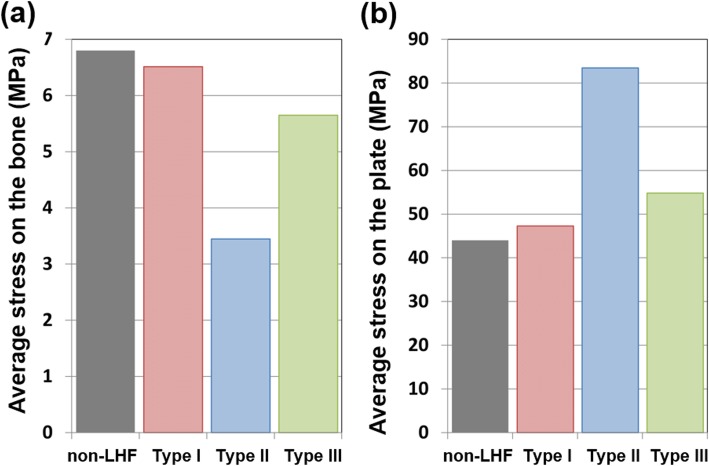
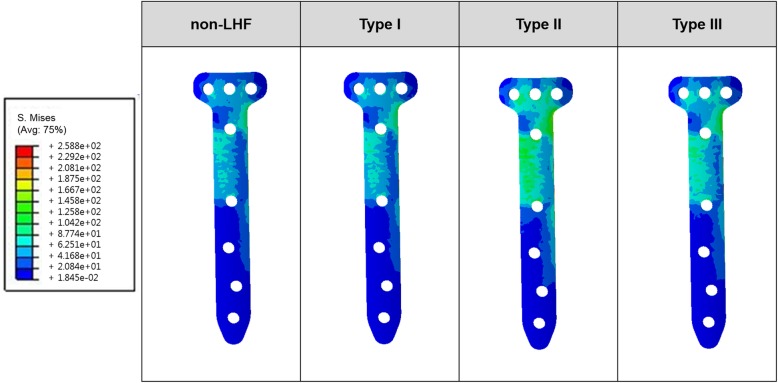
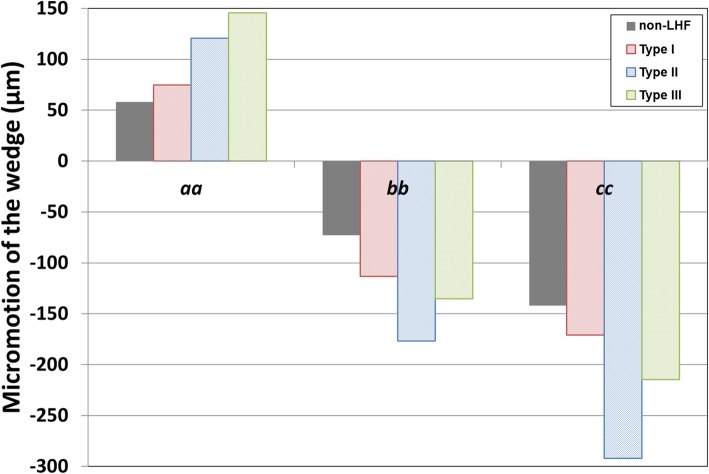
We performed an FE simulation for type I, type II, and type III in accordance with the Takeuchi classification. The stresses on the bone and plate, wedge micromotion, and forces on ligaments were evaluated to investigate stress-shielding effect, plate stability, and biomechanical change, respectively, in three different types of LHF HTO and with the HTO without LHF model (non-LHF) models.
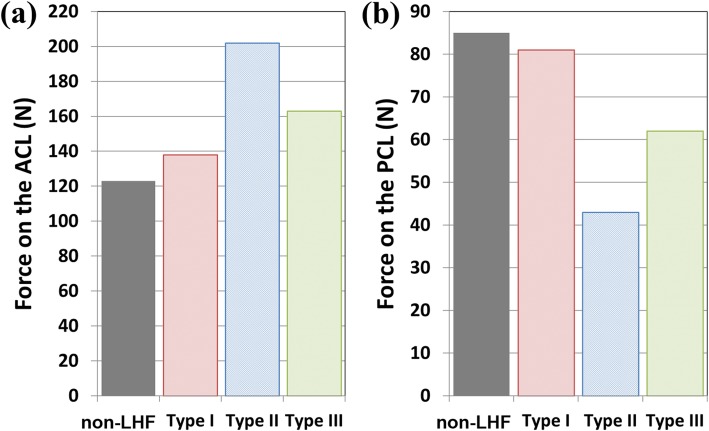
The greatest stress-shielding effect and wedge micromotion were observed in type II LHF (distal portion fracture). The type II and type III (lateral plateau fracture) models exhibited a reduction in ACL force and an increase in PCL force compared with the HTO without LHF model. However, the type I (osteotomy line fracture) and HTO without LHF models did not exhibit a significant biomechanical effect. This study demonstrates that Takeuchi type II and type III LHF models provide unstable structures compared with the type I and HTO without LHF models.
HTO should be performed while considering a medial opening wedge HTO to avoid a type II and type III LHF as a potential complication.
本研究旨在探讨外侧铰链骨折(LHF)Takuchi 分类在胫骨高位截骨术(HTO)中的生物力学影响。
我们根据 Takuchi 分类对 I 型、II 型和 III 型进行了有限元模拟。评估了骨和板的应力、楔形微运动以及韧带的力,分别研究了三种不同类型的 LHF HTO 和无 LHF HTO 模型(非 LHF)的应力屏蔽效应、板稳定性和生物力学变化。
II 型 LHF(远段骨折)的最大应力屏蔽效应和楔形微运动。与非 LHF HTO 模型相比,II 型和 III 型(外侧平台骨折)模型的 ACL 力减小,PCL 力增大。然而,I 型(截骨线骨折)和非 LHF HTO 模型没有表现出明显的生物力学效应。本研究表明,与 I 型和非 LHF HTO 模型相比,Takuchi Ⅱ型和 III 型 LHF 模型提供了不稳定的结构。
HTO 应考虑内侧开口楔形截骨术,以避免 II 型和 III 型 LHF 作为潜在的并发症。