Department of Neurobiology, Stanford University, United States.
Department of Chemistry and Henry Eyring Center for Cell & Genome Sciences, University of Utah, United States.
Curr Opin Biotechnol. 2020 Jun;63:157-166. doi: 10.1016/j.copbio.2020.01.001. Epub 2020 Feb 19.
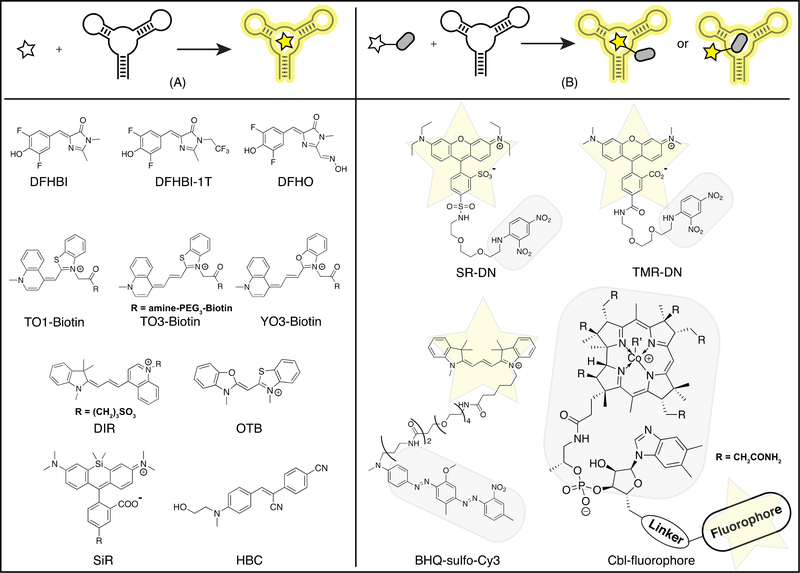
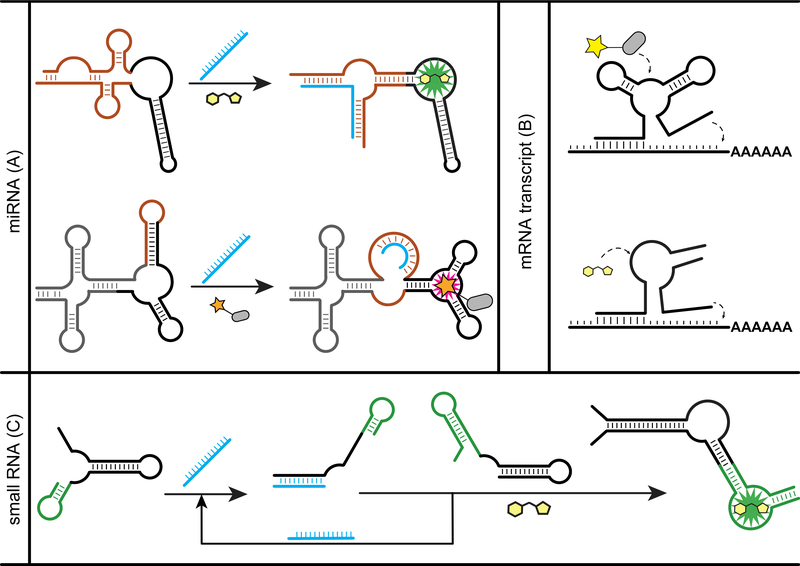
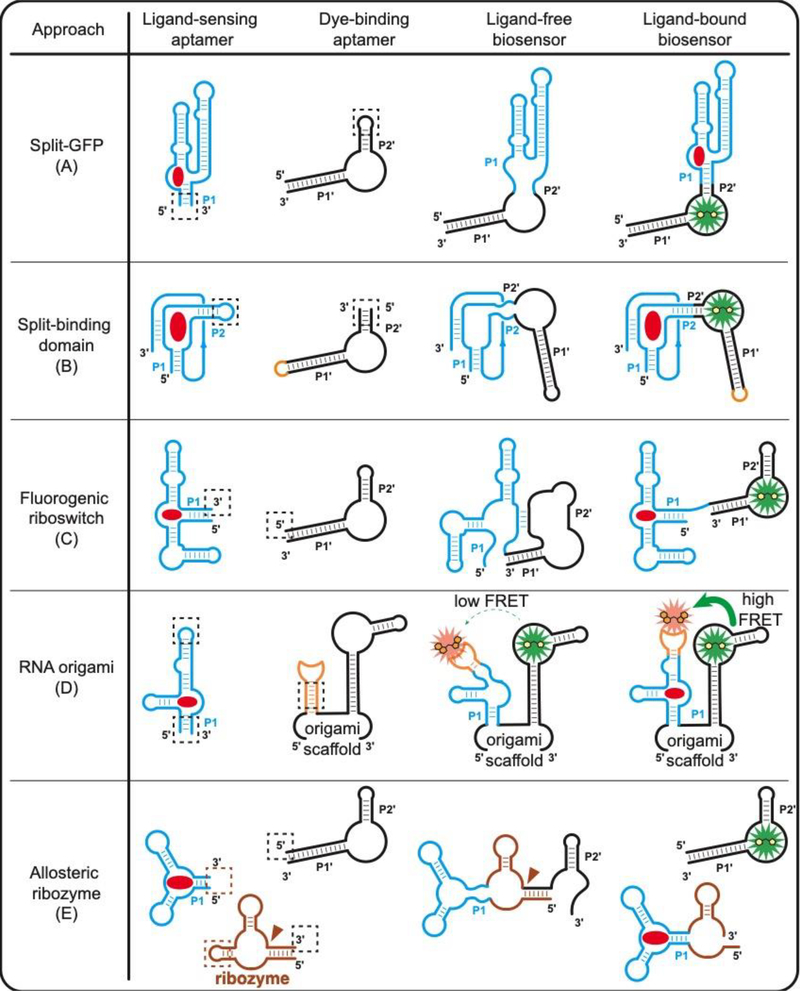
Genetically encodable fluorescent biosensors provide spatiotemporal information on their target analytes in a label-free manner, which has enabled the study of cell biology and signaling in living cells. Over the past three decades, fueled by the development of a wide palette of fluorescent proteins, protein-based fluorescent biosensors against a broad array of targets have been developed. Recently, with the development of fluorogenic RNA aptamer-dye pairs that function in live cells, RNA-based fluorescent (RBF) biosensors have emerged as a complementary class of biosensors. Here we review the current state-of-the-art for fluorogenic RNA aptamers and RBF biosensors for imaging small molecules and RNAs, and highlight some emerging opportunities.
基因可编码的荧光生物传感器以无标记的方式提供其靶分析物的时空信息,这使得人们能够在活细胞中研究细胞生物学和信号转导。在过去的三十年中,得益于一系列荧光蛋白的发展,针对广泛靶标的基于蛋白质的荧光生物传感器已经得到了发展。最近,随着在活细胞中起作用的荧光 RNA 适体-染料对的发展,基于 RNA 的荧光(RBF)生物传感器已成为一类互补的生物传感器。在这里,我们回顾了用于小分子和 RNA 成像的荧光 RNA 适体和 RBF 生物传感器的最新技术,并强调了一些新出现的机会。