Shallcross Laura, Lorencatto Fabiana, Fuller Christopher, Tarrant Carolyn, West Jonathan, Traina Rosanna, Smith Catherine, Forbes Gillian, Crayton Elise, Rockenschaub Patrick, Dutey-Magni Peter, Richardson Emma, Fragaszy Ellen, Michie Susan, Hayward Andrew
University College London, London, UK.
University of Leicester, Leicester, UK.
Wellcome Open Res. 2020 Jan 14;5:8. doi: 10.12688/wellcomeopenres.15554.1. eCollection 2020.
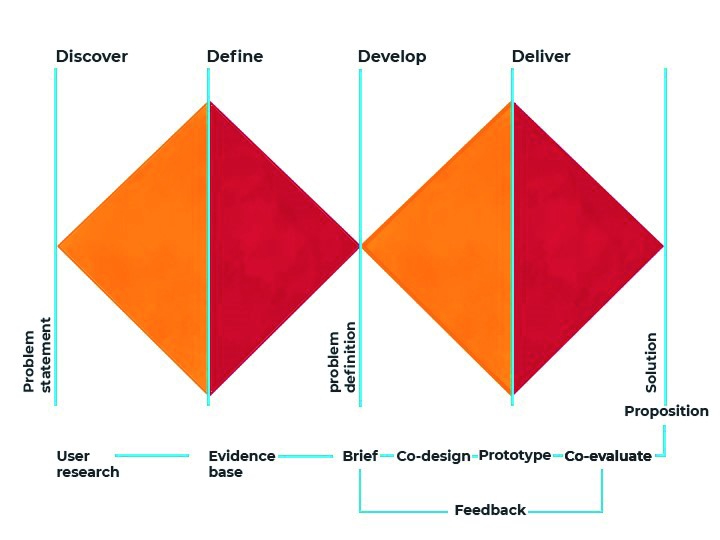
Behaviour change is key to combating antimicrobial resistance. Antimicrobial stewardship (AMS) programmes promote and monitor judicious antibiotic use, but there is little consideration of behavioural and social influences when designing interventions. We outline a programme of research which aims to co-design AMS interventions across healthcare settings, by integrating data-science, evidence- synthesis, behavioural-science and user-centred design. The project includes three work-packages (WP): Identifying patterns of prescribing): analysis of electronic health-records to identify prescribing patterns in care-homes, primary-care, and secondary-care. An online survey will investigate consulting/antibiotic-seeking behaviours in members of the public. (Barriers and enablers to prescribing in practice): Semi-structured interviews and observations of practice to identify barriers/enablers to prescribing, influences on antibiotic-seeking behaviour and the social/contextual factors underpinning prescribing. Systematic reviews of AMS interventions to identify the components of existing interventions associated with effectiveness. Design workshops to identify constraints influencing the form of the intervention. Interviews conducted with healthcare-professionals in community pharmacies, care-homes, primary-, and secondary-care and with members of the public. Topic guides and analysis based on the Theoretical Domains Framework. Observations conducted in care-homes, primary and secondary-care with analysis drawing on grounded theory. Systematic reviews of interventions in each setting will be conducted, and interventions described using the Behaviour Change Technique taxonomy v1. Design workshops in care-homes, primary-, and secondary care. (Co-production of interventions and dissemination). Findings will be integrated to identify opportunities for interventions, and assess whether existing interventions target influences on antibiotic use. Stakeholder panels will be assembled to co-design and refine interventions in each setting, applying the Affordability, Practicability, Effectiveness, Acceptability, Side-effects and Equity (APEASE) criteria to prioritise candidate interventions. Outputs will inform development of new AMS interventions and/or optimisation of existing interventions. We will also develop web-resources for stakeholders providing analyses of antibiotic prescribing patterns, prescribing behaviours, and evidence reviews.
行为改变是对抗抗菌药物耐药性的关键。抗菌药物管理(AMS)计划促进并监测抗生素的合理使用,但在设计干预措施时很少考虑行为和社会影响。我们概述了一项研究计划,旨在通过整合数据科学、证据综合、行为科学和以用户为中心的设计,跨医疗环境共同设计AMS干预措施。该项目包括三个工作包(WP):(确定处方模式):分析电子健康记录,以确定养老院、初级保健和二级保健中的处方模式。一项在线调查将调查公众的咨询/寻求抗生素行为。(实践中处方的障碍和促进因素):进行半结构化访谈并观察实践,以确定处方的障碍/促进因素、对寻求抗生素行为的影响以及处方背后的社会/背景因素。对AMS干预措施进行系统评价,以确定现有干预措施中与有效性相关的组成部分。设计研讨会,以确定影响干预形式的制约因素。与社区药房、养老院、初级和二级保健机构的医疗专业人员以及公众进行访谈。基于理论领域框架的主题指南和分析。在养老院以及初级和二级保健机构进行观察,并运用扎根理论进行分析。将对每个环境中的干预措施进行系统评价,并使用行为改变技术分类法v1描述干预措施。在养老院、初级和二级保健机构举办设计研讨会。(干预措施的共同制定和传播)。研究结果将被整合,以确定干预机会,并评估现有干预措施是否针对抗生素使用的影响因素。将组建利益相关者小组,在每个环境中共同设计和完善干预措施,应用可负担性、实用性、有效性、可接受性、副作用和公平性(APEASE)标准对候选干预措施进行优先排序。研究成果将为新的AMS干预措施的开发和/或现有干预措施的优化提供参考。我们还将为利益相关者开发网络资源,提供抗生素处方模式、处方行为分析以及证据综述。