College of Life Science, Sichuan Agricultural University, Ya'an 625014, China.
College of Resources, Sichuan Agricultural University, Chengdu 611130, China.
Int J Mol Sci. 2020 Feb 19;21(4):1390. doi: 10.3390/ijms21041390.
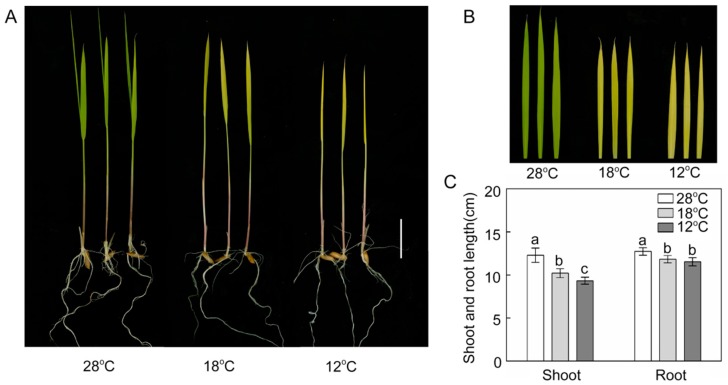
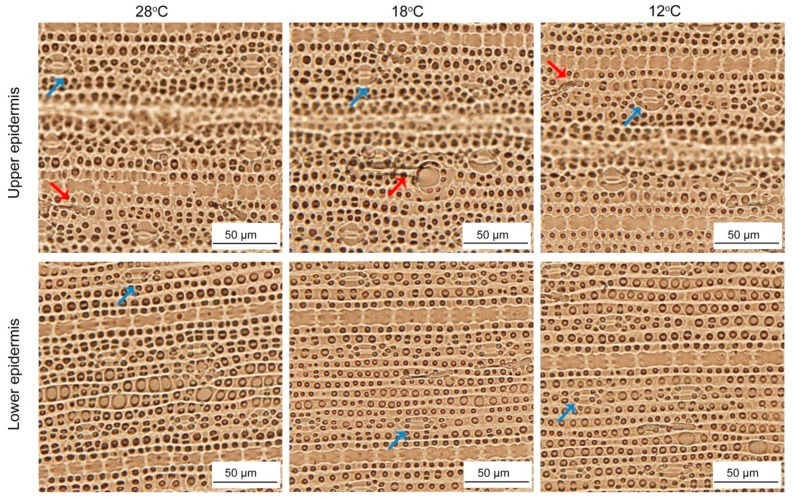
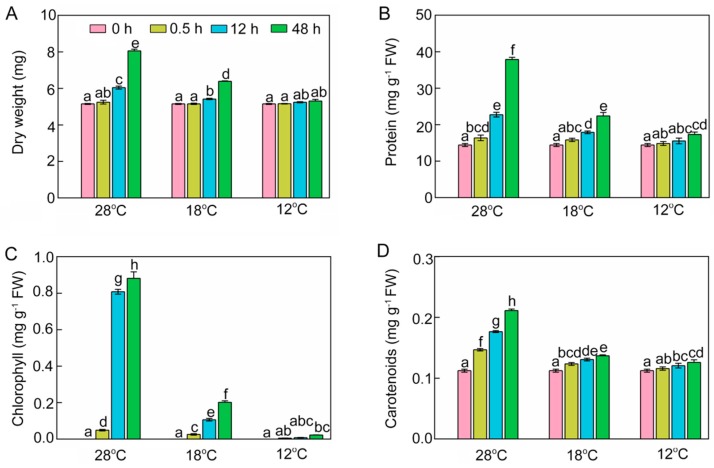
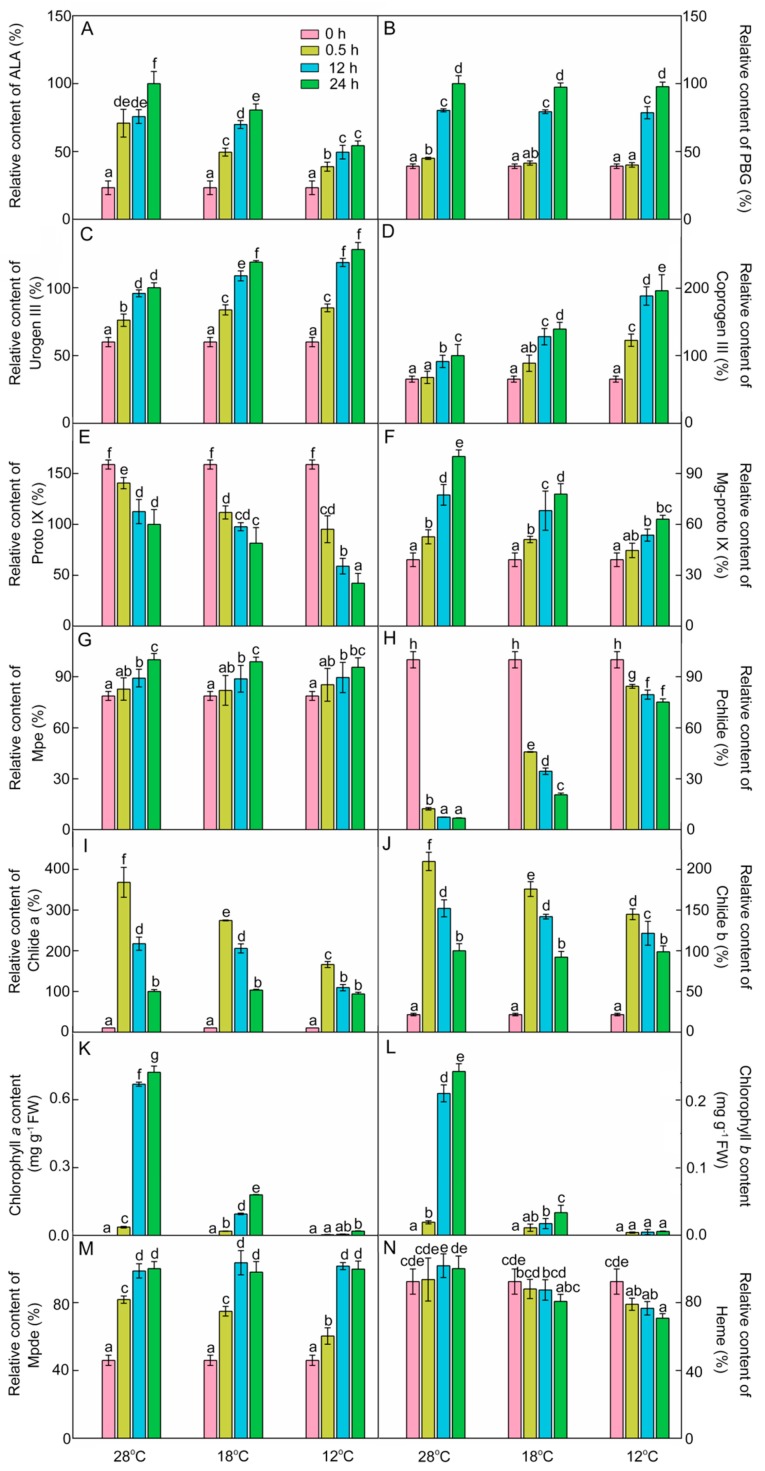
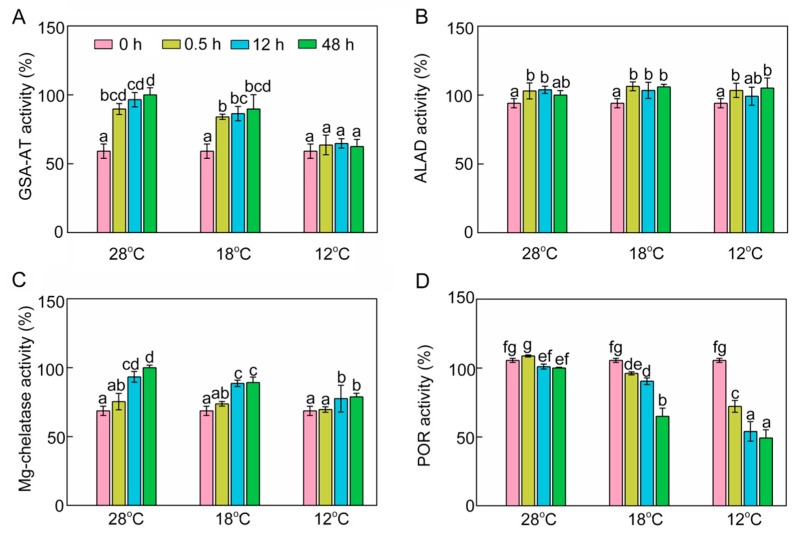
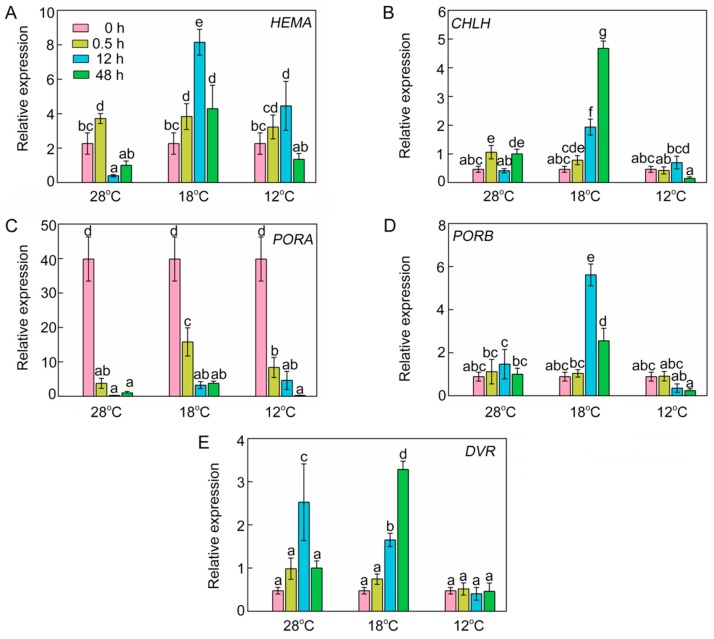
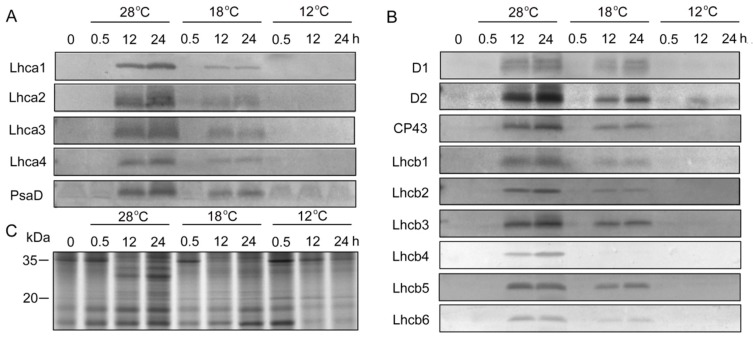
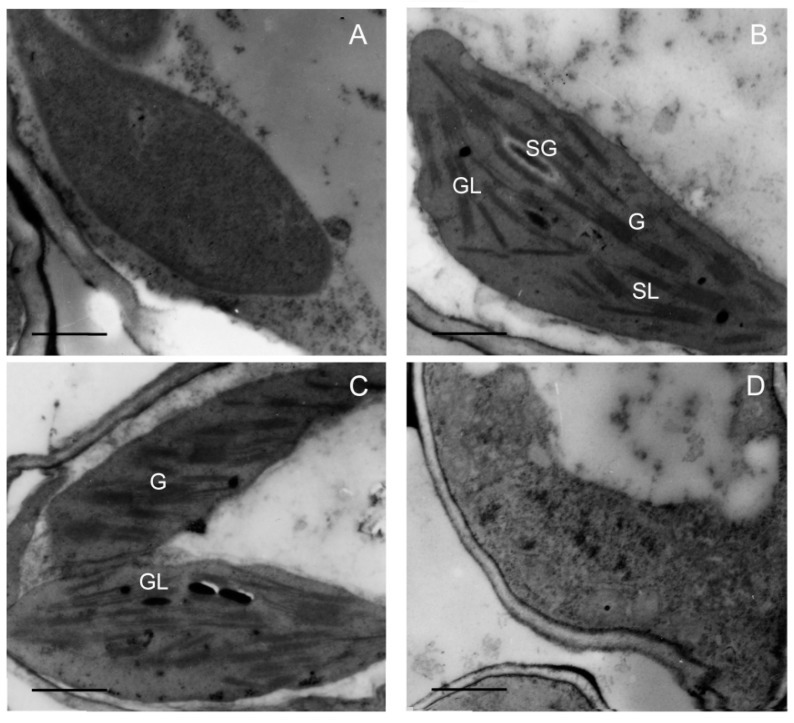
Rice ( L.) frequently suffers in late spring from severe damage due to cold spells, which causes the block of chlorophyll biosynthesis during early rice seedling greening. However, the inhibitory mechanism by which this occurs is still unclear. To explore the responsive mechanism of rice seedlings to low temperatures during greening, the effects of chilling stress on chlorophyll biosynthesis and plastid development were studied in rice seedlings. Chlorophyll biosynthesis was obviously inhibited and chlorophyll accumulation declined under low temperatures during greening. The decrease in chlorophyll synthesis was due to the inhibited synthesis of δ-aminolevulinic acid (ALA) and the suppression of conversion from protochlorophyllide (Pchlide) into chlorophylls (Chls). Meanwhile, the activities of glutamate-1-semialdehyde transaminase (GSA-AT), Mg-chelatase, and protochlorophyllide oxidoreductase (POR) were downregulated under low temperatures. Further investigations showed that chloroplasts at 18 °C had loose granum lamellae, while the thylakoid and lamellar structures of grana could hardly develop at 12 °C after 48 h of greening. Additionally, photosystem II (PSII) and photosystem I (PSI) proteins obviously declined in the stressed seedlings, to the point that the PSII and PSI proteins could hardly be detected after 48 h of greening at 12 °C. Furthermore, the accumulation of reactive oxygen species (ROS) and malondialdehyde (MDA) and cell death were all induced by low temperature. Chilling stress had no effect on the development of epidermis cells, but the stomata were smaller under chilling stress than those at 28 °C. Taken together, our study promotes more comprehensive understanding in that chilling could inhibit chlorophyll biosynthesis and cause oxidative damages during greening.
水稻(L.)在晚春经常遭受严寒天气的严重破坏,导致早期水稻幼苗变绿过程中叶绿素生物合成受阻。然而,其发生的抑制机制尚不清楚。为了探索水稻幼苗变绿过程中对低温的响应机制,研究了低温胁迫对水稻幼苗叶绿素生物合成和质体发育的影响。在变绿过程中,低温明显抑制叶绿素合成,叶绿素积累减少。叶绿素合成的减少是由于δ-氨基酮戊酸(ALA)合成受阻和原卟啉原(Pchlide)向叶绿素(Chls)转化受到抑制。同时,谷氨酸-1-半醛转氨酶(GSA-AT)、Mg-螯合酶和原卟啉原氧化还原酶(POR)的活性在低温下下调。进一步的研究表明,在 18°C 下,叶绿体的颗粒板层较松散,而在 12°C 下经过 48 小时的变绿后,类囊体和板层结构几乎无法发育。此外,受胁迫的幼苗中 PSII 和 PSI 蛋白明显下降,在 12°C 下变绿 48 小时后,PSII 和 PSI 蛋白几乎无法检测到。此外,低温诱导活性氧(ROS)和丙二醛(MDA)的积累和细胞死亡。低温对表皮细胞的发育没有影响,但在低温下气孔比在 28°C 下更小。综上所述,我们的研究促进了更全面的理解,即低温可以抑制叶绿素的生物合成,并在变绿过程中造成氧化损伤。