Pharmacognosy Research Group, Department of Medicinal Chemistry-Faculty of Pharmacy, Uppsala University, BMC-Biomedical Center, Box 574, S-751 23 Uppsala, Sweden.
Department of Pharmaceutical Biology/Pharmacognosy, Institute of Pharmacy, University of Halle-Wittenberg, Hoher Weg 8, DE 06120 Halle (Saale), Germany.
Molecules. 2020 Feb 20;25(4):945. doi: 10.3390/molecules25040945.
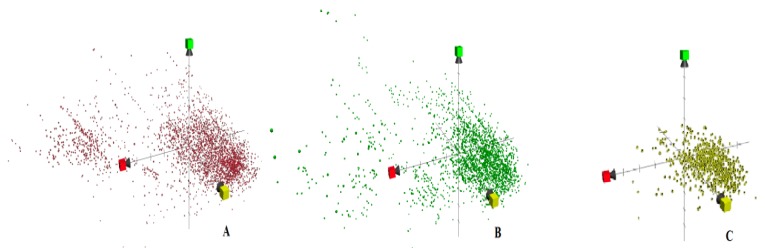
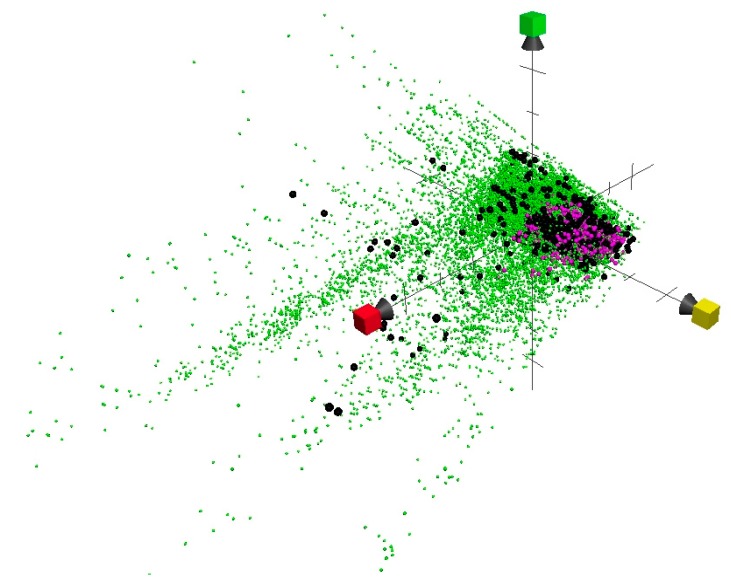
Most of the targeted discoveries in tuberculosis research have covered previously explored chemical structures but neglected physiochemical properties. Until now, no efficient prediction tools have been developed to discriminate the novelty of screened compounds at early stages. To overcome this deficit, a drastic novel approach must include physicochemical properties filters provided by Chemical Global Positioning System-Natural Product analysis (ChemGPS-NP). Three different screening schemes GSK, GVKBio, and NIAID provided 776, 2880, and 3779 compounds respectively and were evaluated based on their physicochemical properties and thereby proposed as deduction examples. Charting the physiochemical property spaces of these sets identified the merits and demerits of each screening scheme by simply observing the distribution over the chemical property space. We found that GSK screening set was confined to a certain space, losing potentially active compounds when compared with an in-house constructed 459 highly active compounds (active set), while the GVKBio and NIAID screening schemes were evenly distributed through space. The latter two sets had the advantage, as they have covered a larger space and presented compounds with additional variety of properties and activities. The in-house active set was cross-validated with MycPermCheck and SmartsFilter to be able to identify priority compounds. The model demonstrated undiscovered spaces when matched with Maybridge drug-like space, providing further potential targets. These undiscovered spaces should be considered in any future investigations. We have included the most active compounds along with permeability and toxicity filters as supplemented material.
大多数结核病研究中的靶向发现都涵盖了以前探索过的化学结构,但忽略了物理化学性质。到目前为止,还没有开发出有效的预测工具来区分早期筛选化合物的新颖性。为了克服这一不足,必须采用包括化学全球定位系统-天然产物分析(ChemGPS-NP)提供的物理化学性质过滤器在内的全新方法。三个不同的筛选方案GSK、GVKBio 和 NIAID 分别提供了 776、2880 和 3779 种化合物,并根据其物理化学性质进行了评估,并提出了作为推理实例。这些集合的物理化学性质空间的图表通过简单地观察化学性质空间中的分布,确定了每个筛选方案的优缺点。我们发现,与内部构建的 459 种高活性化合物(活性集)相比,GSK 筛选集被限制在一定的空间内,可能会失去潜在的活性化合物,而 GVKBio 和 NIAID 筛选方案在空间中均匀分布。后两个方案具有优势,因为它们涵盖了更大的空间,并提供了具有额外多样性的性质和活性的化合物。内部的活性集与 MycPermCheck 和 SmartsFilter 交叉验证,以识别优先化合物。该模型与 Maybridge 类药性空间匹配时展示了未被发现的空间,提供了进一步的潜在目标。在任何未来的研究中都应该考虑这些未被发现的空间。我们已经包含了最活跃的化合物以及渗透性和毒性过滤器作为补充材料。