Department of Epidemiology and Biostatistics, School of Health Sciences, Wuhan University, Wuhan 430071, China.
Department of Zoology, University of Gujrat, Gujrat 50700, Pakistan.
Int J Environ Res Public Health. 2020 Feb 20;17(4):1367. doi: 10.3390/ijerph17041367.
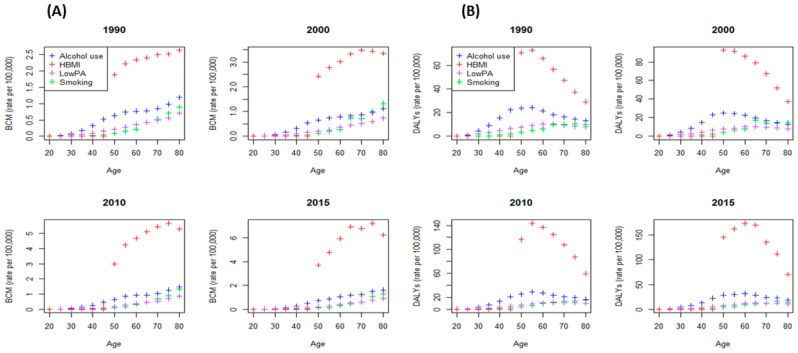
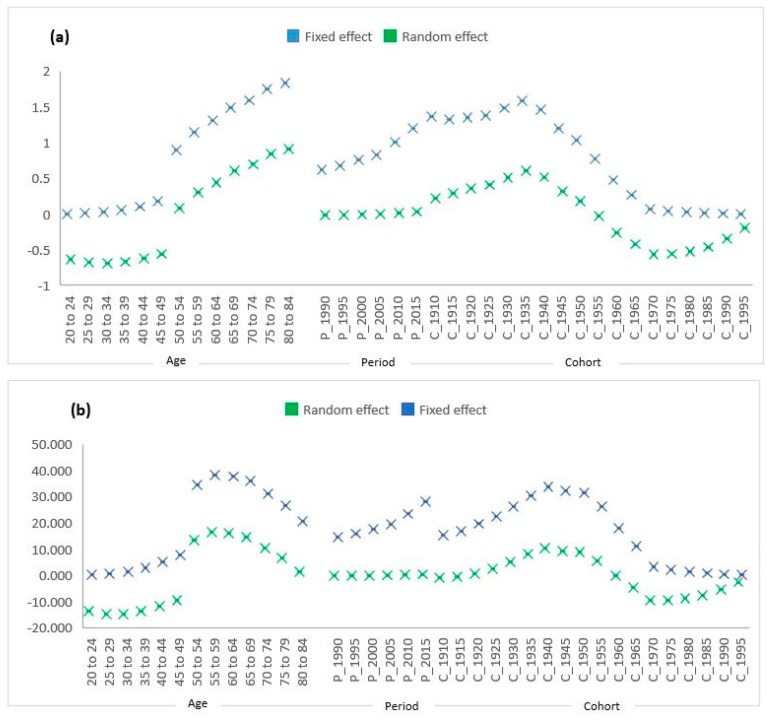
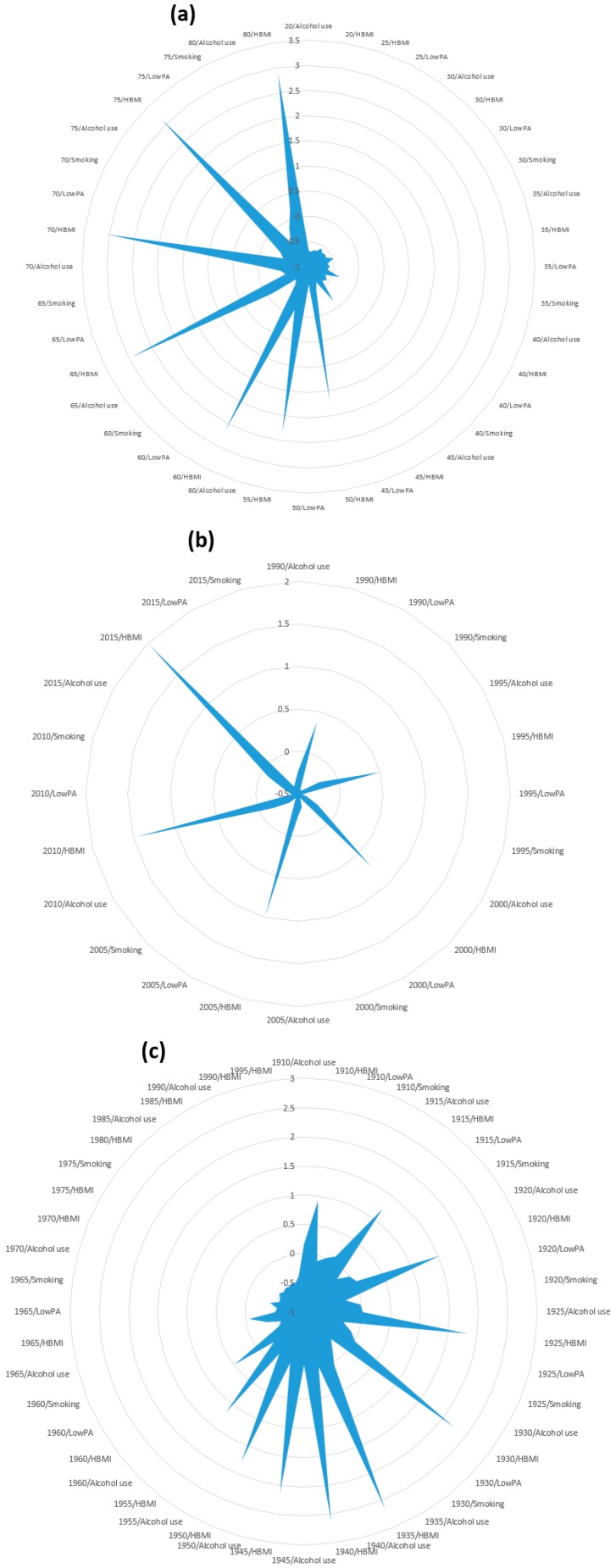
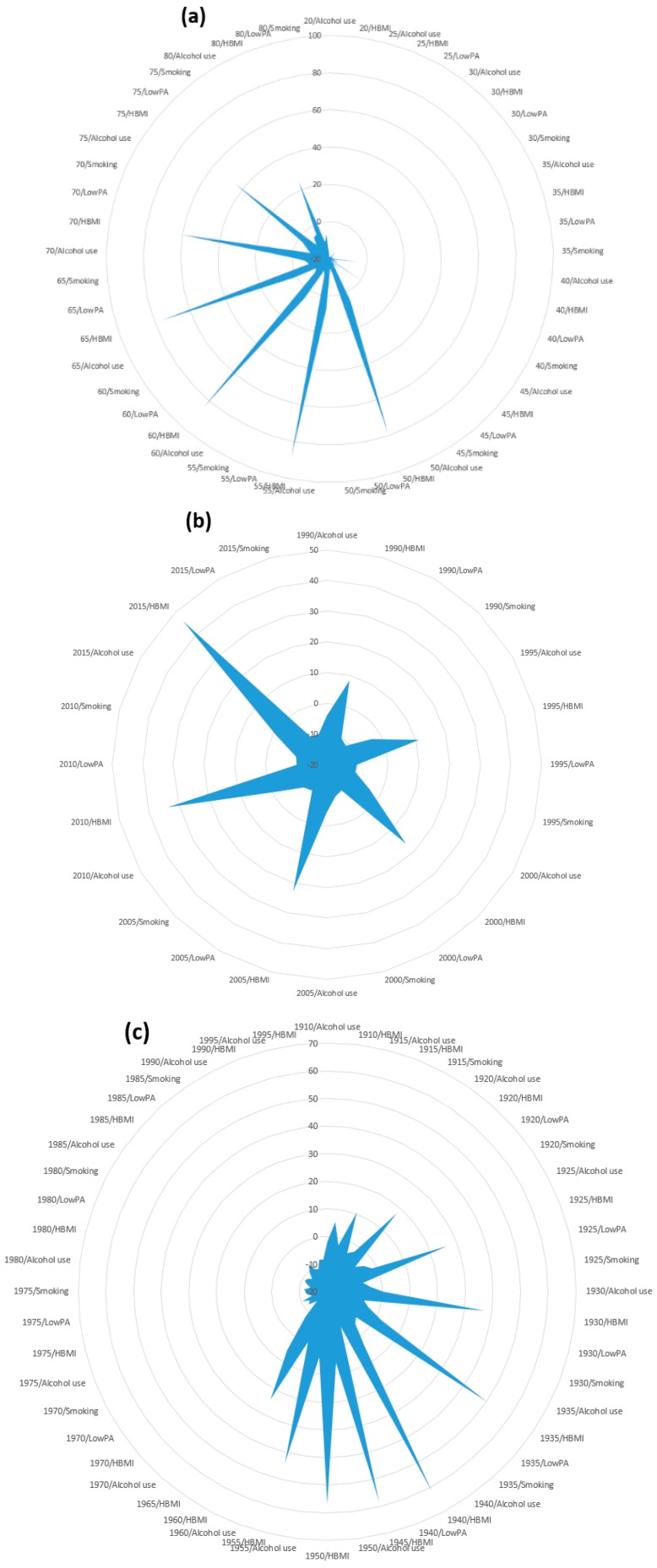
Limited studies quantified the age, period, and cohort effects attributable to different risk factors on mortality rates (MRs) and disability-adjusted life years (DALYs) due to breast cancer among Chinese women. We used data from the Global Burden of Disease Study (GBD) in 2017. Mixed-effect and hierarchical age-period-cohort (HAPC) models were used to assess explicit and implicit fluctuations in MRs and DALYs attributable to different breast cancer associated risk factors. As the only risk factor, high body mass index (HBMI) showed continuously increasing trends in MRs and DALYs across ages, periods, and cohorts. Age, recent periods (2010-2015), and risk factor HBMI showed significant positive effect on MRs and DALYs ( < 0.05). Moreover, we reported significant interaction effects of older age and period in recent years in addition to the interplay of older age and risk factor HBMI on MRs and DALYs. Increased age and obesity contribute to substantially raised breast cancer MRs and DALYs in China and around the globe. These discoveries shed light on protective health policies and provision of healthy lifestyle for improving the subsequent breast cancer morbidity and mortality for China, as well as other related Asian regions that are presently facing the same public health challenges.
有限的研究量化了归因于不同危险因素的年龄、时期和队列效应对中国女性乳腺癌死亡率 (MR) 和伤残调整生命年 (DALY) 的影响。我们使用了 2017 年全球疾病负担研究 (GBD) 的数据。混合效应和分层年龄-时期-队列 (HAPC) 模型用于评估归因于不同乳腺癌相关危险因素的 MR 和 DALY 的明确和隐含波动。作为唯一的危险因素,高身体质量指数 (HBMI) 在年龄、时期和队列方面的 MR 和 DALY 呈持续上升趋势。年龄、近期时期 (2010-2015 年) 和危险因素 HBMI 对 MR 和 DALY 有显著的正向影响 (<0.05)。此外,我们还报告了在近年来的高龄和近期时期之间存在显著的交互作用效应,以及高龄和危险因素 HBMI 对 MR 和 DALY 的相互作用效应。年龄的增长和肥胖导致中国乃至全球乳腺癌的 MR 和 DALY 显著上升。这些发现为制定保护健康的政策和提供健康的生活方式提供了启示,以改善中国以及其他面临同样公共卫生挑战的亚洲相关地区的乳腺癌发病率和死亡率。