Polidori Carlo, Ballesteros Yolanda, Wurdack Mareike, Asís Josep Daniel, Tormos José, Baños-Picón Laura, Schmitt Thomas
Institute of Environmental Sciences (ICAM), University of Castilla La Mancha. Avda, Carlos III s/n, 45071 Toledo, Spain.
Zoology Unit, Faculty of Biology, University of Salamanca, 37071 Salamanca, Spain.
Insects. 2020 Feb 20;11(2):136. doi: 10.3390/insects11020136.
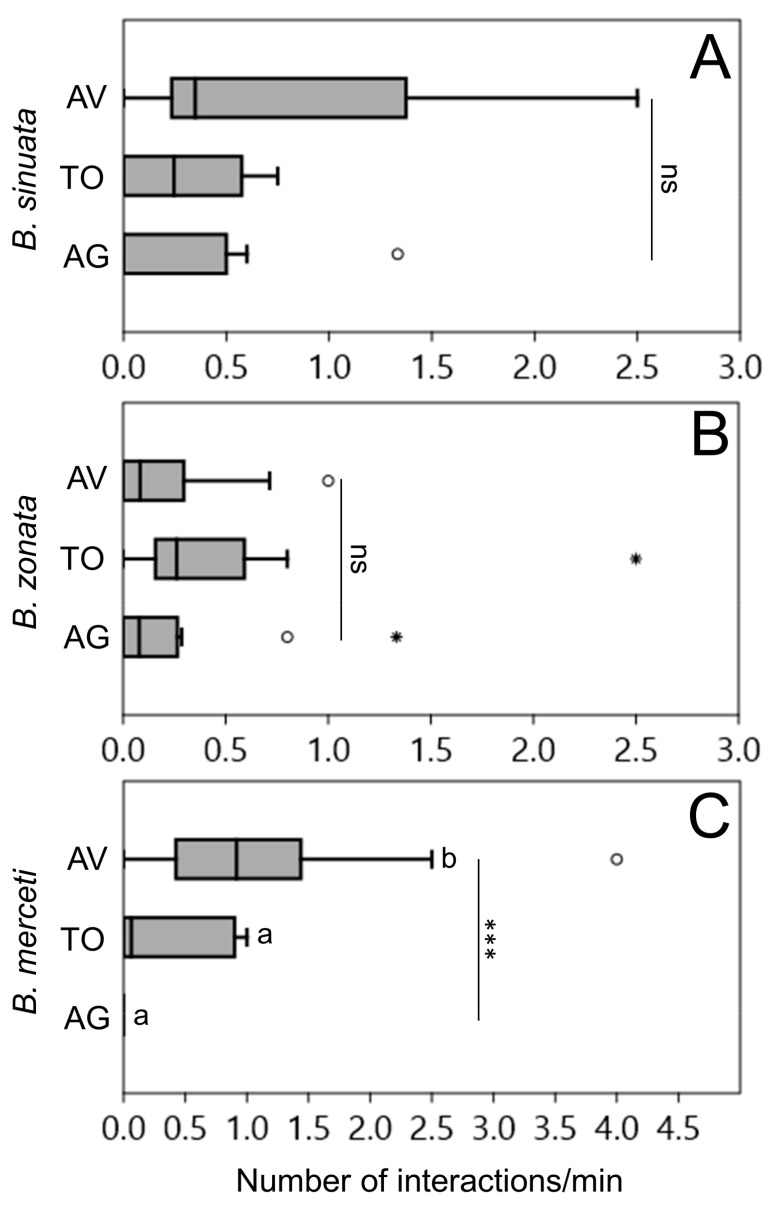
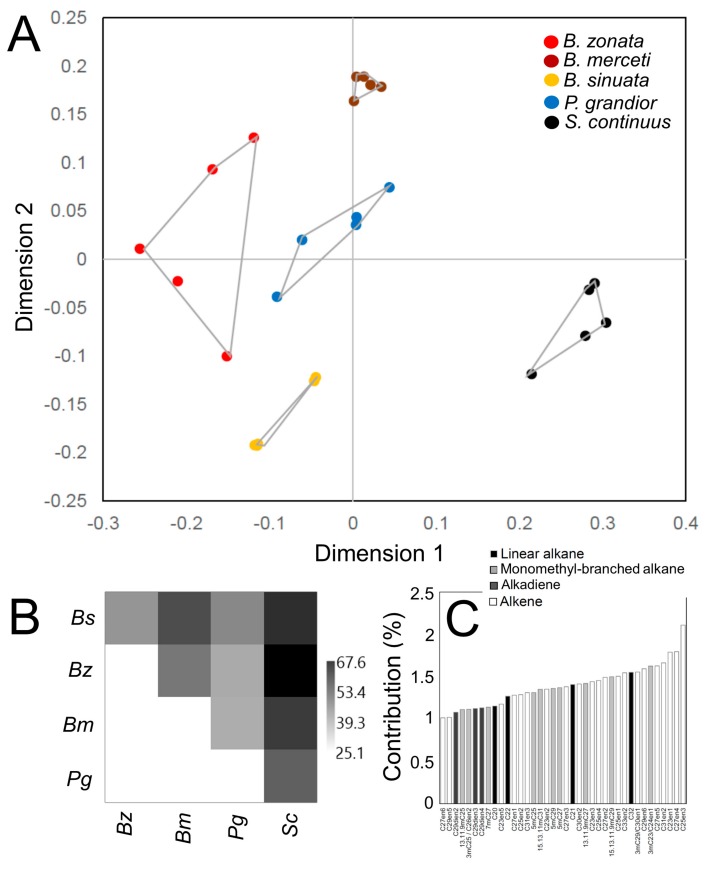
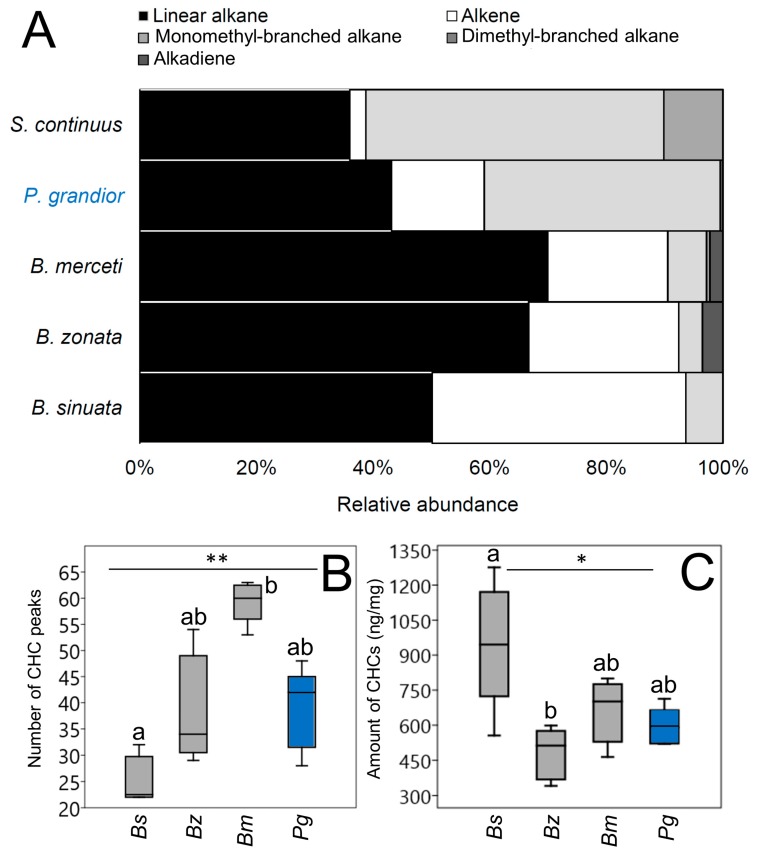
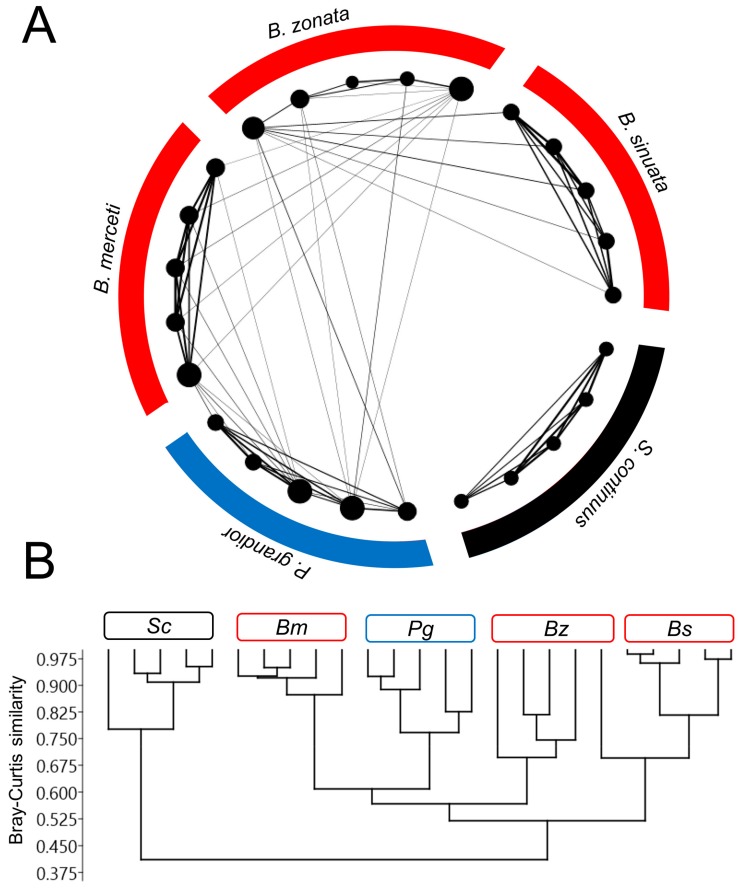
Insect brood parasites have evolved a variety of strategies to avoid being detected by their hosts. Few previous studies on cuckoo wasps (Hymenoptera: Chrysididae), which are natural enemies of solitary wasps and bees, have shown that chemical mimicry, i.e., the biosynthesis of cuticular hydrocarbons (CHC) that match the host profile, evolved in several species. However, mimicry was not detected in all investigated host-parasite pairs. The effect of host range as a second factor that may play a role in evolution of mimicry has been neglected, since all previous studies were carried out on host specialists and at nesting sites where only one host species occurred. Here we studied the cuckoo wasp , which attacks many digger wasp species of the genus (Hymenoptera: Crabronidae). Given its weak host specialization, may either locally adapt by increasing mimicry precision to only one of the sympatric hosts or it may evolve chemical insignificance by reducing the CHC profile complexity and/or CHCs amounts. At a study site harbouring three host species, we found evidence for a weak but appreciable chemical deception strategy in . Indeed, the CHC profile of was more similar to all sympatric species than to a non-host wasp species belonging to the same tribe as . Furthermore, CHC profile was equally distant to all the hosts' CHC profiles, thus not pointing towards local adaptation of the CHC profile to one of the hosts' profile. We conducted behavioural assays suggesting that such weak mimicry is sufficient to reduce host aggression, even in absence of an insignificance strategy, which was not detected. Hence, we finally concluded that host range may indeed play a role in shaping the level of chemical mimicry in cuckoo wasps.
昆虫巢寄生者进化出了多种策略来避免被宿主发现。此前针对杜鹃蜂(膜翅目:青蜂科)的研究较少,杜鹃蜂是独居黄蜂和蜜蜂的天敌,已有研究表明,化学拟态,即合成与宿主表皮碳氢化合物(CHC)特征相匹配的表皮碳氢化合物,在一些物种中已经进化出来。然而,并非在所有研究的宿主 - 寄生者对中都检测到了拟态现象。宿主范围作为可能在拟态进化中起作用的第二个因素,其影响一直被忽视,因为之前所有的研究都是针对宿主专一性物种,且研究地点只有一种宿主物种筑巢。在此,我们研究了一种攻击多种掘土蜂属(膜翅目:方头泥蜂科)黄蜂的杜鹃蜂。鉴于其较弱的宿主专一性,这种杜鹃蜂可能通过提高对同域分布的其中一种宿主的拟态精度进行局部适应,或者通过降低CHC特征的复杂性和/或CHC含量来进化出化学无显著性。在一个有三种宿主物种的研究地点,我们发现了这种杜鹃蜂存在一种微弱但明显的化学欺骗策略的证据。事实上,这种杜鹃蜂的CHC特征与所有同域分布的宿主物种相比,比与同属一个部落的非宿主黄蜂物种更为相似。此外,这种杜鹃蜂的CHC特征与所有宿主的CHC特征的距离相等,因此并不表明其CHC特征已局部适应于其中一种宿主的特征。我们进行的行为试验表明,即使没有检测到无显著性策略,这种微弱的拟态也足以降低宿主的攻击性。因此,我们最终得出结论,宿主范围确实可能在塑造杜鹃蜂化学拟态水平方面发挥作用。