Department of Clinical Oral Oncology, Nagasaki University Graduate School of Biomedical Sciences, 1-7-1 Sakamoto, Nagasaki, 852-8588, Japan.
Oral Care Center, Nagasaki University Hospital, 1-7-1 Sakamoto, Nagasaki, 852-8588, Japan.
BMC Oral Health. 2020 Feb 24;20(1):62. doi: 10.1186/s12903-020-1043-7.
Topical 0.12% chlorhexidine has been used widely to prevent ventilator-associated pneumonia in patients undergoing mechanical ventilation. However, it is not approved for mucosal application in Japan. The aims of this study were to investigate if topical povidone iodine (i) inhibits bacterial growth and (ii) disrupts the balance of the oral microbiota.
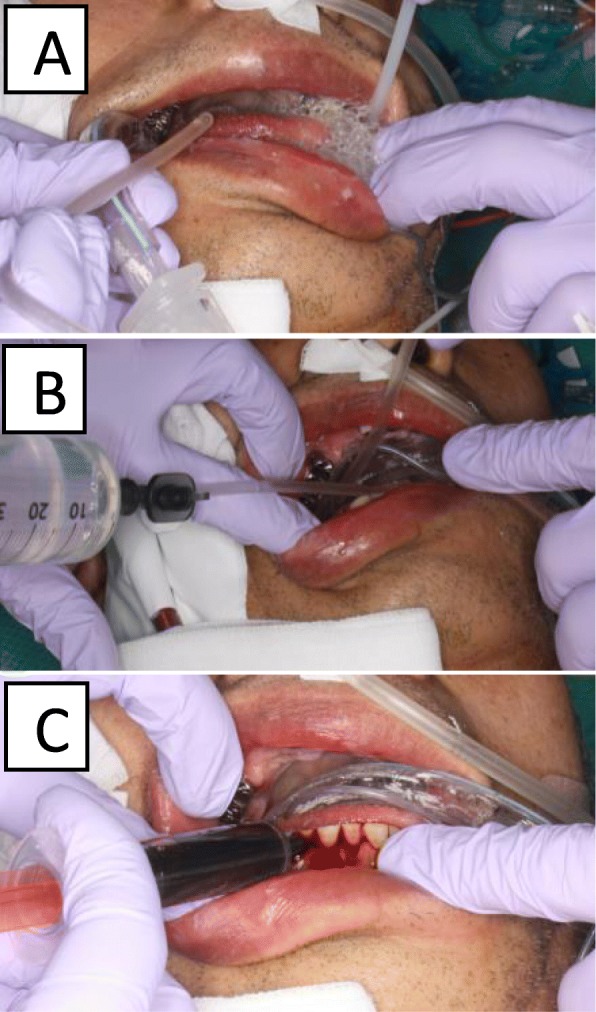
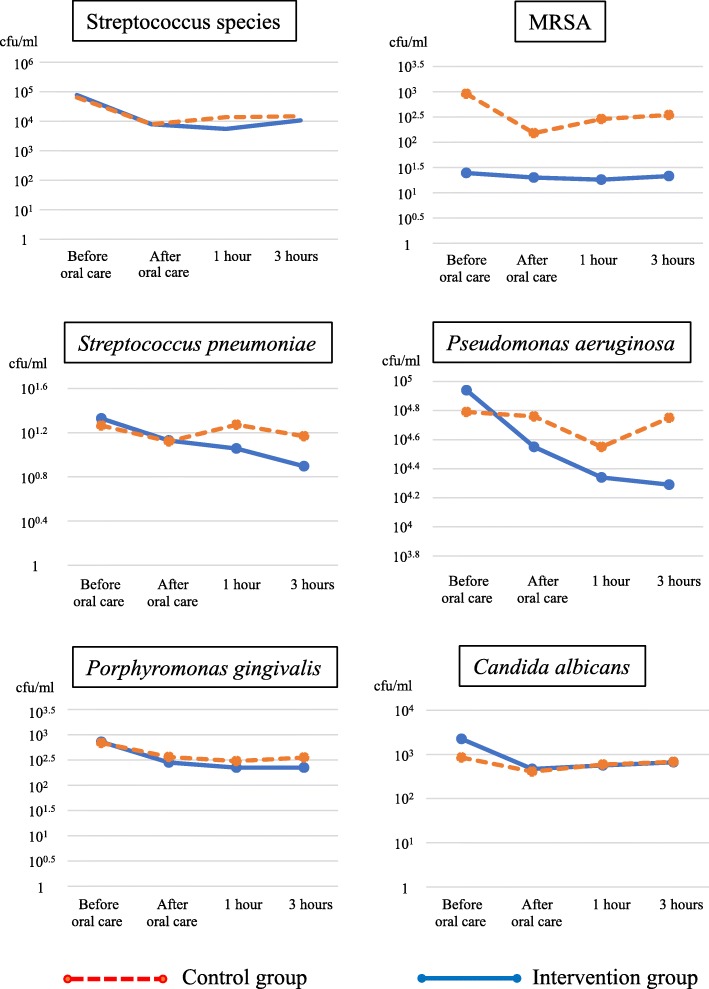
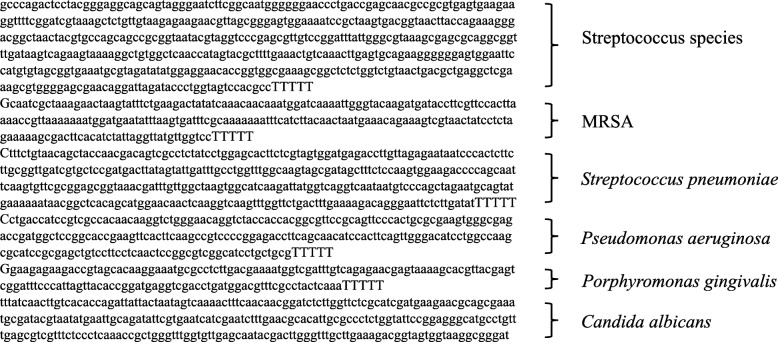
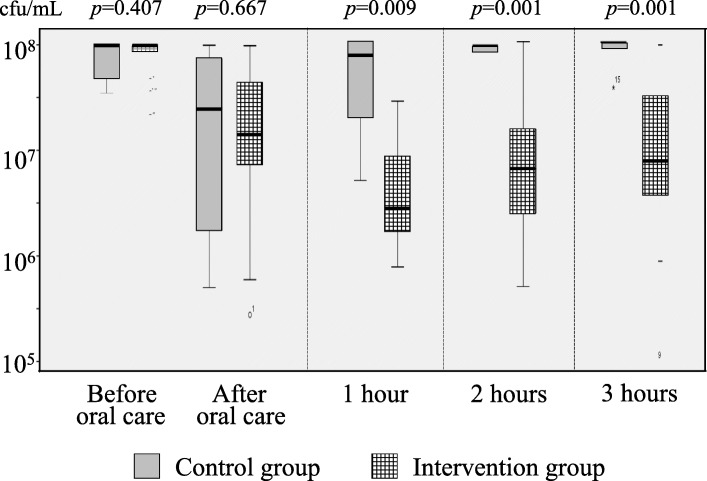
This randomized controlled clinical trial included 23 patients who underwent mechanical ventilation in the intensive care unit. The patients were divided randomly into two groups: the intervention group (n = 16) and the control group (n = 7). All patients received oral cleaning with 3% hydrogen peroxide, followed by irrigation with tap water. The patients in the intervention group received 10% povidone iodine applied topically to the oral cavity. The concentration of total bacteria in the oropharyngeal fluid were determined before, immediately after, 1 h, 2 h, and 3 h after oral care using the Rapid Oral Bacteria Quantification System, which is based on dielectrophoresis and impedance measurements. The number of streptococci, methicillin-resistant Staphylococcus aureus, Streptococcus pneumoniae, Pseudomonas aeruginosa, Porphyromonas gingivalis, and Candida albicans before, immediately after, 1 h, and 3 h after oral care were estimated based on real-time polymerase chain reaction data.
After irrigation of the oral cavity, the number of bacteria decreased, but increased again at 1 h after oral care in the control group; however, in the intervention group, the concentration of bacteria was significantly lower than that in the control group at 1 hour (p = 0.009), 2 h (p = 0.001), and 3 h (p = 0.001) after oral care. The growth of all bacterial species tested was inhibited in the intervention group at 3 h after oral care, suggesting that povidone iodine did not disturb the balance of the oral microbiota.
Topical application of povidone iodine after cleaning and irrigation of the oral cavity inhibited bacterial growth in the oropharyngeal fluid of patients on mechanical ventilation while not disrupting the balance of the oral microbiota.
University Hospitals Medical Information Network Clinical Trials Registry (UMIN-CTR), UMIN000028307. Registered 1 September 2017.
局部使用 0.12%洗必泰已广泛用于预防机械通气患者的呼吸机相关性肺炎。然而,在日本,它未被批准用于粘膜应用。本研究的目的是研究局部聚维酮碘(i)是否抑制细菌生长和(ii)破坏口腔微生物群的平衡。
这项随机对照临床试验纳入了 23 名在重症监护病房接受机械通气的患者。患者随机分为两组:干预组(n=16)和对照组(n=7)。所有患者均接受 3%过氧化氢进行口腔清洁,然后用自来水冲洗。干预组患者接受 10%聚维酮碘局部涂于口腔。使用基于介电泳和阻抗测量的快速口腔细菌定量系统,在口腔护理前、口腔护理后立即、1、2 和 3 小时后,分别测定口咽液中总细菌的浓度。根据实时聚合酶链反应数据,估计口腔护理前、口腔护理后立即、1 和 3 小时后链球菌、耐甲氧西林金黄色葡萄球菌、肺炎链球菌、铜绿假单胞菌、牙龈卟啉单胞菌和白色念珠菌的数量。
口腔冲洗后,细菌数量减少,但对照组在口腔护理后 1 小时再次增加;然而,在干预组中,口腔护理后 1、2 和 3 小时,细菌浓度明显低于对照组(p=0.009、p=0.001 和 p=0.001)。在口腔护理后 3 小时,所有测试细菌的生长均受到干预组的抑制,表明聚维酮碘并未破坏口腔微生物群的平衡。
在口腔清洁和冲洗后局部应用聚维酮碘可抑制机械通气患者口咽液中的细菌生长,同时不破坏口腔微生物群的平衡。
大学医院医学信息网络临床试验注册(UMIN-CTR),UMIN000028307。2017 年 9 月 1 日注册。