Jet Propulsion Laboratory, California Institute of Technology, Pasadena, CA, 91109, USA.
SUNY Geneseo, Department of Geological Sciences, 1 College Circle, Geneseo, NY, 14454, USA.
Nat Commun. 2020 Feb 24;11(1):1014. doi: 10.1038/s41467-020-14679-1.
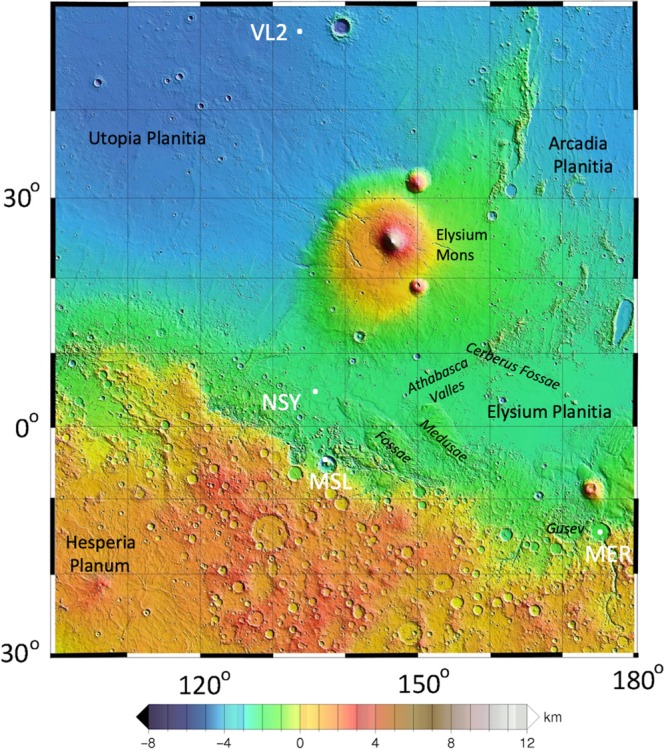
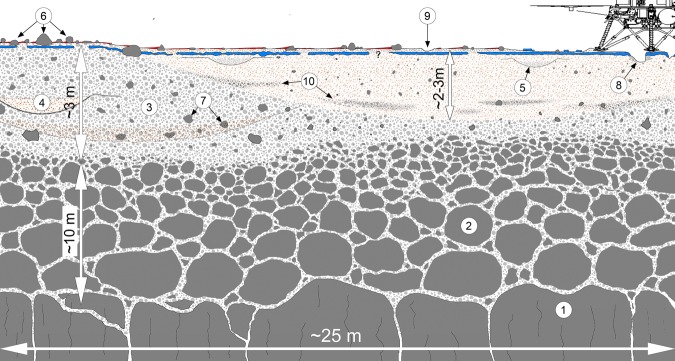
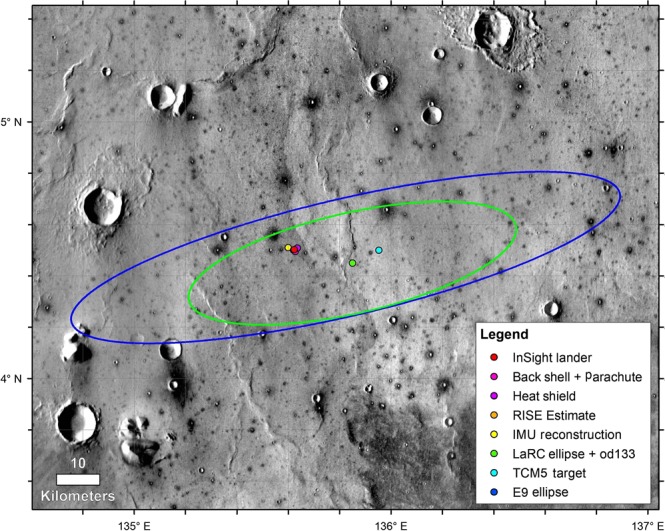
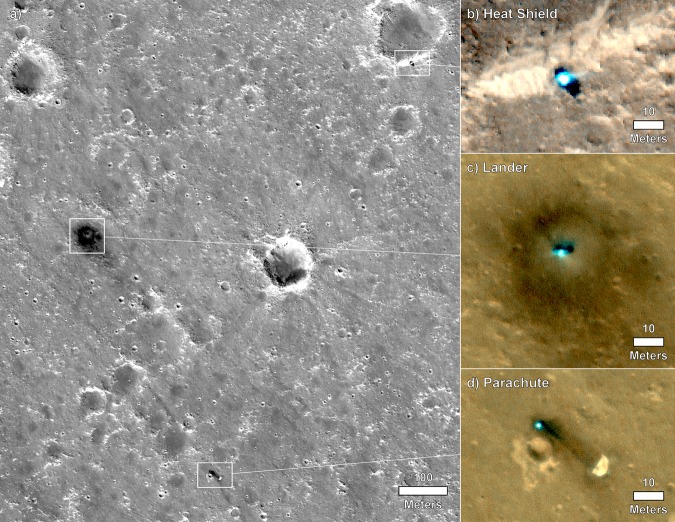
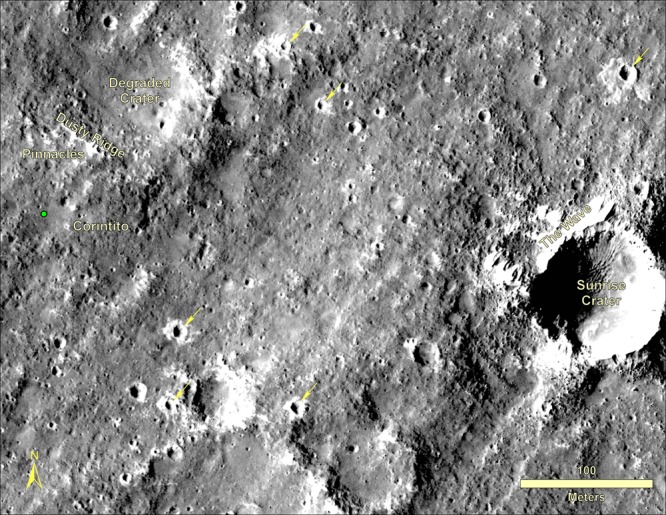
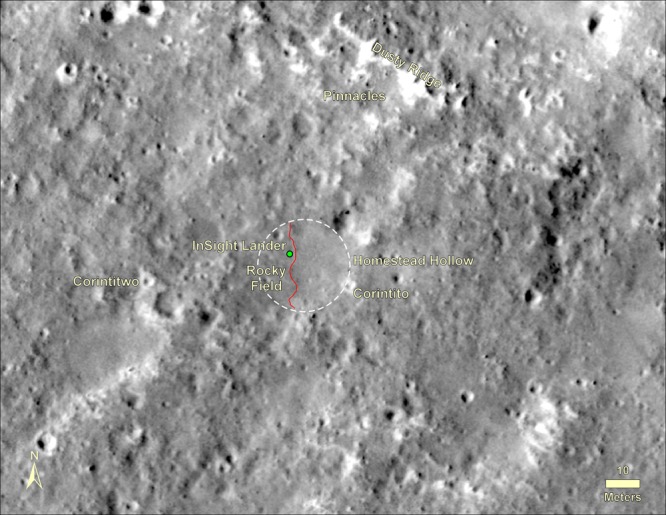
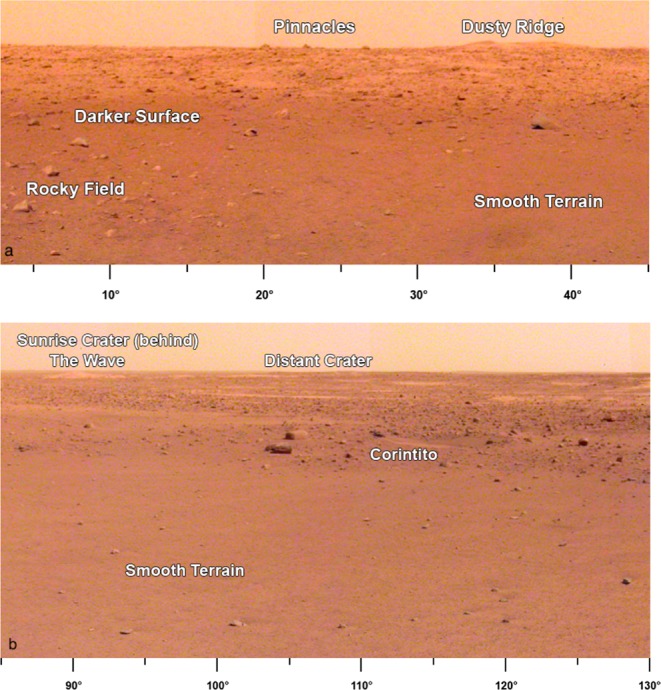
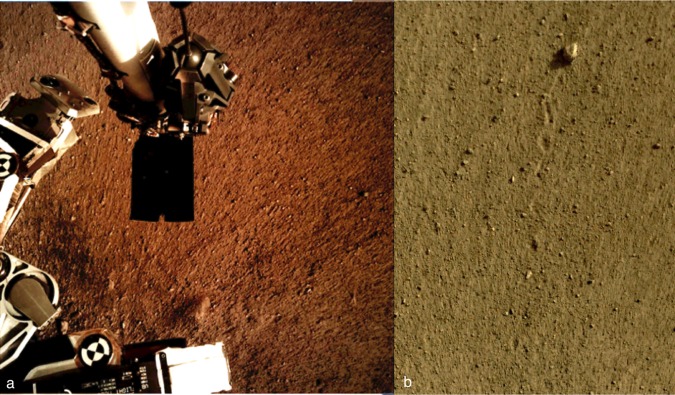
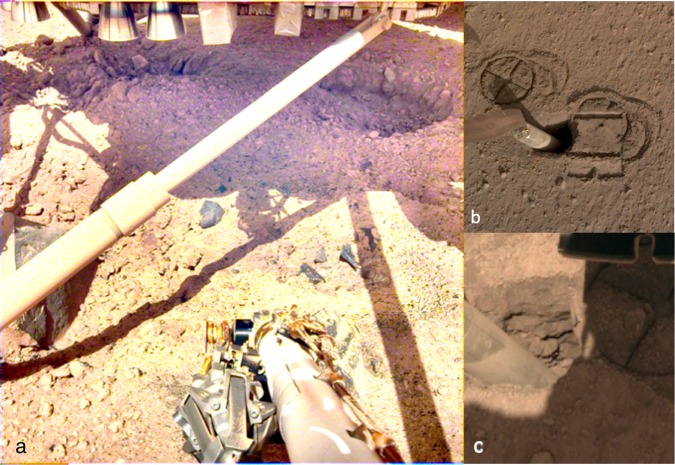
The Interior Exploration using Seismic Investigations, Geodesy and Heat Transport (InSight) spacecraft landed successfully on Mars and imaged the surface to characterize the surficial geology. Here we report on the geology and subsurface structure of the landing site to aid in situ geophysical investigations. InSight landed in a degraded impact crater in Elysium Planitia on a smooth sandy, granule- and pebble-rich surface with few rocks. Superposed impact craters are common and eolian bedforms are sparse. During landing, pulsed retrorockets modified the surface to reveal a near surface stratigraphy of surficial dust, over thin unconsolidated sand, underlain by a variable thickness duricrust, with poorly sorted, unconsolidated sand with rocks beneath. Impact, eolian, and mass wasting processes have dominantly modified the surface. Surface observations are consistent with expectations made from remote sensing data prior to landing indicating a surface composed of an impact-fragmented regolith overlying basaltic lava flows.
使用地震调查、大地测量和热传输(InSight)的内部探测航天器成功降落在火星上,并对表面成像以描述表面地质。在这里,我们报告着陆点的地质和地下结构,以帮助进行现场地球物理调查。InSight 降落在埃律西昂平原(Elysium Planitia)一个退化的撞击坑中,落在一个光滑的沙质、颗粒和卵石丰富的表面上,岩石很少。叠加的撞击坑很常见,而风成床形构造则很少。在着陆过程中,脉冲反推火箭对表面进行了改造,揭示了近地表的表层尘埃、薄薄的未固结沙层、可变厚度硬壳层的分层结构,下面是分选不良、未固结的沙层和下面的岩石。撞击、风成和物质流失过程主要改变了表面。表面观测与着陆前遥感数据的预期一致,表明表面由撞击破碎的风化层覆盖玄武岩熔岩流。