Nagano Hideki, Watanabe Takeshi, Togawa Tamotsu, Ohnishi Kenji, Kimura Toshihisa, Iida Atsushi, Sato Yasunori, Goi Takanori
Department of Surgery, National Hospital Organization Tsuruga Medical Center, Fukui 914-0195, Japan.
Department of Human Pathology, Kanazawa University, Graduate School of Medicine, Kanazawa 920-8640, Japan.
Onco Targets Ther. 2020 Jan 28;13:791-801. doi: 10.2147/OTT.S234945. eCollection 2020.
Lymphoepithelioma-like carcinomas (LELCs), especially colorectal cancers (CRCs), are uncommon pathological phenotypes generally associated with poor aggressiveness and a preferable prognosis. However, PD-L1 overexpression in CRCs is associated with poor outcomes. We report a case of moderately differentiated adenocarcinoma with PD-L1 overexpression, an LELC component, and Crohn's-like lymphoid reaction (CLR) presenting with extreme locoregional aggression and complete remission with chemotherapy after noncurative excision.
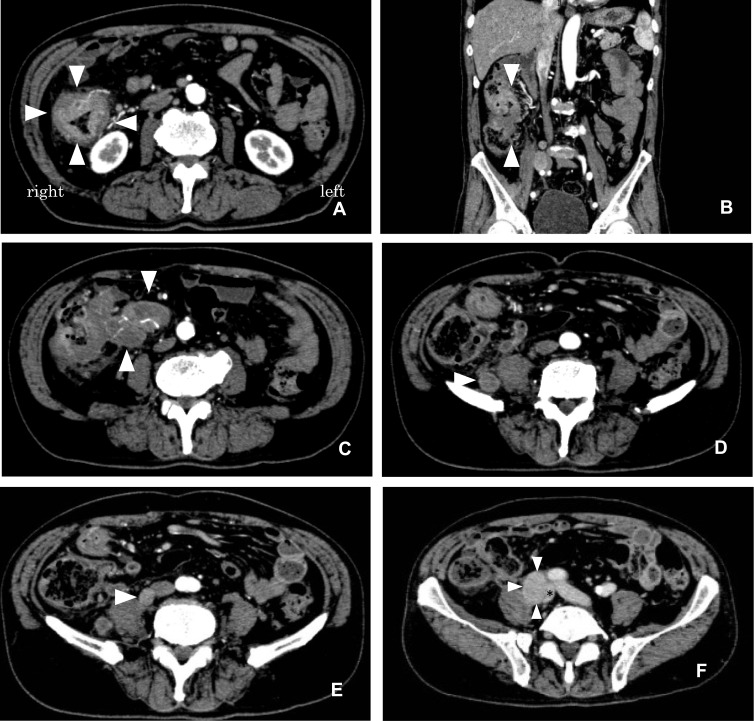
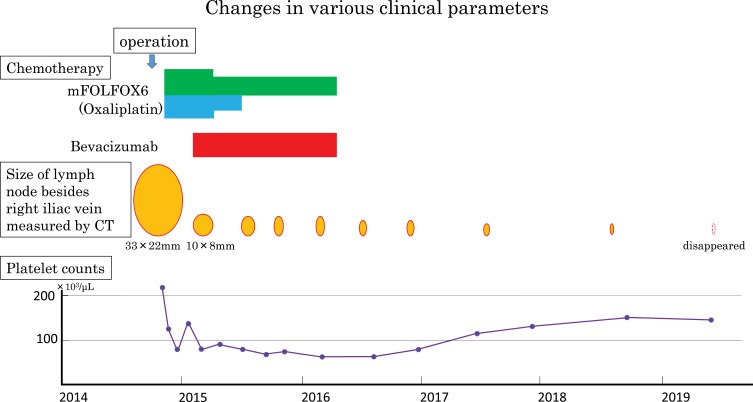
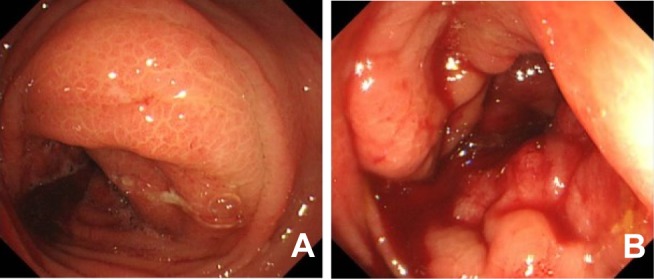
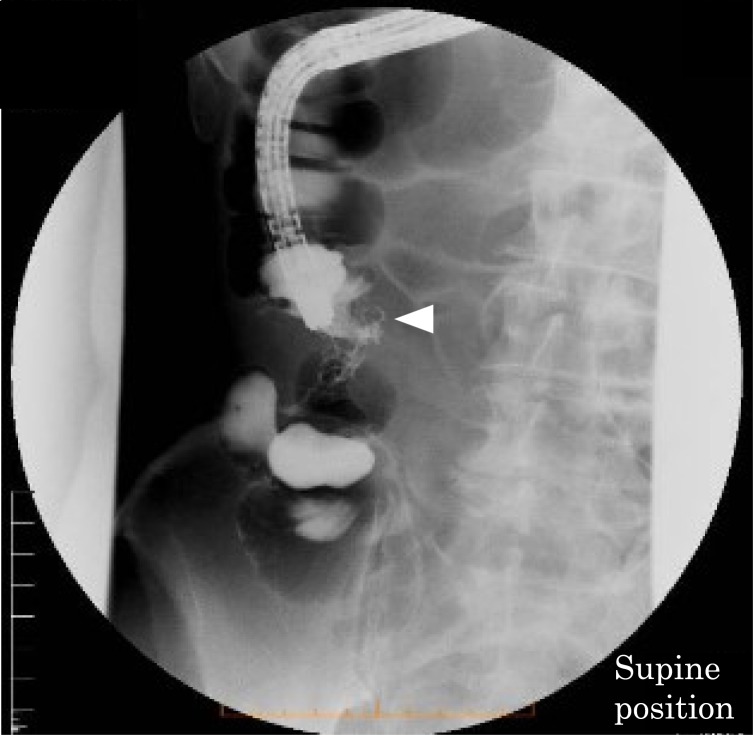
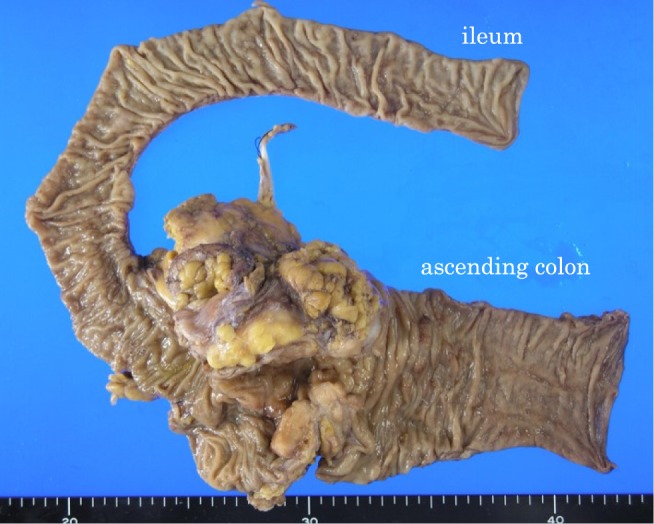
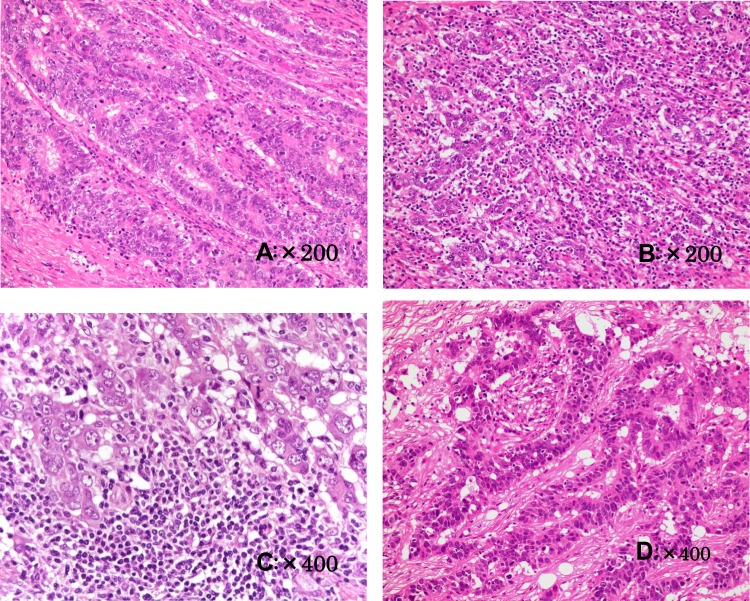
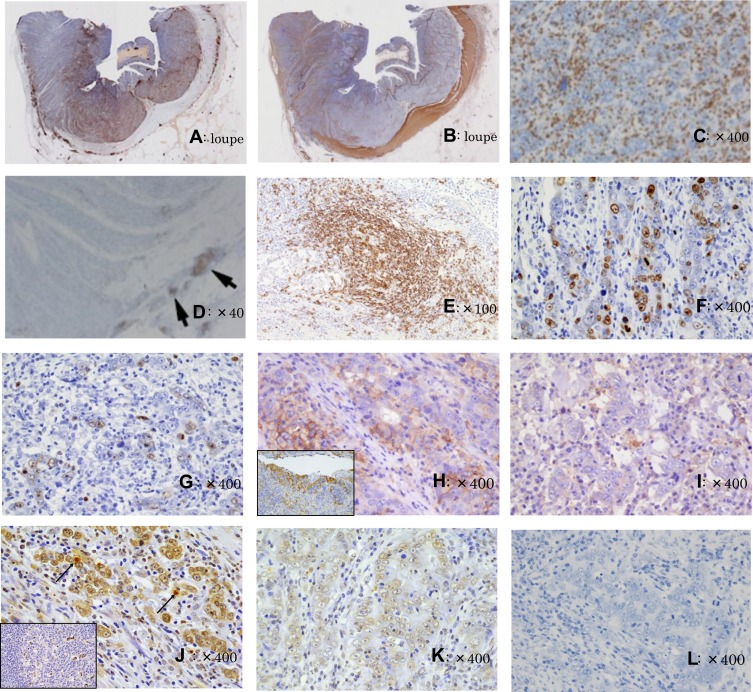
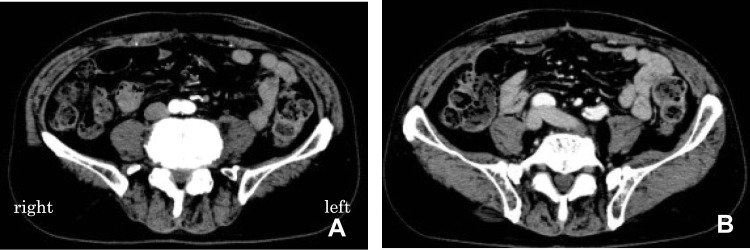
A 69-year-old man was referred to our hospital for abdominal fullness and pain. Computed tomography (CT) showed a circumferential tumor in the ascending colon, accompanied by bulky swollen lymph nodes. Under the preoperative diagnosis of T4N2M1 (lymph nodes) ascending colon cancer, we performed a right hemicolectomy; however, paracaval and parailiac vein lymph nodes were abandoned. Pathological findings showed moderate to poorly differentiated adenocarcinoma invading the subserosa accompanied by an LELC component invading the superficial muscularis propria. Lymph node metastases were found in a neighboring tumor and in retroperitoneal lymph nodes with glandular differentiation. No relation to microsatellite instability (MSI) or Epstein-Barr virus (EBV) was observed. In the component with glandular differentiation, PD-L1 overexpression was revealed. CLR findings were also observed. The tumor was diagnosed as T3N2M1 cancer that was moderately to poorly differentiated and had an LELC component. The patient was treated with chemotherapy, and the metastasized lymph nodes ultimately disappeared. He was alive without tumor recurrence 5-years post-operation.
This is a very rare case of moderately differentiated adenocarcinoma with PD-L1 overexpression and a heterogeneous LELC component that developed in the ascending colon. Unlike the previously reported weak aggressive properties of LELCs, the present case showed an extremely aggressive locoregional extent, but complete remission was finally achieved with chemotherapy. This type of LELC with CLR could be associated with a good response to chemotherapy and a good prognosis in CRC patients.
淋巴上皮瘤样癌(LELCs),尤其是结直肠癌(CRCs),是罕见的病理表型,通常与侵袭性较弱和较好的预后相关。然而,结直肠癌中PD-L1过表达与不良预后相关。我们报告一例中度分化腺癌,伴有PD-L1过表达、LELC成分和克罗恩样淋巴反应(CLR),表现为局部侵袭性极强,在非根治性切除术后经化疗完全缓解。
一名69岁男性因腹部胀满和疼痛转诊至我院。计算机断层扫描(CT)显示升结肠有一环形肿瘤,伴有大量肿大淋巴结。术前诊断为T4N2M1(淋巴结)升结肠癌,我们进行了右半结肠切除术;然而,腔静脉旁和髂外静脉淋巴结未切除。病理结果显示为中度至低分化腺癌侵犯浆膜下层,伴有LELC成分侵犯固有肌层浅层。在邻近肿瘤和具有腺分化的腹膜后淋巴结中发现了淋巴结转移。未观察到与微卫星不稳定性(MSI)或爱泼斯坦-巴尔病毒(EBV)的相关性。在具有腺分化的成分中,发现了PD-L1过表达。还观察到CLR表现。该肿瘤被诊断为T3N2M1癌,中度至低分化,有LELC成分。患者接受了化疗,转移的淋巴结最终消失。术后5年他存活且无肿瘤复发。
这是一例非常罕见的升结肠中度分化腺癌,伴有PD-L1过表达和异质性LELC成分。与先前报道的LELCs侵袭性较弱不同,本例显示出极强的局部侵袭范围,但最终通过化疗实现了完全缓解。这种伴有CLR的LELC类型可能与结直肠癌患者对化疗的良好反应和良好预后相关。