Khan Adnan, Dou Jinhuan, Wang Yachun, Jiang Xiaolong, Khan Muhammad Zahoor, Luo Hanpeng, Usman Tahir, Zhu Huabin
1Key Laboratory of Animal Genetics, Breeding, and Reproduction, MARA; National Engineering Laboratory for Animal Breeding, College of Animal Science and Technology, China Agricultural University, Beijing, 100193 People's Republic of China.
2Embryo Biotechnology and Reproduction Laboratory, Institute of Animal Sciences, Chinese Academy of Agricultural Sciences, Beijing, China.
J Anim Sci Biotechnol. 2020 Feb 18;11:25. doi: 10.1186/s40104-019-0408-8. eCollection 2020.
Heat stress is known to affect follicular dynamics, oocyte maturation, and fertilization by impairing steroidogenic ability and viability of bovine granulosa cell (bGCs). The present study explored the physiological and molecular response of bGCs to different heat stress intensities . We exposed the primary bGCs to heat stress (HS) at 39 °C, 40 °C and 41 °C along with control samples (38 °C) for 2 h. To evaluate the impact of heat stress on bGCs, several cellular parameters including cell apoptosis, intracellular reactive oxygen species (ROS) accumulation and kinetics were assessed by flow cytometry, florescence microscopy and western blot, respectively. Furthermore, the ELISA was performed to confirm the 17β-estradiol (E) and progesterone (P) levels. In addition, the RNA sequencing (RNA-Seq) method was used to get the molecular based response of bGCs to different heat treatments.
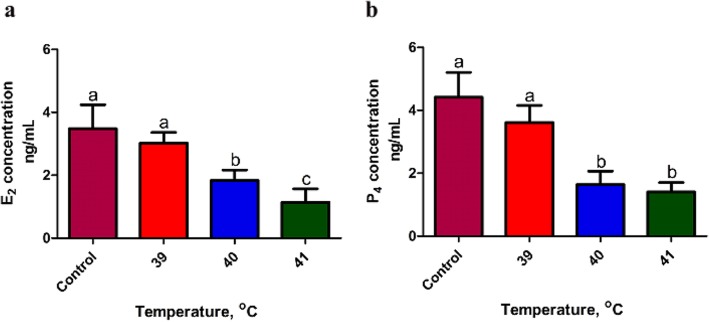
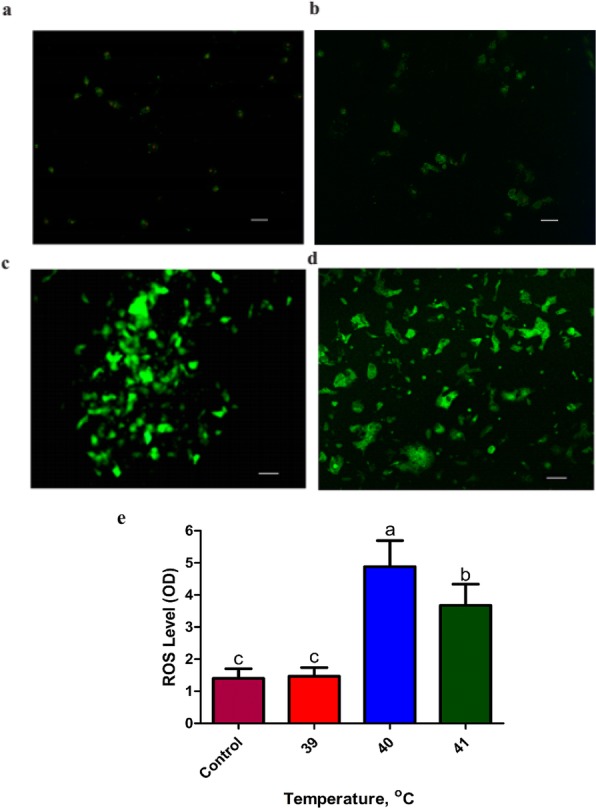
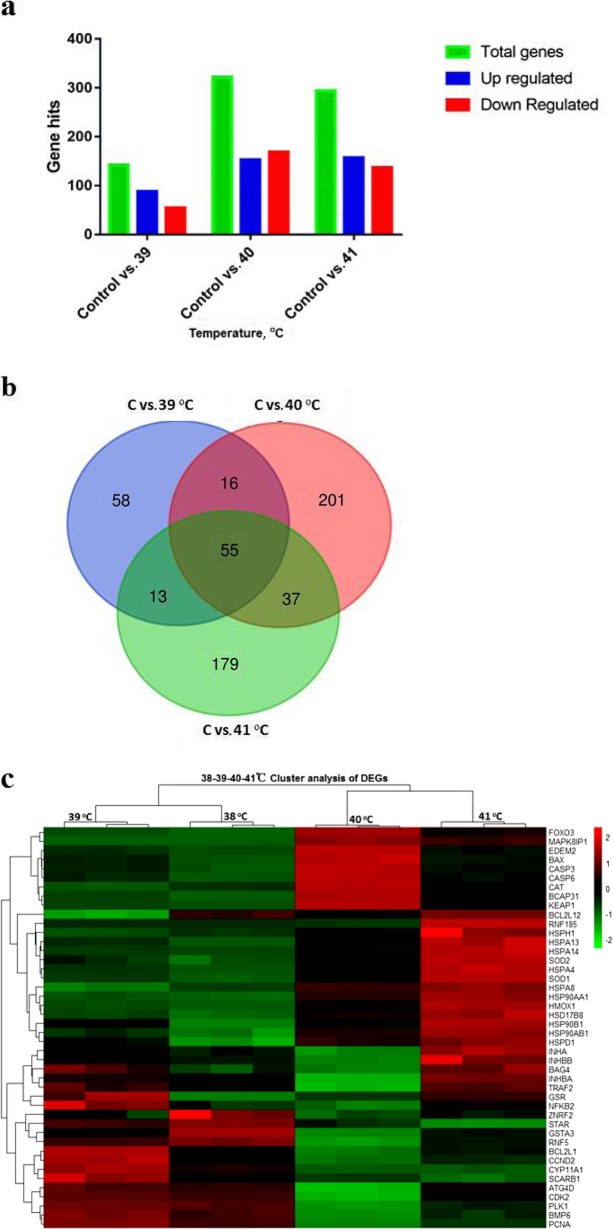
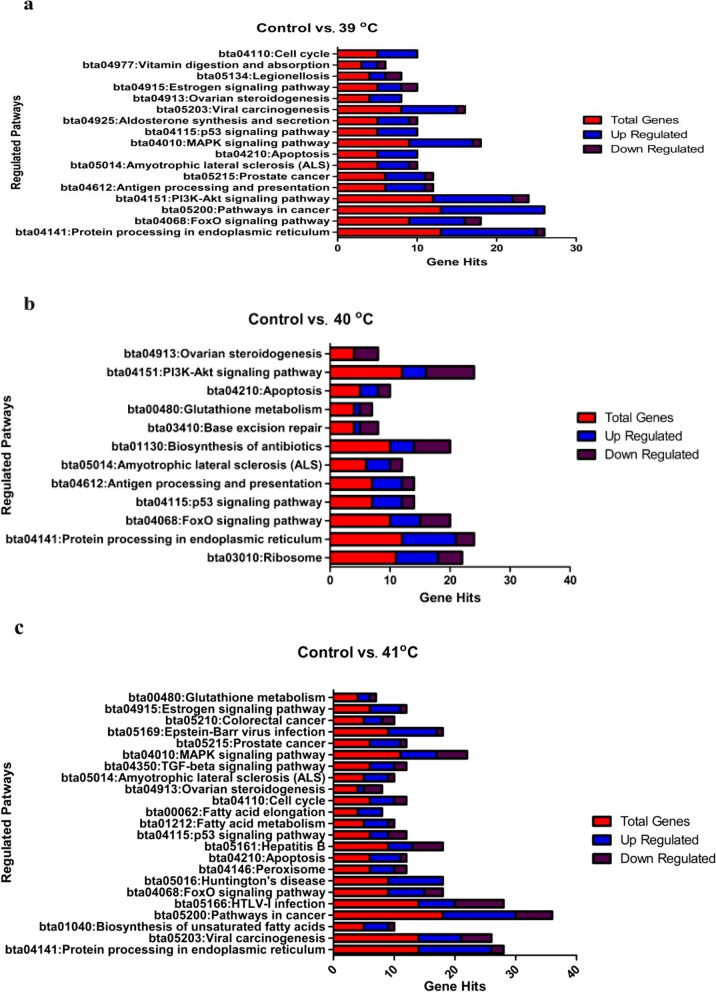
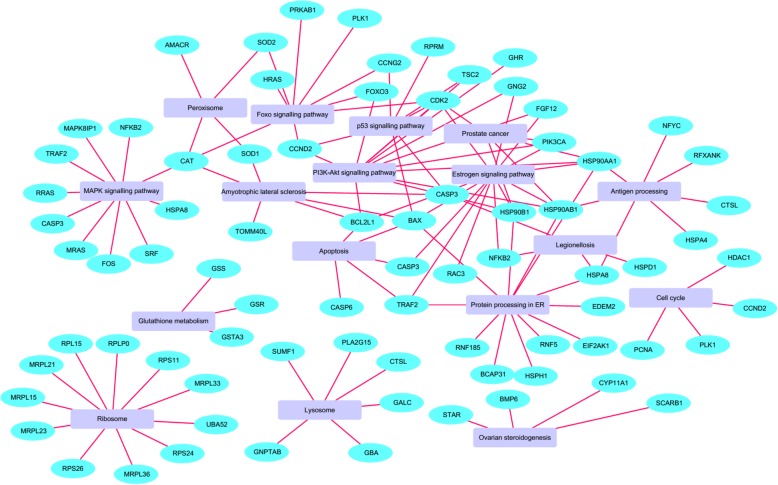
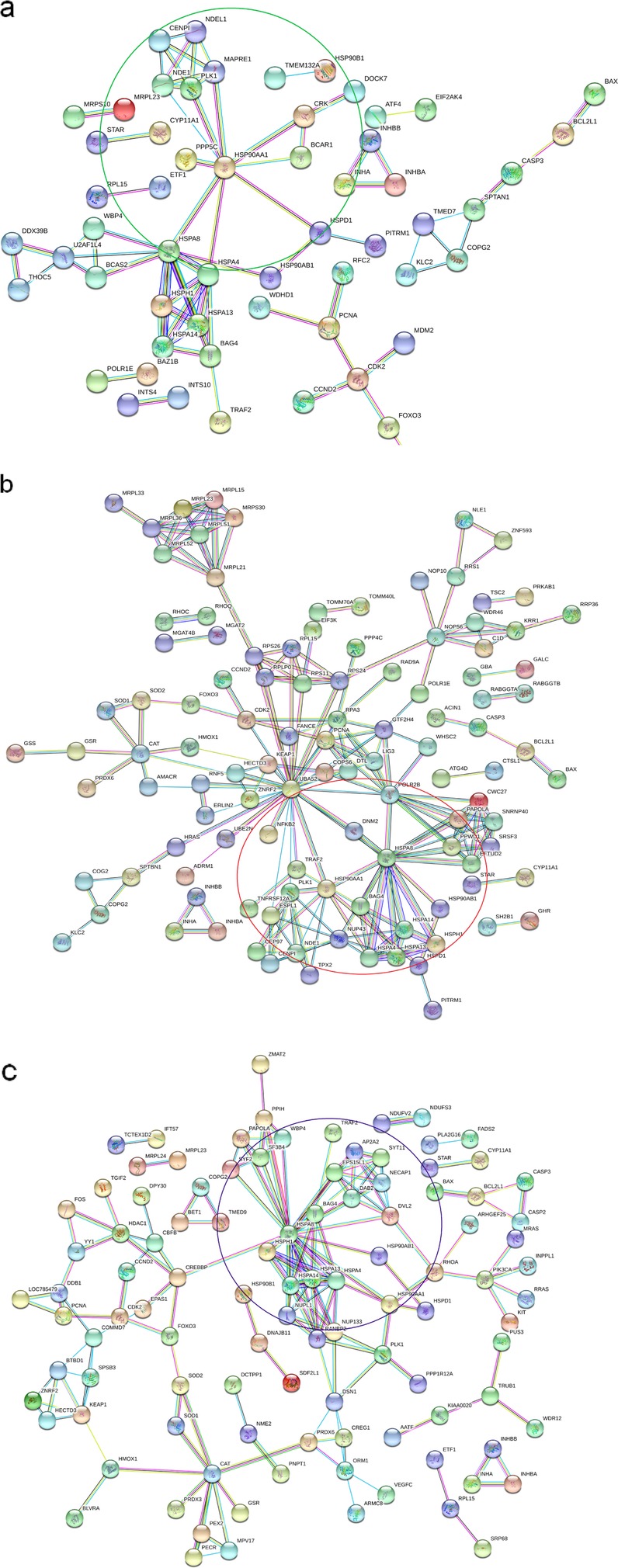
Our findings revealed that the HS significantly decreased the cell viability, E and P levels in bGCs, whereas, increased the cellular apoptosis and ROS. Moreover, the RNA-Seq experiments showed that all the treatments (39 °C, 40 °C and 41 °C) significantly regulated many differentially expressed genes (DEGs) i.e. , and and pathways associated with heat stress, apoptosis, steroidogenesis, and oxidative stress. Conclusively, our data demonstrated that the impact of 40 °C treatment was comparatively detrimental for cell viability, apoptosis and ROS accumulation. Notably, a similar trend of gene expression was reported by RT-qPCR for RNA-seq data.
Our study presented a worthy strategy for the first time to characterize the cellular and transcriptomic adaptation of bGCs to heat stress (39, 40 and 41 °C) . The results infer that these genes and pathways reported in present study could be useful candidates/indicators for heat stress research in dairy cattle. Moreover, the established model of bGCs to heat stress in the current study provides an appropriate platform to understand the mechanism of how heat-stressed bGCs can affect the quality of oocytes and developing embryo.
已知热应激会通过损害牛颗粒细胞(bGCs)的类固醇生成能力和活力来影响卵泡动力学、卵母细胞成熟和受精。本研究探讨了bGCs对不同热应激强度的生理和分子反应。我们将原代bGCs在39°C、40°C和41°C下进行热应激(HS)处理2小时,同时设置38°C的对照样本。为了评估热应激对bGCs的影响,分别通过流式细胞术、荧光显微镜和蛋白质免疫印迹法评估了包括细胞凋亡、细胞内活性氧(ROS)积累和动力学在内的几个细胞参数。此外,采用酶联免疫吸附测定(ELISA)来确定17β-雌二醇(E)和孕酮(P)水平。另外,使用RNA测序(RNA-Seq)方法来获得bGCs对不同热处理的基于分子的反应。
我们的研究结果表明,热应激显著降低了bGCs的细胞活力、E和P水平,而增加了细胞凋亡和ROS。此外,RNA-Seq实验表明,所有处理(39°C、40°C和41°C)均显著调节了许多差异表达基因(DEGs),即与热应激、细胞凋亡、类固醇生成和氧化应激相关的基因和通路。总之,我们的数据表明,40°C处理对细胞活力、细胞凋亡和ROS积累的影响相对更有害。值得注意的是,逆转录定量聚合酶链反应(RT-qPCR)对RNA-seq数据报告了相似的基因表达趋势。
我们的研究首次提出了一种有价值的策略,用于表征bGCs对热应激(39、40和41°C)的细胞和转录组适应性。结果表明,本研究中报道的这些基因和通路可能是奶牛热应激研究的有用候选基因/指标。此外,本研究中建立的bGCs热应激模型为理解热应激bGCs如何影响卵母细胞和发育中胚胎的质量提供了一个合适的平台。