Tuohy Evan, Wade Christina, Weil Ernesto
Department of Marine Science, Universidad de Puerto Rico, Recinto de Mayagüez, Mayagüez, Puerto Rico, Puerto Rico.
PeerJ. 2020 Feb 12;8:e8428. doi: 10.7717/peerj.8428. eCollection 2020.
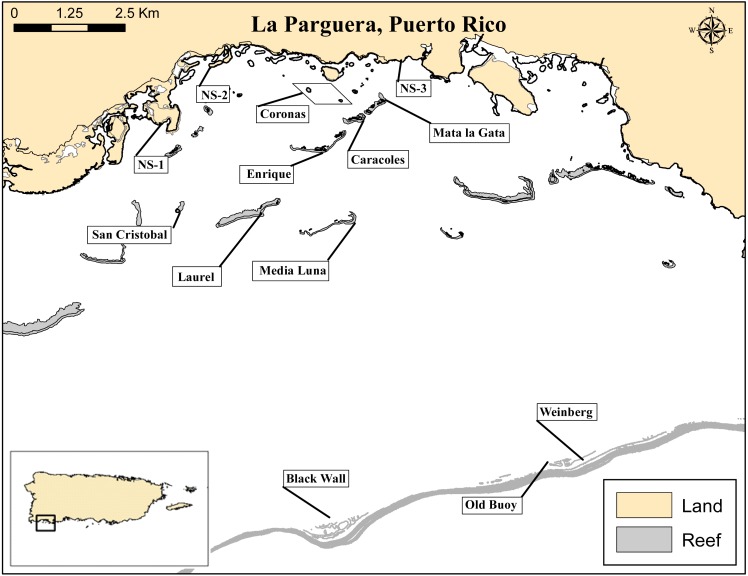
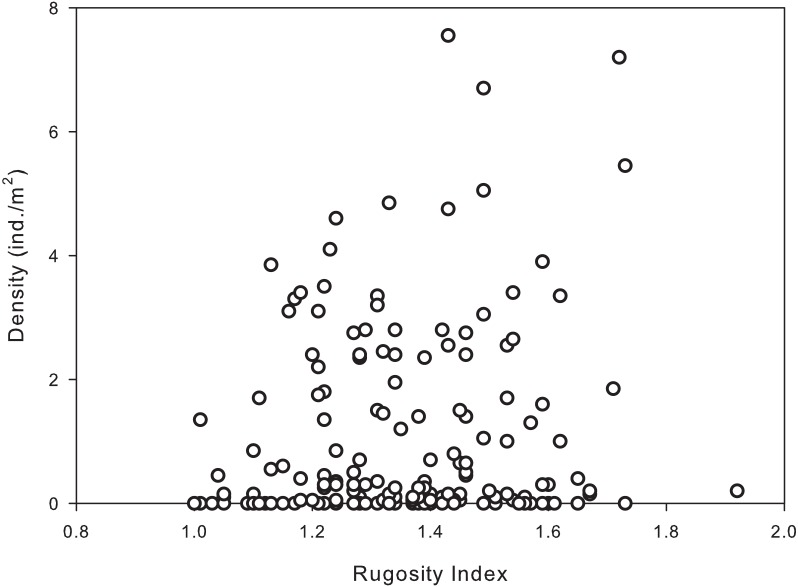
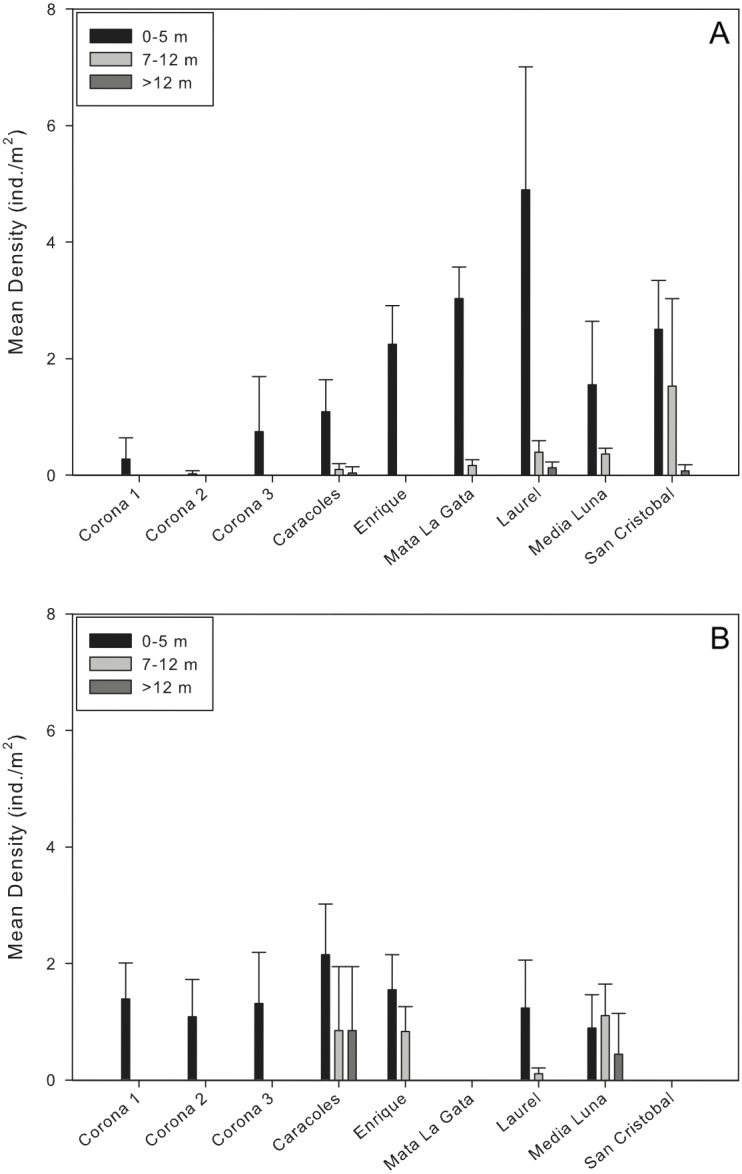
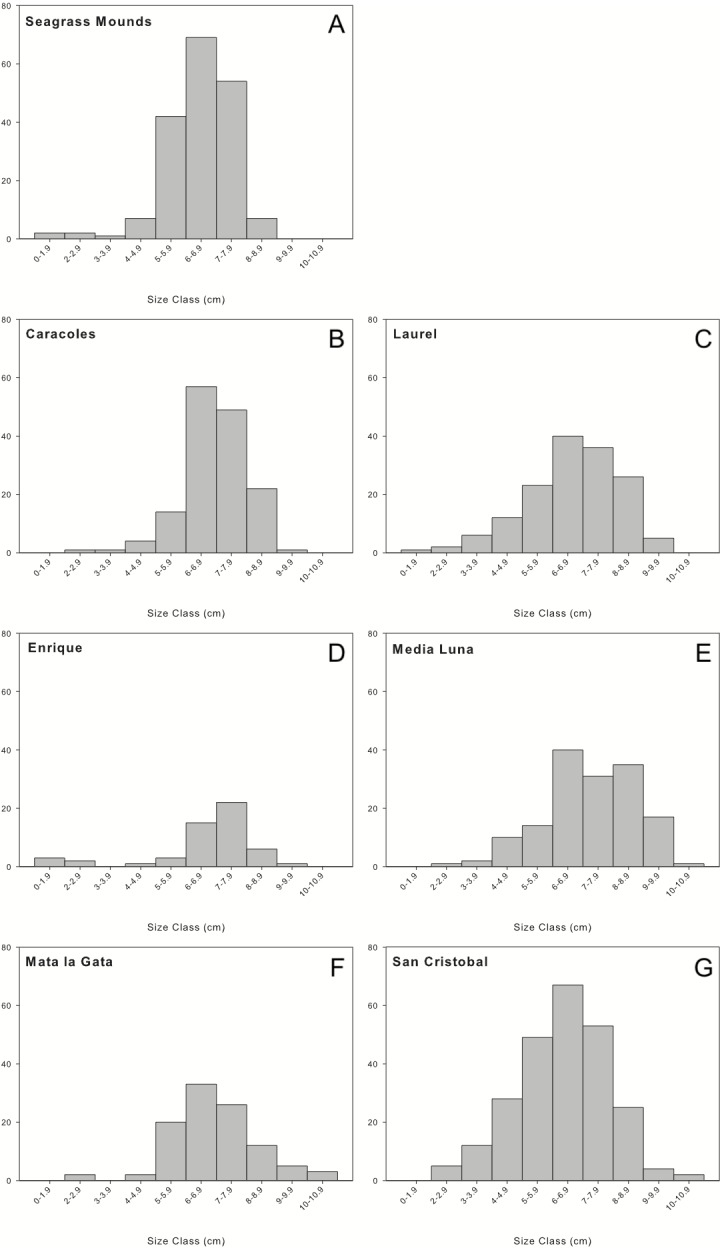
Caribbean populations of the long-spined black sea urchin Philippi were decimated by a disease-induced mass mortality in the early 1980's. The present study provides an updated status of the recovery and population characteristics in La Parguera Natural Reserve, Puerto Rico. The last detailed study to assess population recovery in 2001, indicated a slow, and modest recovery, albeit densities remained far below pre-mass mortality levels. Population densities were assessed along three depth intervals in six reef localities and one depth in three lagoonal sea-grass mounds using ten 20 m (10 × 2 m) belt-transects at each depth interval. Most of these were previously surveyed in 2001. All individuals encountered along the belt transects were sized with calipers and rulers to characterize the size (age) structure of each population and get insight into the urchin's population dynamics and differences across localities in the area. Habitat complexity (rugosity) was assessed in all depth intervals. No significant differences in population densities between reef zones (inner shelf and mid-shelf) were observed, but significantly higher densities were found on shallow habitats (<5 m depth; 2.56 ± 1.6 ind/m) compared to intermediate (7-12 m; 0.47 ± 0.8 ind/m) and deep (>12 m; 0.04 ± 0.08 ind/m) reef habitats in almost all sites surveyed. Habitat complexity had the greatest effect on population densities at all levels (site, zone and depth) with more rugose environments containing significantly higher densities and wider size structures. Comparison between survey years revealed that populations have not increased since 2001, and urchins seem to prefer shallower, more complex and productive areas of the reef. Populations were dominated by medium to large (5-9 cm in test diameter) individuals and size-frequency distributions indicated that smaller juveniles were virtually absent compared to 2001, which could reflect a recruitment-limited population and explain in part, the lack of increase in population densities. The limited temporal scale of this study, high horizontal movement of individuals along the complex, shallower reef and inshore habitats could also explain the general decline in mean densities. Other extrinsic factors affecting reproductive output and/or succesful recruitment and survival of juveniles likely contribute to the high variablility in population densities observed over time.
20世纪80年代初,加勒比地区的长刺黑海胆(Philippi)种群因疾病引发的大规模死亡而数量锐减。本研究提供了波多黎各拉帕尔古拉自然保护区海胆恢复情况及种群特征的最新状况。上一次评估种群恢复情况的详细研究是在2001年,结果表明恢复过程缓慢且程度有限,尽管密度仍远低于大规模死亡前的水平。在六个珊瑚礁区域的三个深度区间以及三个泻湖海草丘的一个深度处,使用每个深度区间的十条20米(10×2米)带状样带评估种群密度。其中大部分区域在2001年曾进行过调查。沿着带状样带遇到的所有个体都用卡尺和尺子测量大小,以描述每个种群的大小(年龄)结构,并深入了解海胆的种群动态以及该区域不同地点之间的差异。在所有深度区间评估栖息地复杂性(粗糙度)。未观察到珊瑚礁区域(内架和中架)之间种群密度的显著差异,但在几乎所有调查地点,与中等深度(7 - 12米;0.47±0.8个/平方米)和深度(>12米;0.04±0.08个/平方米)的珊瑚礁栖息地相比,浅海栖息地(<5米深度;2.56±1.6个/平方米)的密度显著更高。栖息地复杂性在所有层面(地点、区域和深度)对种群密度的影响最大,粗糙度更高环境中的密度显著更高且大小结构更广泛。不同调查年份之间的比较显示,自2001年以来种群数量没有增加,海胆似乎更喜欢珊瑚礁较浅、更复杂且生产力更高的区域。种群以中大型(测试直径5 - 9厘米)个体为主,大小频率分布表明与2001年相比,较小的幼体几乎不存在,这可能反映出种群受繁殖限制,部分解释了种群密度没有增加的原因。本研究时间尺度有限,个体在复杂、较浅的珊瑚礁和近岸栖息地的水平移动性高,这也可能解释了平均密度普遍下降的原因。其他影响繁殖输出和/或幼体成功繁殖与存活的外部因素可能导致了随时间观察到的种群密度的高度变异性。