Perozeni Federico, Cazzaniga Stefano, Baier Thomas, Zanoni Francesca, Zoccatelli Gianni, Lauersen Kyle J, Wobbe Lutz, Ballottari Matteo
Department of Biotechnology, University of Verona, Verona, Italy.
Faculty of Biology, Center for Biotechnology (CeBiTec), Bielefeld University, Bielefeld, Germany.
Plant Biotechnol J. 2020 Oct;18(10):2053-2067. doi: 10.1111/pbi.13364. Epub 2020 Mar 31.
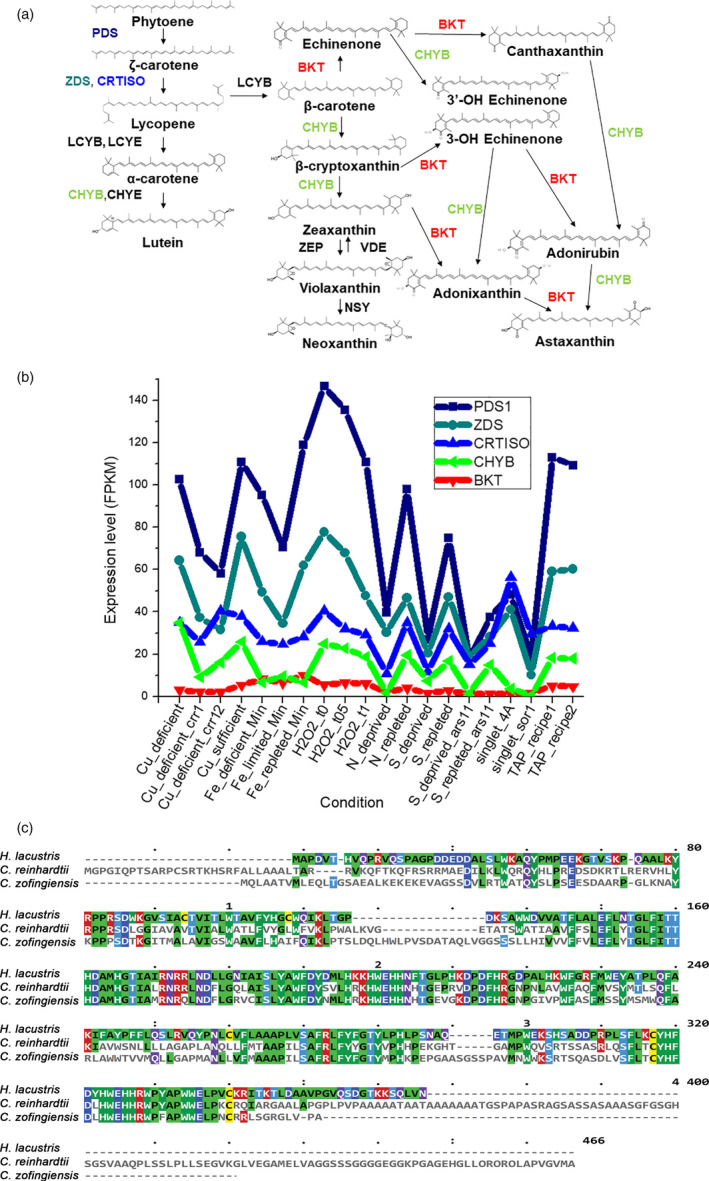
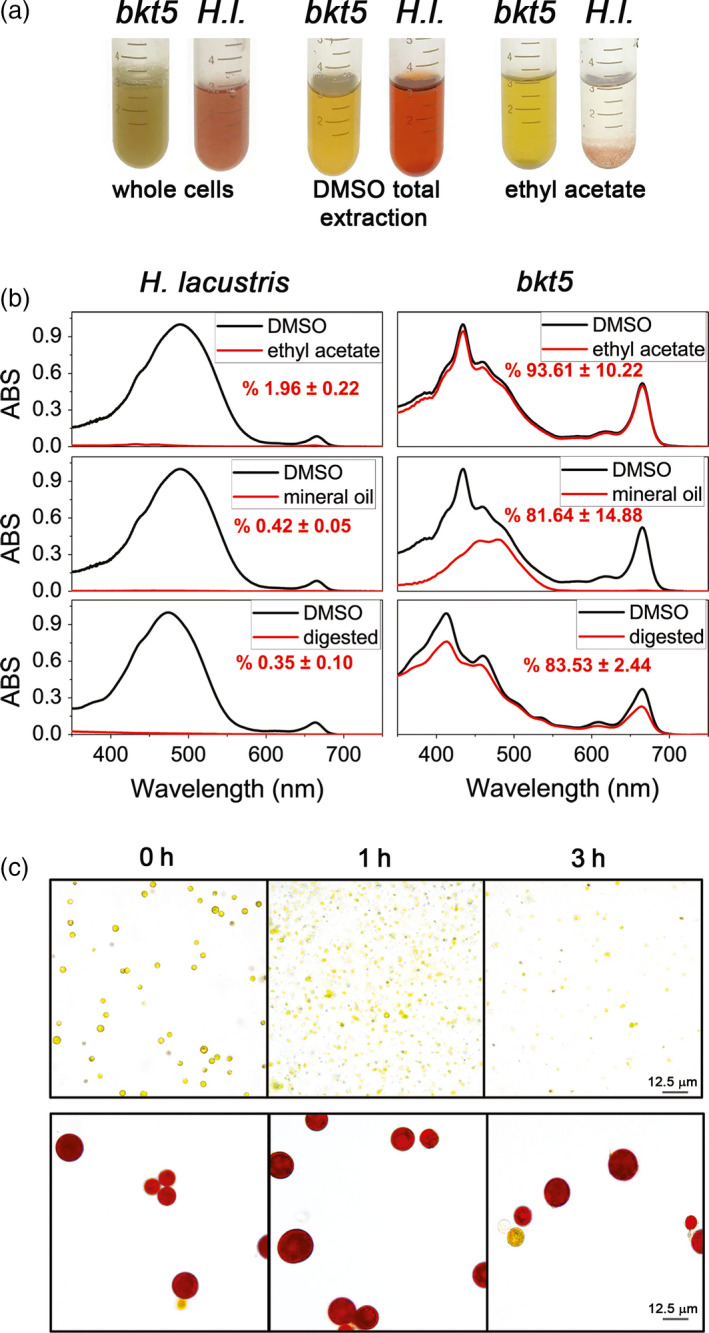
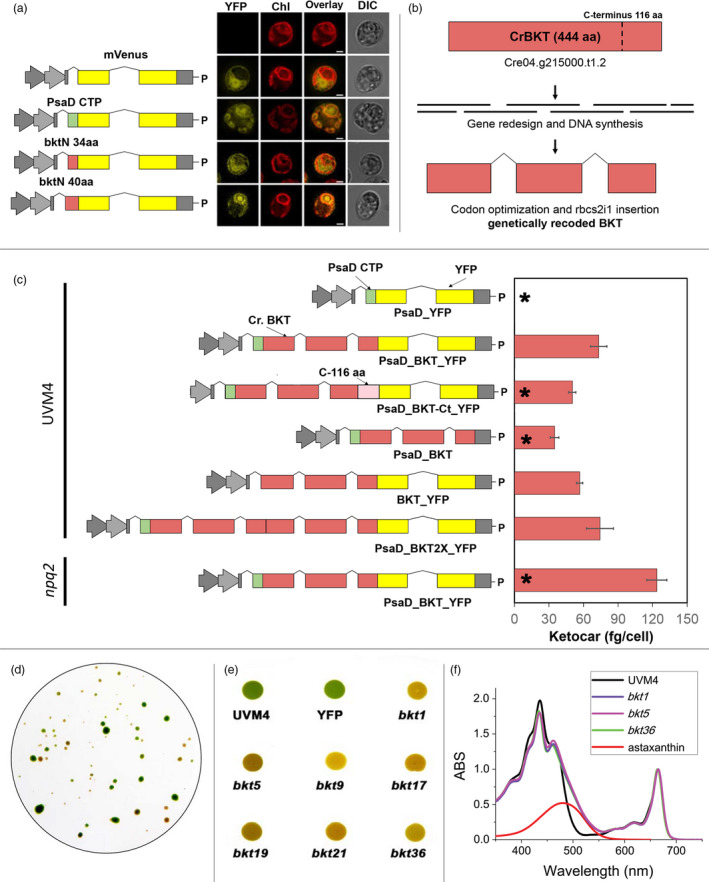
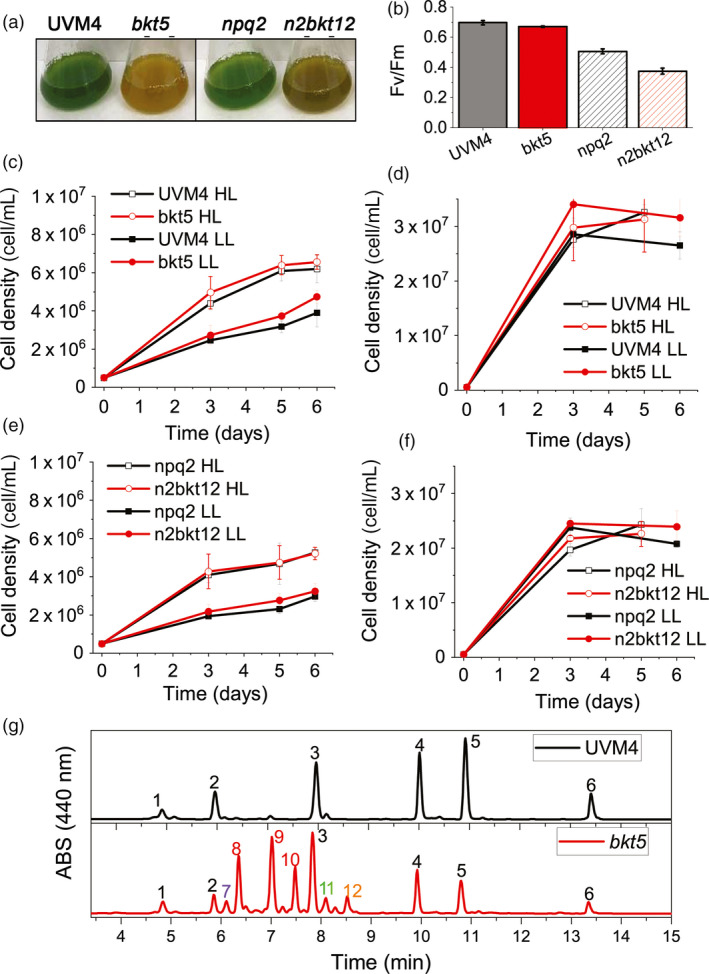
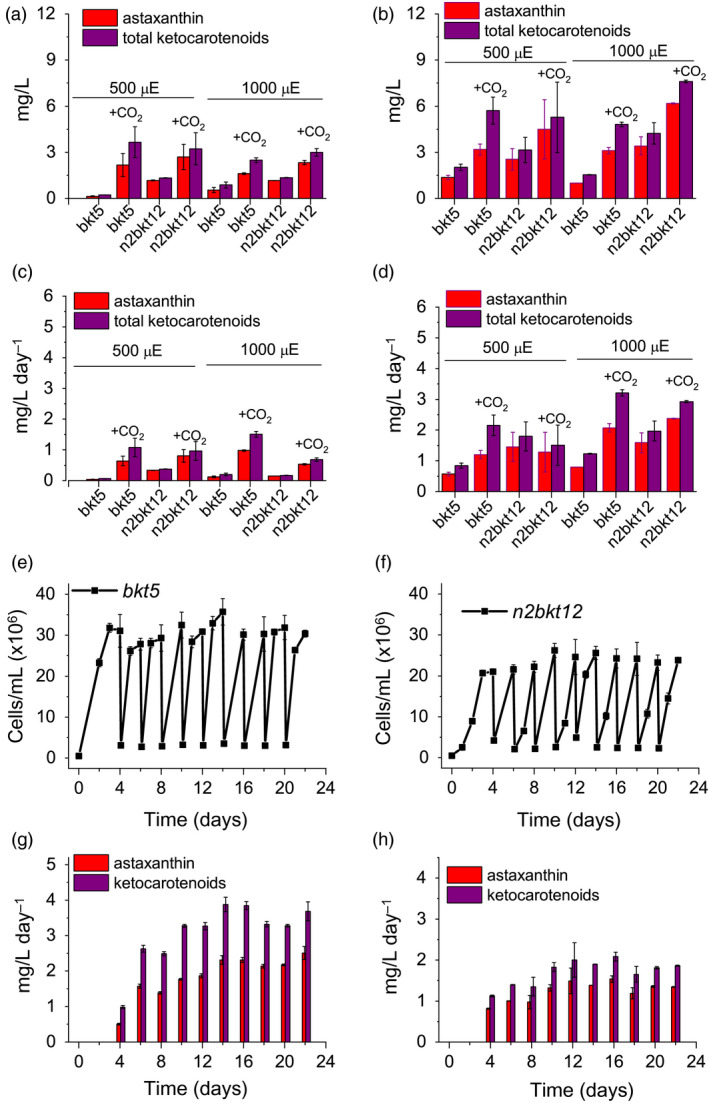
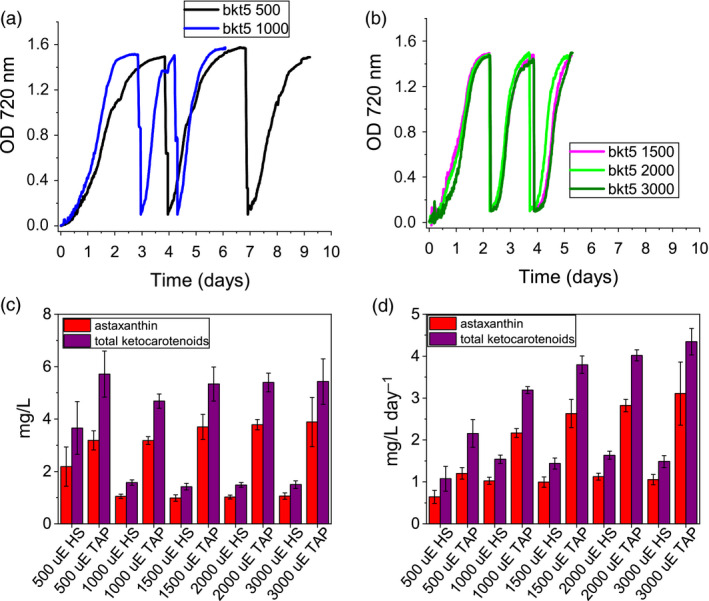
The green alga Chlamydomonas reinhardtii does not synthesize high-value ketocarotenoids like canthaxanthin and astaxanthin; however, a β-carotene ketolase (CrBKT) can be found in its genome. CrBKT is poorly expressed, contains a long C-terminal extension not found in homologues and likely represents a pseudogene in this alga. Here, we used synthetic redesign of this gene to enable its constitutive overexpression from the nuclear genome of C. reinhardtii. Overexpression of the optimized CrBKT extended native carotenoid biosynthesis to generate ketocarotenoids in the algal host causing noticeable changes the green algal colour to reddish-brown. We found that up to 50% of native carotenoids could be converted into astaxanthin and more than 70% into other ketocarotenoids by robust CrBKT overexpression. Modification of the carotenoid metabolism did not impair growth or biomass productivity of C. reinhardtii, even at high light intensities. Under different growth conditions, the best performing CrBKT overexpression strain was found to reach ketocarotenoid productivities up to 4.3 mg/L/day. Astaxanthin productivity in engineered C. reinhardtii shown here might be competitive with that reported for Haematococcus lacustris (formerly pluvialis) which is currently the main organism cultivated for industrial astaxanthin production. In addition, the extractability and bio-accessibility of these pigments were much higher in cell wall-deficient C. reinhardtii than the resting cysts of H. lacustris. Engineered C. reinhardtii strains could thus be a promising alternative to natural astaxanthin producing algal strains and may open the possibility of other tailor-made pigments from this host.
绿藻莱茵衣藻不能合成如角黄素和虾青素等高价值的酮类胡萝卜素;然而,在其基因组中可以发现一种β-胡萝卜素酮酶(CrBKT)。CrBKT表达水平较低,含有一个在同源物中未发现的长C端延伸,在这种藻类中可能代表一个假基因。在这里,我们通过对该基因进行合成重新设计,使其能够从莱茵衣藻的核基因组中组成型过表达。优化后的CrBKT过表达扩展了天然类胡萝卜素的生物合成,从而在藻类宿主中产生酮类胡萝卜素,使绿藻颜色明显变为红棕色。我们发现,通过强力的CrBKT过表达,高达50%的天然类胡萝卜素可以转化为虾青素,超过70%转化为其他酮类胡萝卜素。类胡萝卜素代谢的改变并未损害莱茵衣藻的生长或生物量生产力,即使在高光强度下也是如此。在不同的生长条件下,发现表现最佳的CrBKT过表达菌株的酮类胡萝卜素生产力可达4.3毫克/升/天。这里展示的工程化莱茵衣藻中的虾青素生产力可能与报道的湖生红球藻(原雨生红球藻)的生产力具有竞争力,湖生红球藻目前是用于工业虾青素生产的主要培养生物。此外,这些色素在细胞壁缺陷型莱茵衣藻中的可提取性和生物可及性比湖生红球藻的静止孢囊要高得多。因此,工程化的莱茵衣藻菌株可能是天然虾青素生产藻类菌株的一个有前途的替代方案,并可能开启从该宿主生产其他定制色素的可能性。