Bankes David L, Schamp Richard O, Knowlton Calvin H, Bain Kevin T
Applied Precision Pharmacotherapy Institute, Tabula Rasa HealthCare, Inc., Moorestown, NJ 08057, USA.
Pharmacy (Basel). 2020 Feb 21;8(1):24. doi: 10.3390/pharmacy8010024.
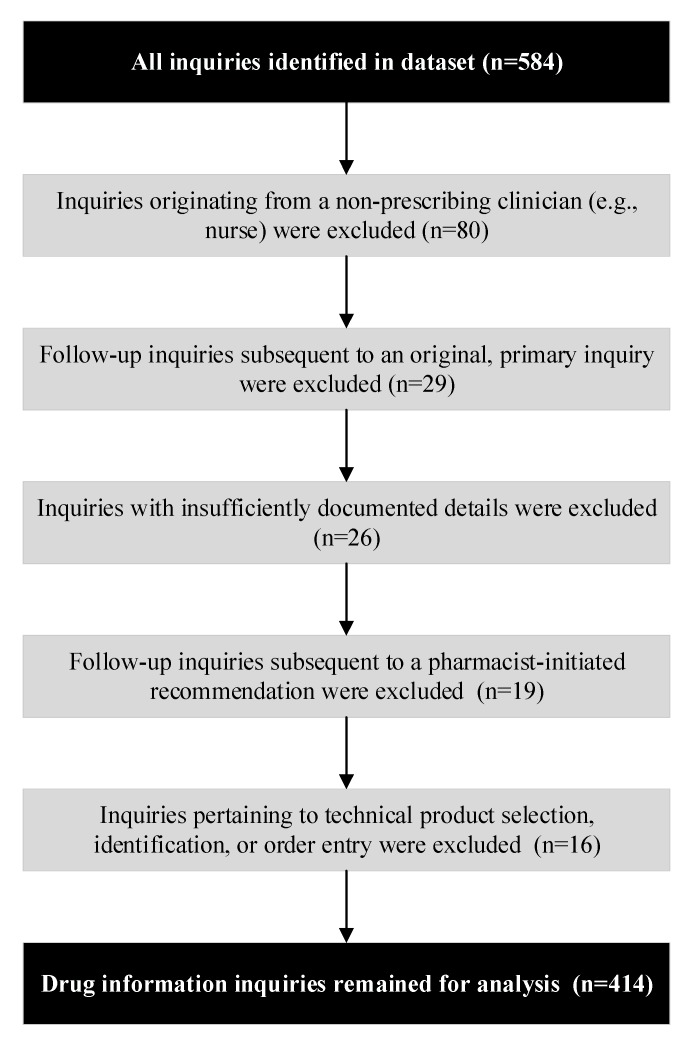
Little is known about the types of drug information inquiries (DIIs) prescribers caring for older adults ask pharmacists during routine practice. The objective of this research was to analyze the types of DIIs prescribing clinicians of Programs of All-Inclusive Care for the Elderly (PACE) made to clinical pharmacists during routine patient care. This was a retrospective analysis of documented pharmacists' encounters with PACE prescribers between March through December, 2018. DIIs were classified using a developed taxonomy that describes prescribers' motivations for consulting with pharmacists and their drug information needs. Prescribers made 414 DIIs during the study period. Medication safety concerns motivated the majority of prescribers' inquiries (223, 53.9%). Inquiries received frequently involved modifying drug therapy (94, 22.7%), identifying or resolving adverse drug events (75, 18.1%), selecting or adjusting doses (61, 14.7%), selecting new drug therapies (57, 13.8%), and identifying or resolving drug interactions (52, 12.6%). Central nervous system medications (e.g., antidepressants and opioids), were involved in 38.6% (n = 160) of all DIIs. When answering DIIs, pharmacists made 389 recommendations. Start alternative medications (18.0%), start new medications (16.7%), and change doses (12.1%) were the most frequent recommendations rendered. Prescribers implemented at least 79.3% (n = 268) of recommendations based on pharmacy records (n = 338 verifiable recommendations). During clinical practice, PACE prescribers commonly ask pharmacists a variety of DIIs, largely related to medication safety concerns. In response to these DIIs, pharmacists provide medication management recommendations, which are largely implemented by prescribers.
在日常诊疗过程中,为老年人提供护理的开处方者向药剂师咨询药物信息的类型鲜为人知。本研究的目的是分析老年全面护理计划(PACE)的开处方临床医生在日常患者护理期间向临床药剂师咨询的药物信息类型。这是一项对2018年3月至12月期间药剂师与PACE开处方者之间记录的接触情况进行的回顾性分析。药物信息咨询使用一种已制定的分类法进行分类,该分类法描述了开处方者咨询药剂师的动机及其药物信息需求。在研究期间,开处方者提出了414次药物信息咨询。大多数开处方者的咨询是出于对用药安全的担忧(223次,53.9%)。经常收到的咨询涉及调整药物治疗(94次,22.7%)、识别或解决药物不良事件(75次,18.1%)、选择或调整剂量(61次,14.7%)、选择新的药物治疗(57次,13.8%)以及识别或解决药物相互作用(52次,12.6%)。中枢神经系统药物(如抗抑郁药和阿片类药物)涉及所有药物信息咨询的38.6%(n = 160)。在回答药物信息咨询时,药剂师提出了389条建议。开始使用替代药物(18.0%)、开始使用新药物(16.7%)和改变剂量(12.1%)是最常给出的建议。根据药房记录(n = 338条可核实的建议),开处方者至少实施了79.3%(n = 268)的建议。在临床实践中,PACE开处方者通常会向药剂师询问各种药物信息咨询,主要与用药安全问题有关。针对这些药物信息咨询,药剂师提供用药管理建议,这些建议大多被开处方者采纳。