Matoba Keiichiro, Takeda Yusuke, Nagai Yosuke, Yokota Tamotsu, Utsunomiya Kazunori, Nishimura Rimei
Division of Diabetes, Metabolism, and Endocrinology, Department of Internal Medicine, The Jikei University School of Medicine, Tokyo 105-8461, Japan.
Center for Preventive Medicine, The Jikei University School of Medicine, Tokyo 105-8461, Japan.
Biomedicines. 2020 Feb 22;8(2):40. doi: 10.3390/biomedicines8020040.
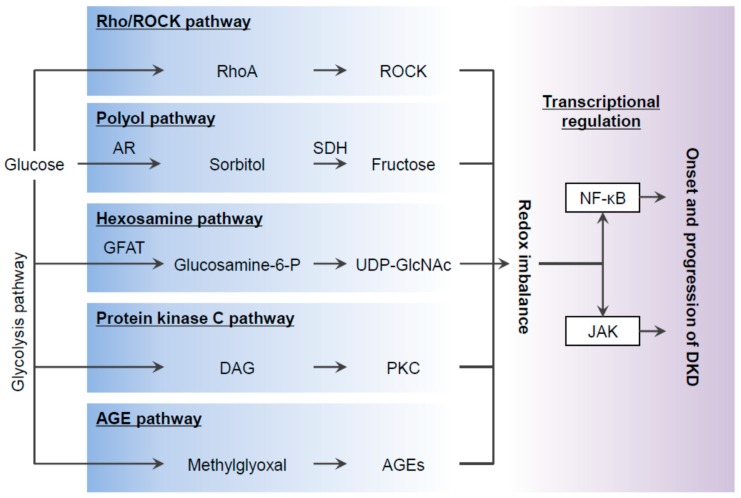
Diabetic kidney disease (DKD) is a worldwide public health problem. It is the leading cause of end-stage renal disease and is associated with increased mortality from cardiovascular complications. The tight interactions between redox imbalance and the development of DKD are becoming increasingly evident. Numerous cascades, including the polyol and hexosamine pathways have been implicated in the oxidative stress of diabetes patients. However, the precise molecular mechanism by which oxidative stress affects the progression of DKD remains to be elucidated. Given the limited therapeutic options for DKD, it is essential to understand how oxidants and antioxidants are controlled in diabetes and how oxidative stress impacts the progression of renal damage. This review aims to provide an overview of the current status of knowledge regarding the pathological roles of oxidative stress in DKD. Finally, we summarize recent therapeutic approaches to preventing DKD with a focus on the anti-oxidative effects of newly developed anti-hyperglycemic agents.
糖尿病肾病(DKD)是一个全球性的公共卫生问题。它是终末期肾病的主要原因,并且与心血管并发症导致的死亡率增加相关。氧化还原失衡与DKD发展之间的紧密相互作用正变得越来越明显。包括多元醇途径和己糖胺途径在内的众多级联反应都与糖尿病患者的氧化应激有关。然而,氧化应激影响DKD进展的确切分子机制仍有待阐明。鉴于DKD的治疗选择有限,了解糖尿病中氧化剂和抗氧化剂是如何被调控的以及氧化应激如何影响肾脏损伤的进展至关重要。这篇综述旨在概述目前关于氧化应激在DKD中的病理作用的知识现状。最后,我们总结了近期预防DKD的治疗方法,重点关注新开发的抗高血糖药物的抗氧化作用。