Chair and Department of Experimental and Clinical Physiology, Laboratory of Centre for Preclinical Research, Medical University of Warsaw, 02-097 Warsaw, Poland.
Faculty of Medicine, Medical University of Warsaw, 02-091 Warsaw, Poland.
Int J Mol Sci. 2023 Aug 22;24(17):13038. doi: 10.3390/ijms241713038.
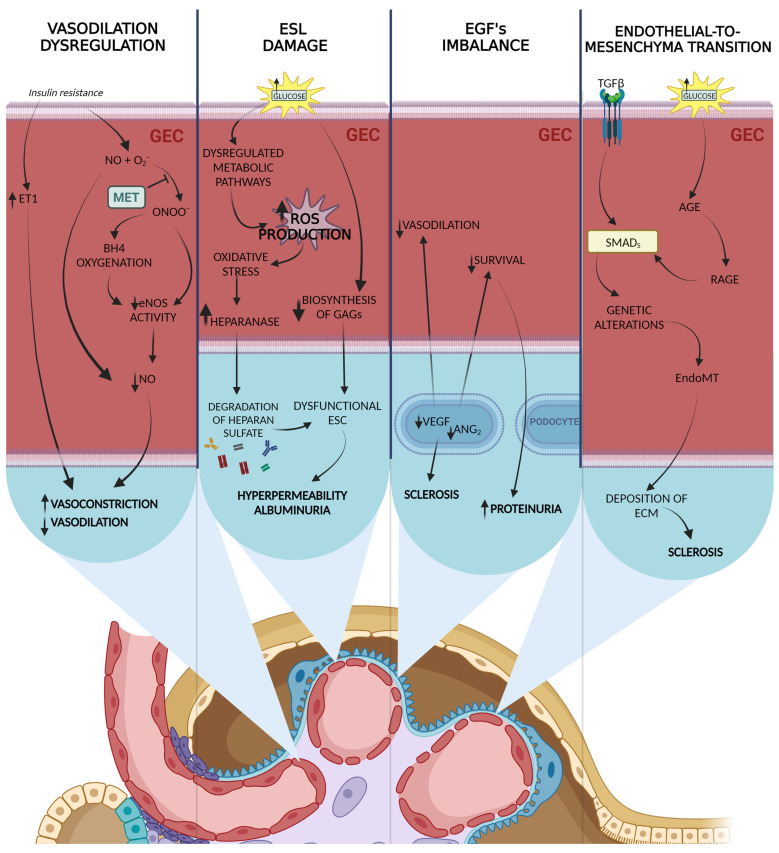
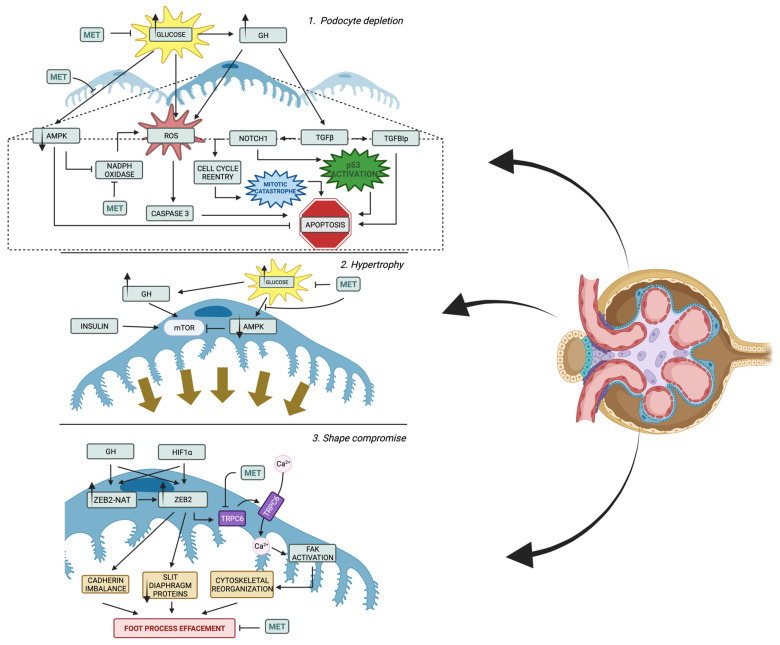
Diabetic kidney disease (DKD) is one of the leading causes of death among patients diagnosed with diabetes mellitus. Despite the growing knowledge about the pathogenesis of DKD, we still do not have effective direct pharmacotherapy. Accurate blood sugar control is essential in slowing down DKD. It seems that metformin has a positive impact on kidneys and this effect is not only mediated by its hypoglycemic action, but also by direct molecular regulation of pathways involved in DKD. The molecular mechanism of DKD is complex and we can distinguish polyol, hexosamine, PKC, and AGE pathways which play key roles in the development and progression of this disease. Each of these pathways is overactivated in a hyperglycemic environment and it seems that most of them may be regulated by metformin. In this article, we summarize the knowledge about DKD pathogenesis and the potential mechanism of the nephroprotective effect of metformin. Additionally, we describe the impact of metformin on glomerular endothelial cells and podocytes, which are harmed in DKD.
糖尿病肾病(DKD)是糖尿病患者死亡的主要原因之一。尽管我们对 DKD 的发病机制有了更多的了解,但仍然没有有效的直接药物治疗方法。准确控制血糖对于减缓 DKD 的发展至关重要。二甲双胍似乎对肾脏有积极影响,这种作用不仅通过其降血糖作用介导,还通过直接调节 DKD 相关途径的分子调节来介导。DKD 的分子机制很复杂,我们可以区分多元醇、己糖胺、PKC 和 AGE 途径,这些途径在疾病的发展和进展中起关键作用。在高血糖环境中,每个途径都过度激活,似乎大多数途径都可以通过二甲双胍来调节。本文总结了 DKD 发病机制的相关知识,以及二甲双胍对肾脏的保护作用的潜在机制。此外,还描述了二甲双胍对肾小球内皮细胞和足细胞的影响,这些细胞在 DKD 中受到损害。