Llanos Jean-Pierre, Ortega Hector, Bogart Michael, Packnett Elizabeth R, Manjelievskaia Janna, Bell Christopher F, Hahn Beth
Respiratory, US Medical Affairs, GSK, Research Triangle Park, NC, USA.
US Value Evidence and Outcomes, US Medical Affairs, GSK, Research Triangle Park, NC, USA.
J Asthma Allergy. 2020 Jan 29;13:77-87. doi: 10.2147/JAA.S236609. eCollection 2020.
Results from clinical trials in patients with severe eosinophilic asthma have demonstrated that mepolizumab is well tolerated and is associated with improved asthma control as evidenced by reductions in both exacerbations and maintenance oral corticosteroid use, and improvements in lung function, asthma control, and quality of life. However, real-world data are lacking on the impact of mepolizumab treatment.
To assess the effect of mepolizumab treatment on the rate of asthma exacerbations and asthma exacerbation-related costs in a real-world setting.
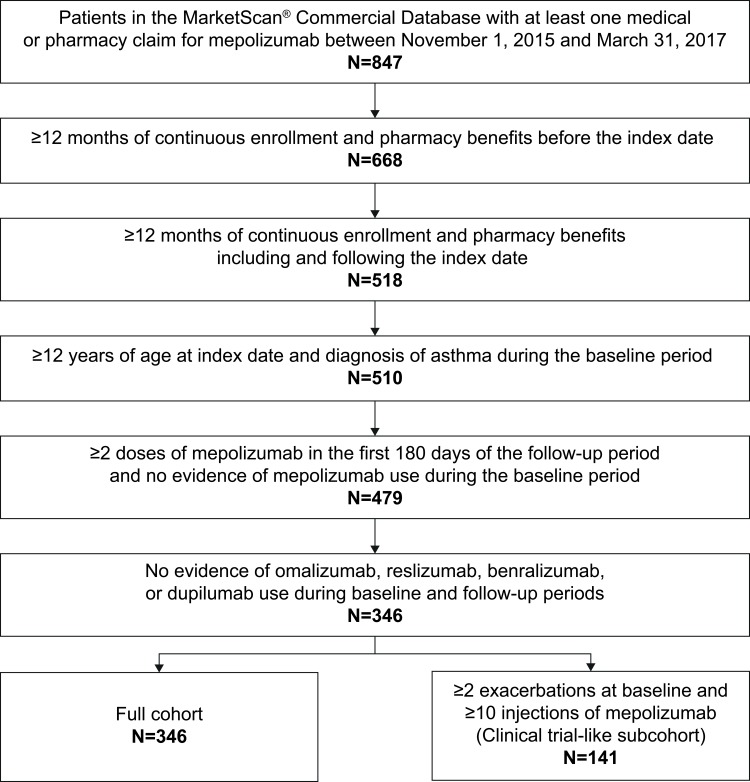
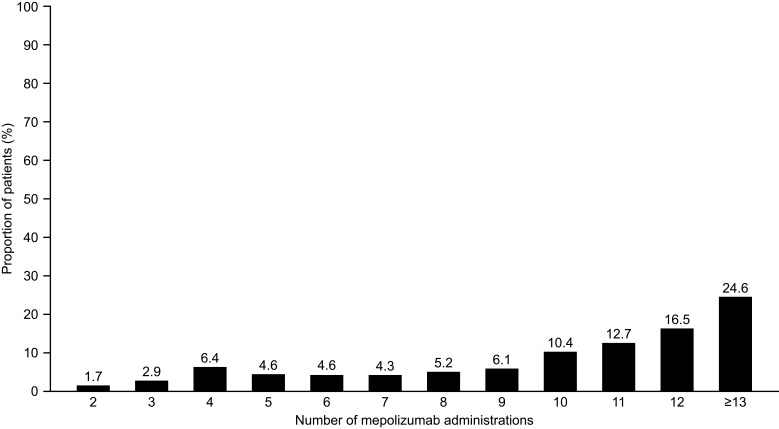
This retrospective cohort study (GSK ID: 209017; HO-18-19168) analyzed data from patients with severe asthma ≥12 years of age at mepolizumab treatment initiation (index date) with ≥12 months pre- (baseline) and post-index (follow-up) data from a commercial claims database (patients were identified from November 1, 2015 to March 31, 2017). Asthma exacerbations (primary objective) and asthma exacerbation-related costs (secondary objective) in the baseline and follow-up periods were compared. Other analyses included the number of mepolizumab administrations and the use of concomitant asthma medications.
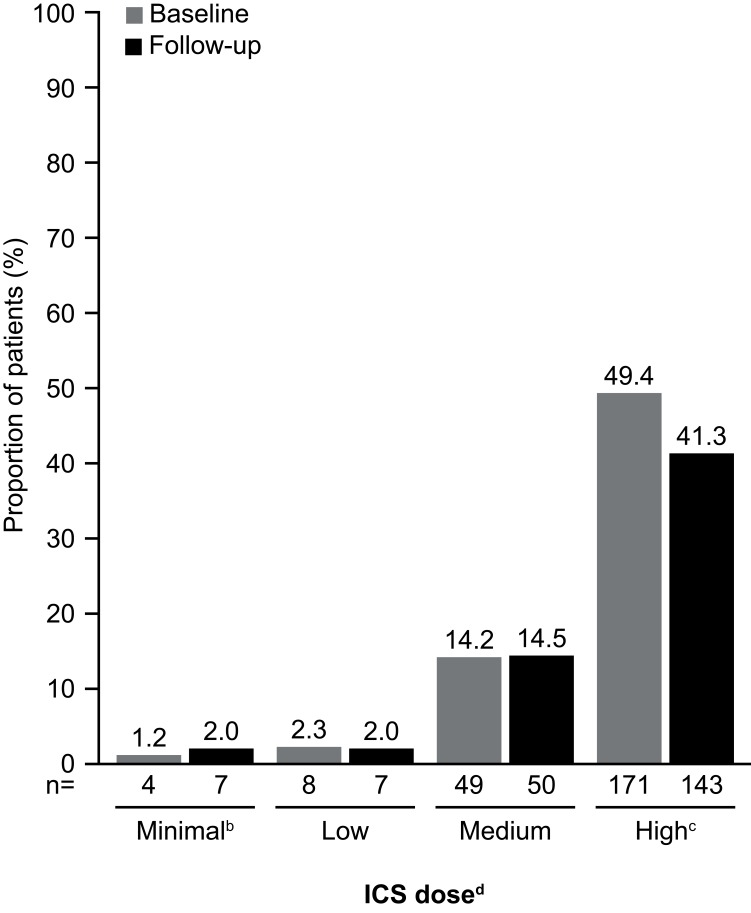
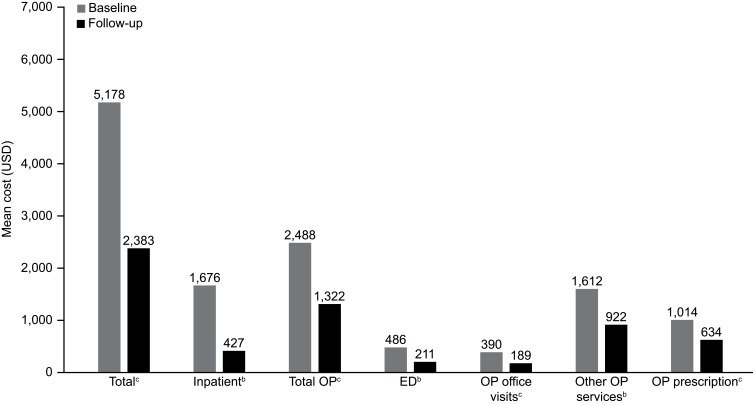
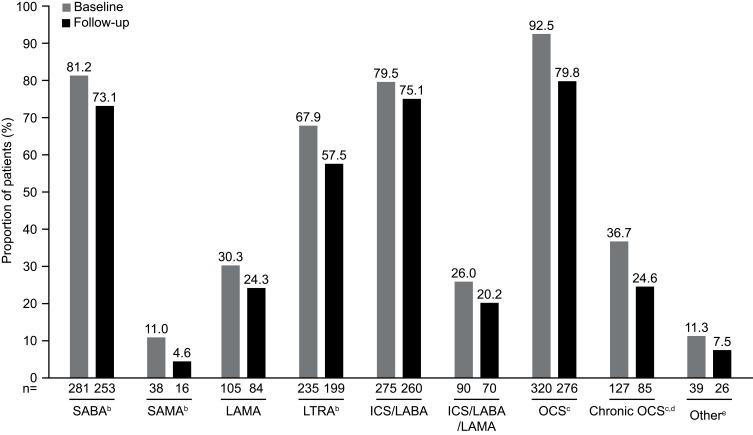
Data were analyzed from 346 patients. Mepolizumab significantly reduced the proportion of patients with any exacerbation and exacerbations requiring hospitalization, compared with baseline. Significant reductions in the rate of all exacerbations of 38.4% (from 2.68 to 1.65 events/patient/year; <0.001) and of exacerbations requiring hospitalization of 72.7% (from 0.11 to 0.03 events/patient/year; =0.004) were observed, compared with baseline. Mean total asthma exacerbation-related costs (excluding mepolizumab acquisition and administrative costs) per person were significantly lower during follow-up compared with baseline (<0.05) and the use of asthma medications, including oral and inhaled corticosteroids, was also lower.
This study confirms the clinical benefit observed in previous mepolizumab clinical trials and demonstrates that mepolizumab is effective in a real-world setting.
针对重度嗜酸性粒细胞性哮喘患者的临床试验结果表明,美泊利珠单抗耐受性良好,与哮喘控制改善相关,这体现在发作次数减少、维持期口服糖皮质激素使用量减少、肺功能改善、哮喘控制及生活质量提高等方面。然而,关于美泊利珠单抗治疗影响的真实世界数据尚缺。
评估在真实世界环境中美泊利珠单抗治疗对哮喘发作率及与哮喘发作相关费用的影响。
这项回顾性队列研究(葛兰素史克编号:209017;HO - 18 - 19168)分析了在美泊利珠单抗治疗起始时(索引日期)年龄≥12岁的重度哮喘患者的数据,这些数据来自一个商业索赔数据库,包括索引日期前(基线)≥12个月和索引日期后(随访)≥12个月的数据(患者于2015年11月1日至2017年3月31日被识别)。比较了基线期和随访期的哮喘发作(主要目标)及与哮喘发作相关的费用(次要目标)。其他分析包括美泊利珠单抗给药次数及哮喘伴随用药的使用情况。
对346例患者的数据进行了分析。与基线相比,美泊利珠单抗显著降低了出现任何发作及需要住院治疗的发作患者比例。与基线相比,所有发作率显著降低38.4%(从2.68次/患者/年降至1.65次/患者/年;<0.001),需要住院治疗的发作率显著降低72.7%(从0.11次/患者/年降至0.03次/患者/年;=0.004)。随访期间人均哮喘发作相关总费用(不包括美泊利珠单抗购置及管理费用)与基线相比显著降低(<0.05),且哮喘药物(包括口服和吸入糖皮质激素)的使用量也较低。
本研究证实了在之前美泊利珠单抗临床试验中观察到的临床益处,并表明美泊利珠单抗在真实世界环境中有效。