Research Center, Dongnam Institute of Radiological & Medical Sciences (DIRAMS), Busan, Republic of Korea.
Department of Microbiology and Immunology, College of Medicine, Inje University, Busan, Republic of Korea.
J Radiat Res. 2020 May 22;61(3):376-387. doi: 10.1093/jrr/rraa002.
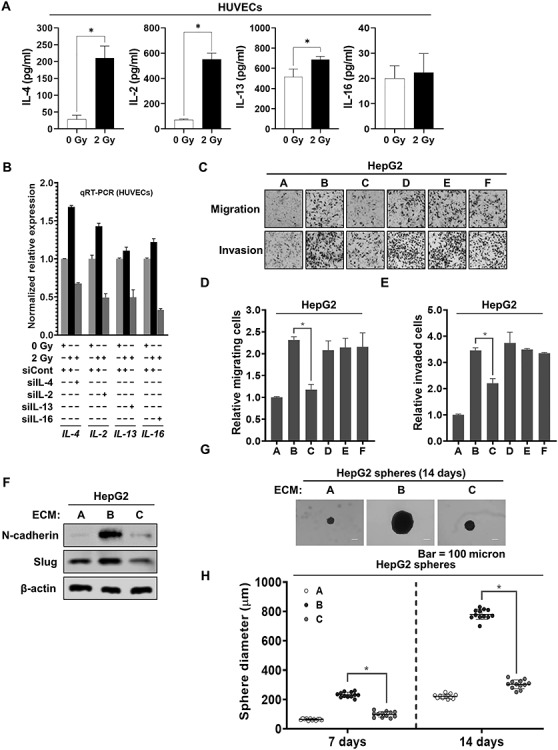
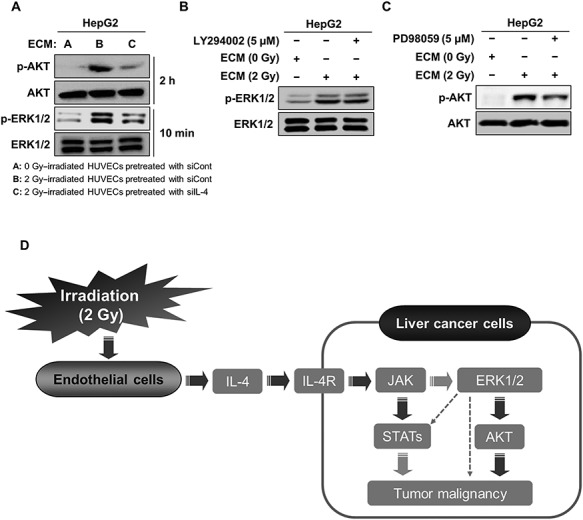
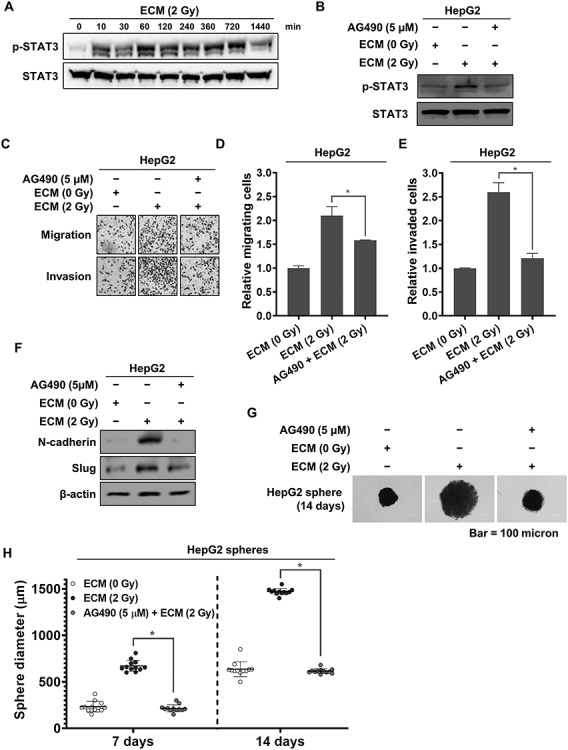
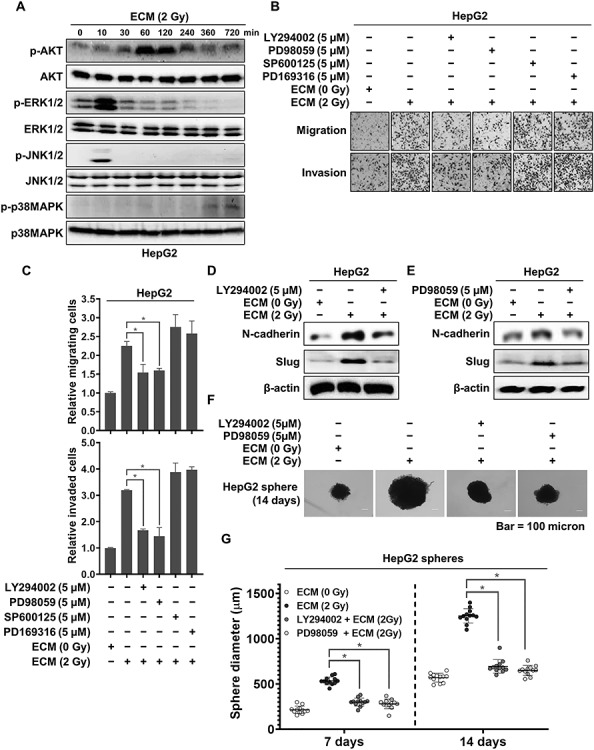
The malignant traits involved in tumor relapse, metastasis and the expansion of cancer stem-like cells are acquired via the epithelial-mesenchymal transition (EMT) process in the tumor microenvironment. In addition, the tumor microenvironment strongly supports the survival and growth of malignant tumor cells and further contributes to the reduced efficacy of anticancer therapy. Ionizing radiation can influence the tumor microenvironment, because it alters the biological functions of endothelial cells composing tumor vascular systems. However, to date, studies on the pivotal role of these endothelial cells in mediating the malignancy of cancer cells in the irradiated tumor microenvironment are rare. We previously evaluated the effects of irradiated endothelial cells on the malignant traits of human liver cancer cells and reported that endothelial cells irradiated with 2 Gy reinforce the malignant properties of these cancer cells. In this study, we investigated the signaling mechanisms underlying these events. We revealed that the increased expression level of IL-4 in endothelial cells irradiated with 2 Gy eventually led to enhanced migration and invasion of cancer cells and further expansion of cancer stem-like cells. In addition, this increased level of IL-4 activated the ERK and AKT signaling pathways to reinforce these events in cancer cells. Taken together, our data indicate that ionizing radiation may indirectly modulate malignancy by affecting endothelial cells in the tumor microenvironment. Importantly, these indirect effects on malignancy are thought to offer valuable clues or targets for overcoming the tumor recurrence after radiotherapy.
肿瘤复发、转移和肿瘤干细胞样细胞扩增所涉及的恶性特征是通过肿瘤微环境中的上皮-间充质转化(EMT)过程获得的。此外,肿瘤微环境强烈支持恶性肿瘤细胞的存活和生长,并进一步导致抗癌治疗效果降低。电离辐射可以影响肿瘤微环境,因为它改变了构成肿瘤血管系统的内皮细胞的生物学功能。然而,迄今为止,关于这些内皮细胞在介导辐照肿瘤微环境中癌细胞恶性的关键作用的研究很少。我们之前评估了辐照内皮细胞对人肝癌细胞恶性特征的影响,并报告了 2Gy 辐照的内皮细胞增强了这些癌细胞的恶性特性。在这项研究中,我们研究了这些事件背后的信号机制。我们揭示了 2Gy 辐照的内皮细胞中 IL-4 表达水平的增加最终导致癌细胞迁移和侵袭能力增强,并进一步导致肿瘤干细胞样细胞扩增。此外,这种增加的 IL-4 水平激活了 ERK 和 AKT 信号通路,以加强癌细胞中的这些事件。总之,我们的数据表明,电离辐射可能通过影响肿瘤微环境中的内皮细胞间接调节恶性程度。重要的是,这些对恶性程度的间接影响被认为为克服放疗后肿瘤复发提供了有价值的线索或靶点。