Department of Veterinary Clinical Sciences, College of Veterinary Medicine, Purdue University, West Lafayette, Indiana.
School of Veterinary Science, The University of Queensland, Gatton, Queensland, Australia.
J Vet Intern Med. 2020 Mar;34(2):902-908. doi: 10.1111/jvim.15747. Epub 2020 Feb 26.
In metabolically stable horses, alpha-2-agonists suppress insulin secretion with transient hyperglycemia and rebound hyperinsulinemia. In horses with insulin dysregulation (ID), the effect of alpha-2-agonists has not been investigated; however, both the alpha-2-agonist-induced suppression of insulin secretion and rebound hyperinsulinemia could have clinical relevance.
HYPOTHESIS/OBJECTIVES: In horses with ID, alpha-2-agonists will alter insulin and glucose dynamics.
Seven horses with ID and 7 control horses.
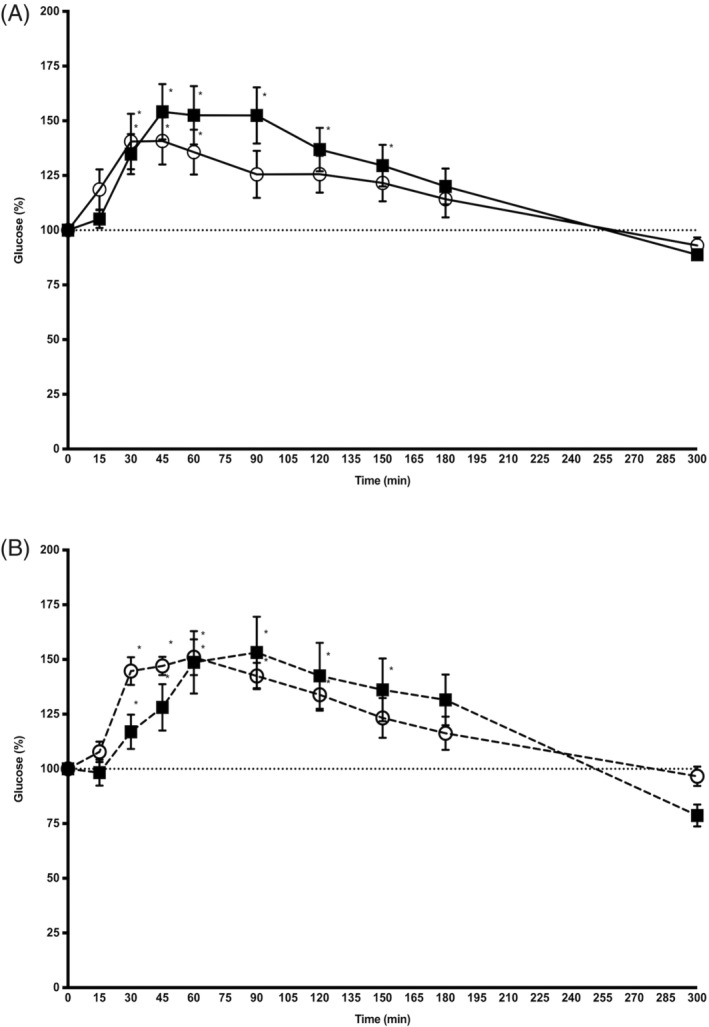
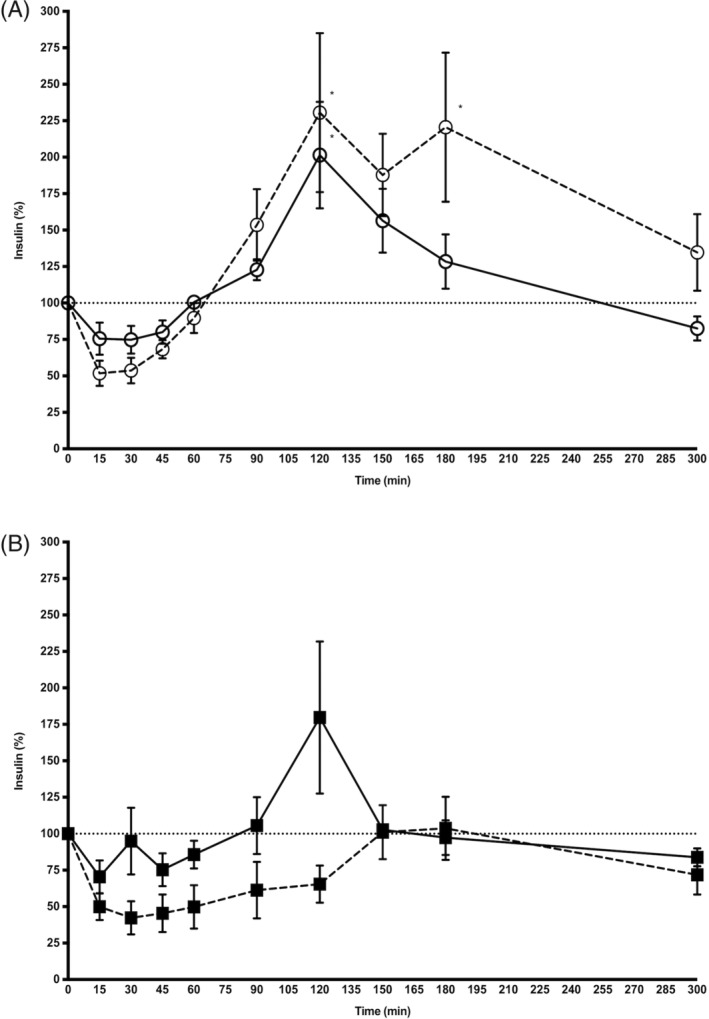
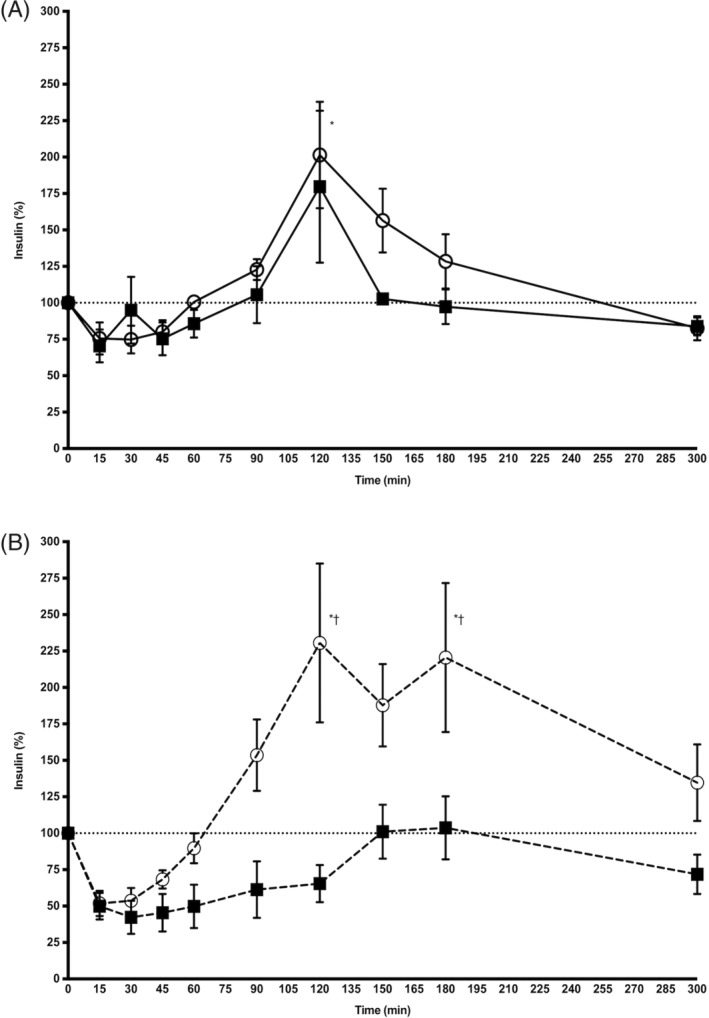
In this randomized crossover study, xylazine hydrochloride (1.1 mg/kg) or detomidine hydrochloride (30 μg/kg) were administered IV, and blood was collected for glucose and insulin concentrations at 0, 15, 30, 45, 60, 90, 120, 150, 180, and 300 minutes after administration. Horses received each drug in a random order with a 24-hour washout period between drugs. Percent change in glucose and insulin concentrations was compared between groups, drugs, and over time with P < .05 considered significant.
A significant time-dependent effect of both alpha-2-agonists on glucose and insulin concentrations in control and ID horses was identified (P = .01 for all comparisons). There was no significant effect of sedative selection and endocrine status on blood glucose concentration in either group; however, in ID horses, xylazine administration resulted in severe rebound hyperinsulinemia whereas detomidine administration did not (P = .02).
Alpha-2-agonists have a significant effect on glucose and insulin concentrations in horses. In ID horses, detomidine could minimize hyperinsulinemia when compared to xylazine.
在代谢稳定的马匹中,α-2-激动剂会导致短暂的高血糖和胰岛素反弹性升高,从而抑制胰岛素分泌。在胰岛素调节异常(ID)的马匹中,尚未研究 α-2-激动剂的作用;然而,α-2-激动剂引起的胰岛素分泌抑制和胰岛素反弹性升高都可能具有临床相关性。
假设/目的:在 ID 马匹中,α-2-激动剂将改变胰岛素和葡萄糖动态。
7 匹 ID 马匹和 7 匹对照马匹。
在这项随机交叉研究中,静脉注射盐酸二甲苯胺噻嗪(1.1mg/kg)或盐酸地托咪定(30μg/kg),并在给药后 0、15、30、45、60、90、120、150、180 和 300 分钟采集血糖和胰岛素浓度的血液样本。马匹以随机顺序接受每种药物,两种药物之间有 24 小时的洗脱期。使用 P<0.05 来评估组间、药物间和时间变化的差异。
在对照和 ID 马匹中,两种 α-2-激动剂对血糖和胰岛素浓度均有显著的时间依赖性影响(所有比较 P<0.05)。镇静剂选择和内分泌状态对两组马匹的血糖浓度均无显著影响;然而,在 ID 马匹中,盐酸二甲苯胺噻嗪导致严重的胰岛素反弹性升高,而盐酸地托咪定则没有(P=0.02)。
α-2-激动剂对马匹的血糖和胰岛素浓度有显著影响。在 ID 马匹中,与盐酸二甲苯胺噻嗪相比,盐酸地托咪定可最大程度地减少胰岛素血症。