Gut-Brain Neurobiology Laboratory, Department of Medicine, School of Medicine, Duke University, Durham, North Carolina 27710, USA; email:
School of Medicine, Duke University, Durham, North Carolina 27710, USA.
Annu Rev Neurosci. 2020 Jul 8;43:337-353. doi: 10.1146/annurev-neuro-091619-022657. Epub 2020 Feb 26.
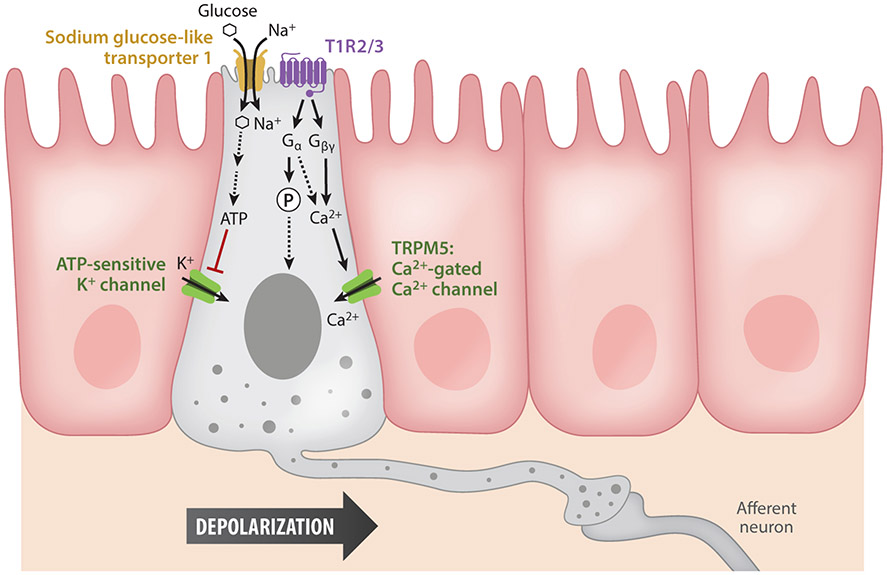
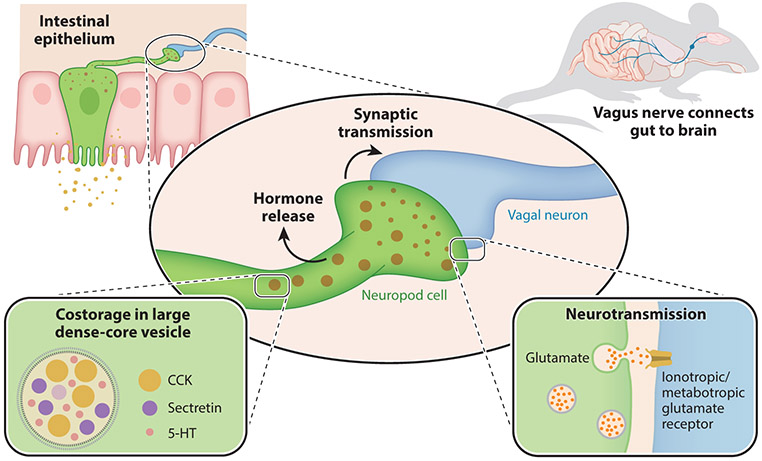
Guided by sight, scent, texture, and taste, animals ingest food. Once ingested, it is up to the gut to make sense of the food's nutritional value. Classic sensory systems rely on neuroepithelial circuits to convert stimuli into signals that guide behavior. However, sensation of the gut milieu was thought to be mediated only by the passive release of hormones until the discovery of synapses in enteroendocrine cells. These are gut sensory epithelial cells, and those that form synapses are referred to as neuropod cells. Neuropod cells provide the foundation for the gut to transduce sensory signals from the intestinal milieu to the brain through fast neurotransmission onto neurons, including those of the vagus nerve. These findings have sparked a new field of exploration in sensory neurobiology-that of gut-brain sensory transduction.
动物通过视觉、嗅觉、质地和味觉来引导进食。一旦食物被摄入,肠道就需要对其营养价值进行判断。经典的感觉系统依赖于神经上皮回路将刺激转化为引导行为的信号。然而,人们认为肠道环境的感觉仅通过激素的被动释放来介导,直到肠内分泌细胞中突触的发现。这些是肠道感觉上皮细胞,形成突触的细胞被称为神经足细胞。神经足细胞为肠道提供了基础,通过快速神经传递将肠道环境中的感觉信号转导到大脑,包括迷走神经的神经元。这些发现激发了感觉神经生物学一个新的探索领域,即肠道-大脑感觉转导。