Faculdade de Medicina de Botucatu, Universidade Estadual Paulista (Unesp), Botucatu, São Paulo, Brasil.
Departamento de Clínica Médica, Faculdade de Medicina de Botucatu, Universidade Estadual Paulista (Unesp), Botucatu, São Paulo, Brasil.
PLoS One. 2020 Feb 26;15(2):e0229531. doi: 10.1371/journal.pone.0229531. eCollection 2020.
Surgical complications after kidney transplantation can lead to catastrophic outcomes. Frailty has been associated with important kidney transplantation outcomes; however, there are no studies assessing this measure of physiological reserve as a specific predictor of surgical complications in this population. Such an assessment was, therefore, the objective of the present study.
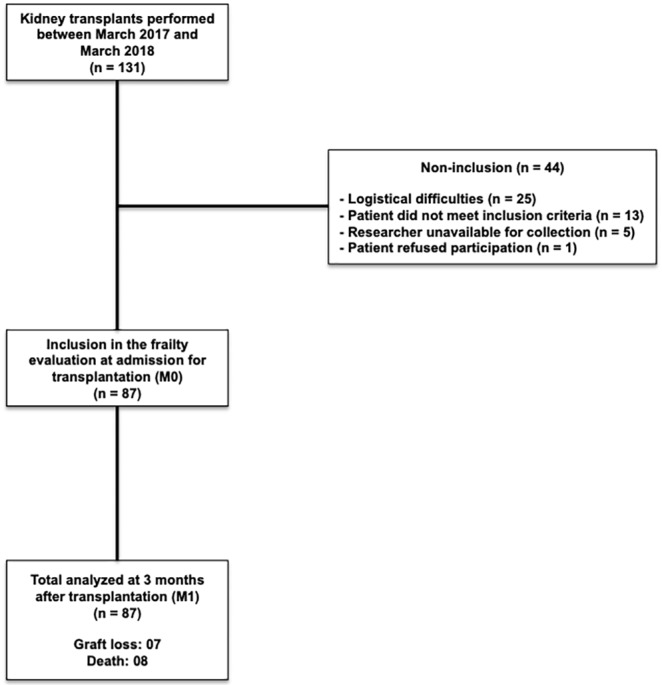
A total of 87 individuals aged ≥ 18 years who underwent kidney transplantation between March 2017 and March 2018 were included. At the time of admission for kidney transplantation, demographic, clinical, and kidney transplantation data were collected, and the frailty score was calculated according to Fried et al., which comprises five components: shrinking, weakness, exhaustion, low activity, and slowed walking speed. Urological, vascular, and general surgical complications were assessed three months later, or until graft loss or death. The propensity score was used to achieve a better homogeneity of the sample, and new analyses were performed in this new, balanced sample.
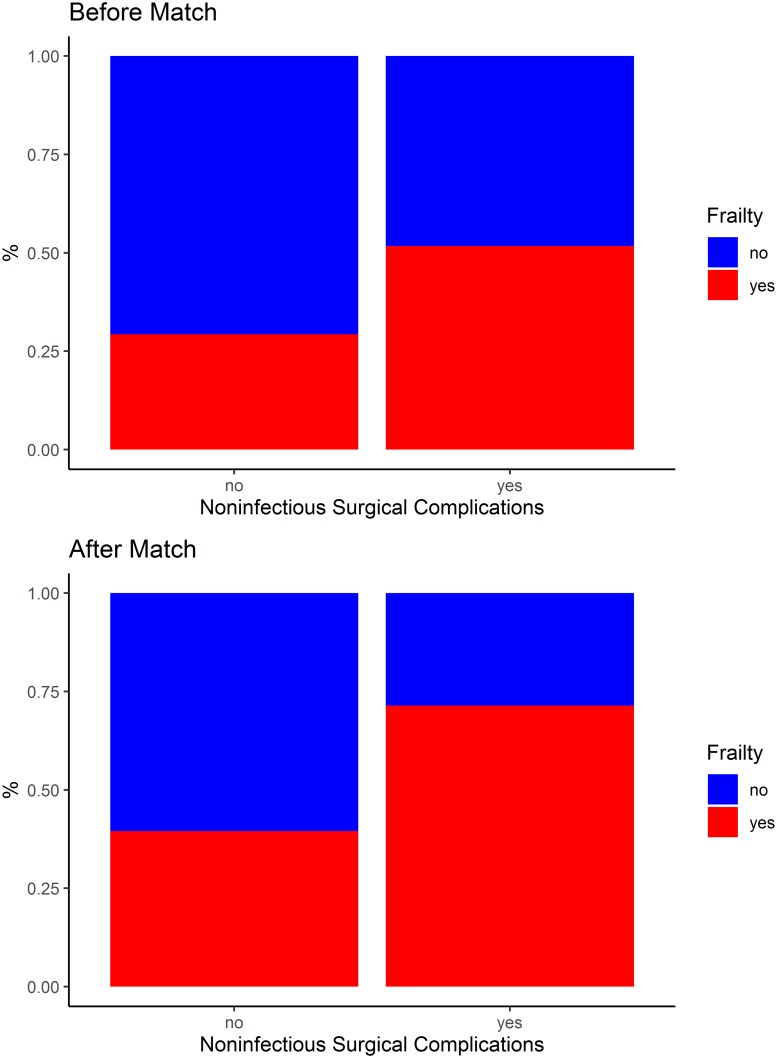
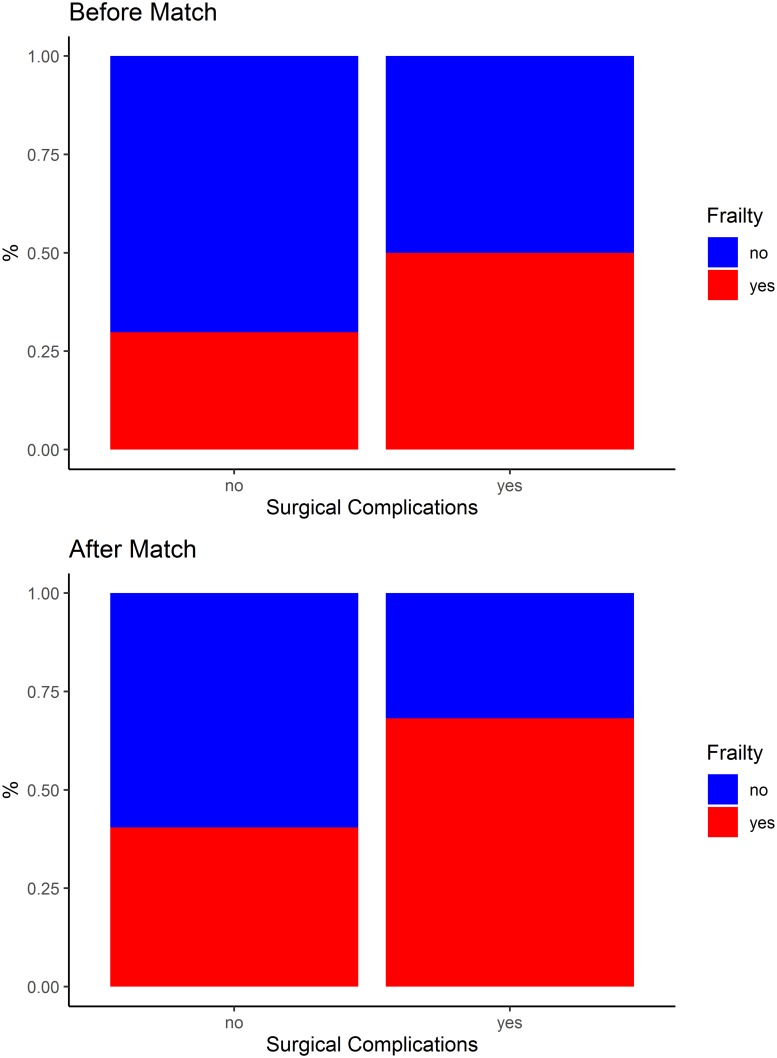
Of the 87 individuals included, 30 (34.5%) had surgical complications. After propensity score matching, the risk of surgical complications was significantly higher among the frail individuals (RR 2.14; 95% CI 1.01-4.54; p = 0.035); specifically, the risk of noninfectious surgical complications was significantly higher among these individuals (RR 2.50; 95% CI 1.11-5.62; p = 0.017).
The results showed that individuals with some degree of frailty before kidney transplantation were more subject to surgical complications. The calculation of the frailty score for transplant candidates and the implementations of measures to increase the physiological reserve of these patients at the time of kidney transplantation may possibly reduce the occurrence of surgical complications.
肾移植术后的手术并发症可能导致灾难性后果。虚弱与重要的肾移植结局相关;然而,目前还没有研究评估这种生理储备作为该人群手术并发症的特定预测指标。因此,本研究的目的是评估该指标。
共纳入 87 名年龄≥18 岁、2017 年 3 月至 2018 年 3 月期间接受肾移植的患者。在接受肾移植时,收集了人口统计学、临床和肾移植数据,并根据 Fried 等人的方法计算了虚弱评分,该评分包括五个部分:消瘦、虚弱、疲惫、低活动量和行走速度减慢。三个月后评估尿外科、血管和普通外科并发症,或直至移植物丢失或死亡。使用倾向评分实现样本更好的同质性,并在这个新的平衡样本中进行新的分析。
在 87 名患者中,30 名(34.5%)发生了手术并发症。在进行倾向评分匹配后,虚弱患者发生手术并发症的风险显著更高(RR 2.14;95%CI 1.01-4.54;p = 0.035);具体而言,这些患者发生非感染性手术并发症的风险显著更高(RR 2.50;95%CI 1.11-5.62;p = 0.017)。
结果表明,肾移植前存在一定程度虚弱的患者更容易发生手术并发症。在为移植候选者计算虚弱评分并在肾移植时采取措施增加这些患者的生理储备,可能会降低手术并发症的发生。