Department of Neuroscience, Mahoney Institute for Neurosciences, Perelman School of Medicine, University of Pennsylvania, Philadelphia, PA 19104
Department of Neuroscience, Mahoney Institute for Neurosciences, Perelman School of Medicine, University of Pennsylvania, Philadelphia, PA 19104.
eNeuro. 2020 Mar 18;7(2). doi: 10.1523/ENEURO.0348-19.2020. Print 2020 Mar/Apr.
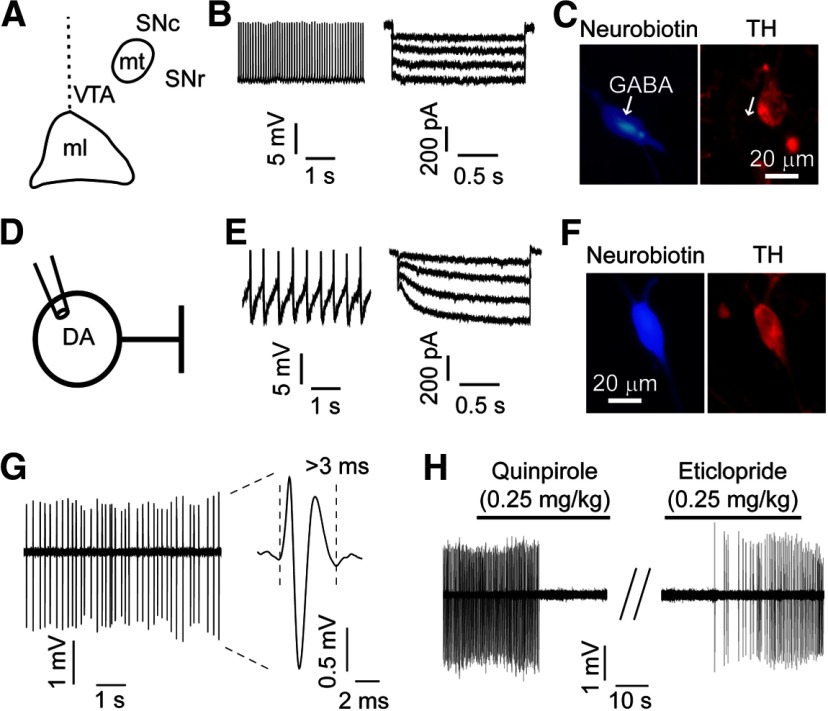
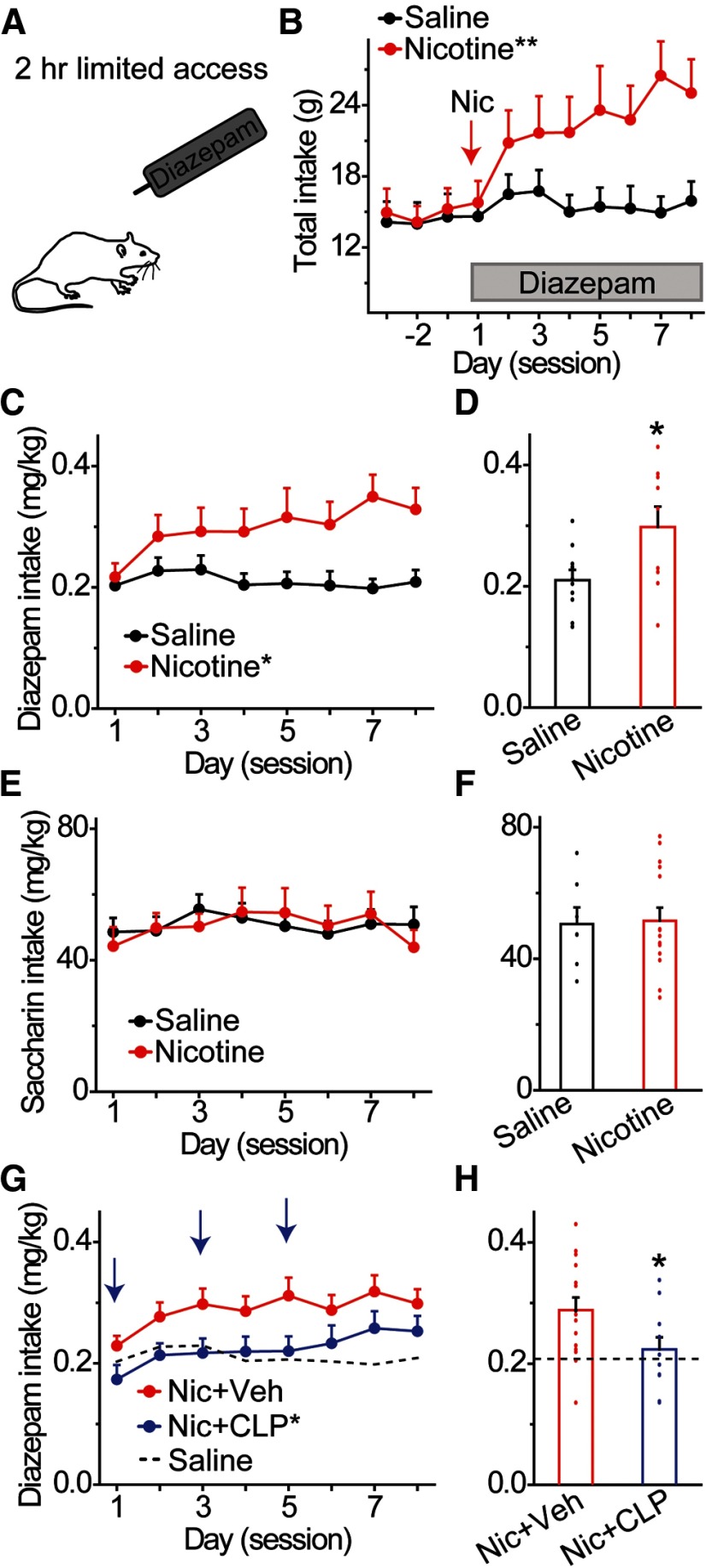
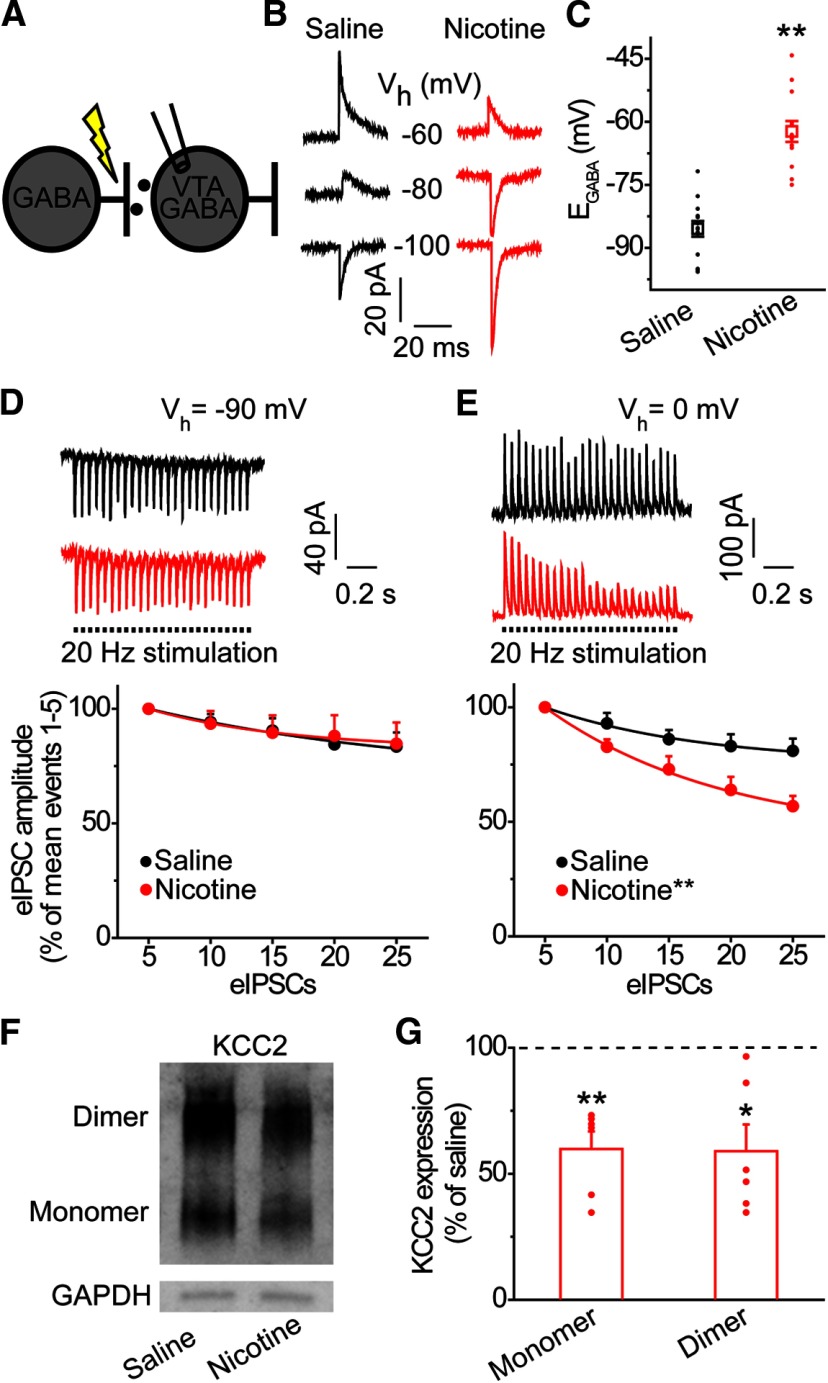
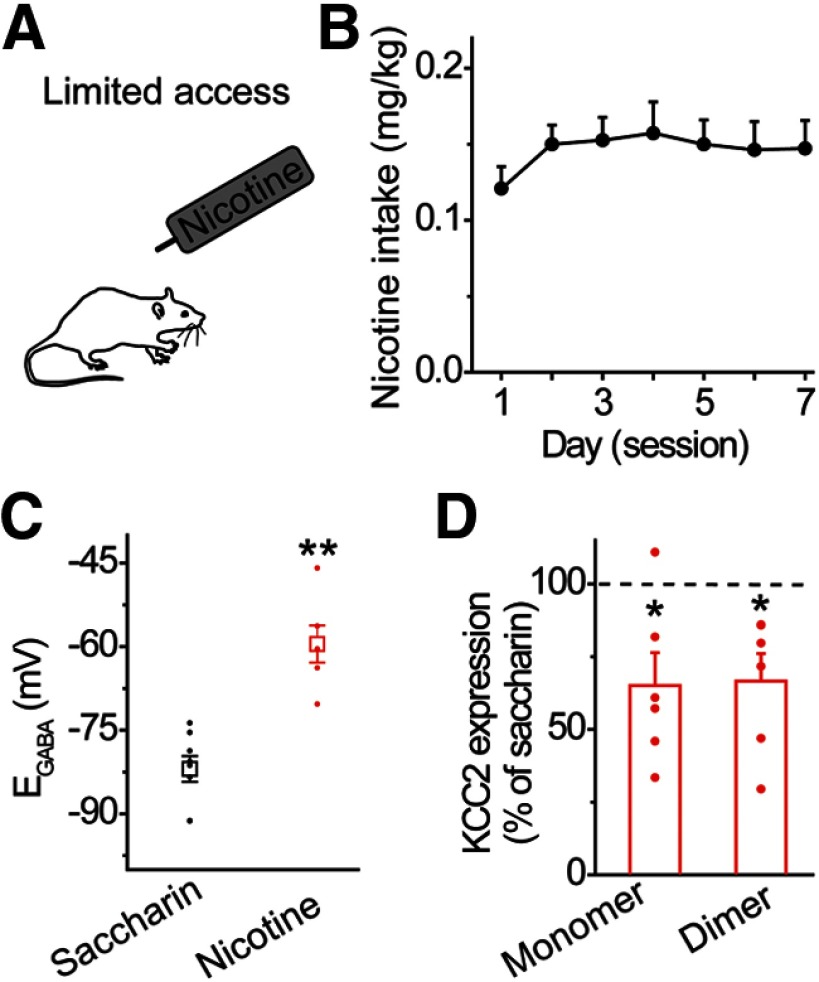
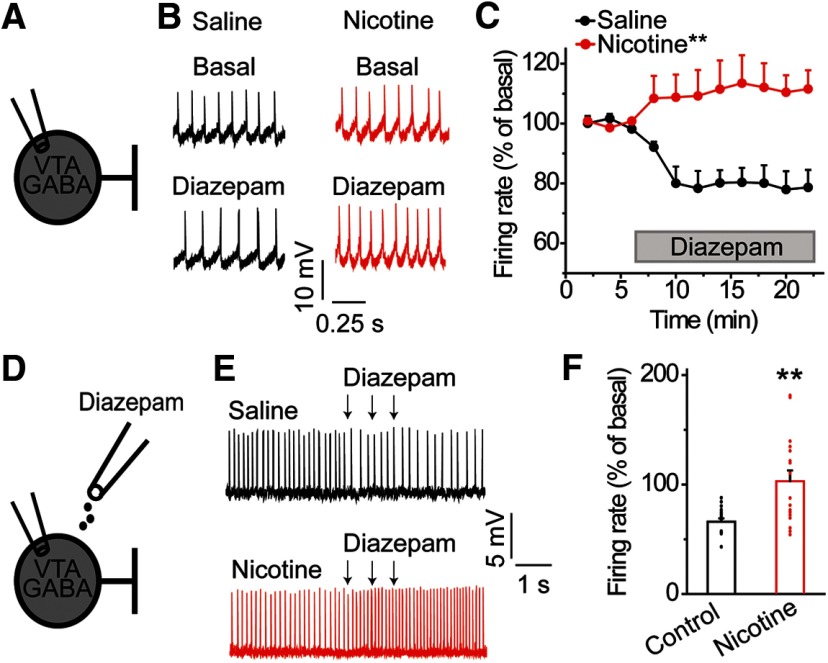
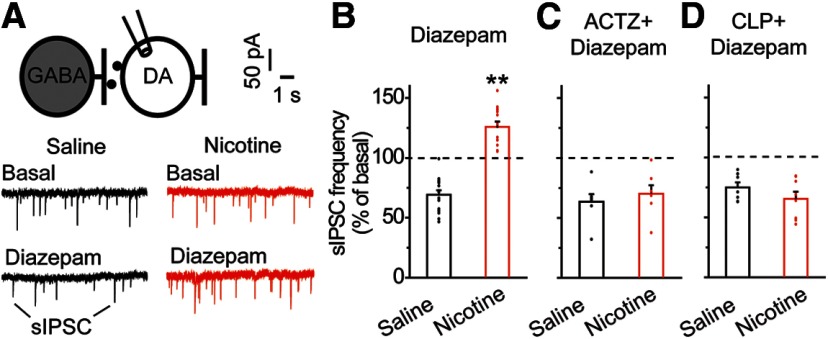
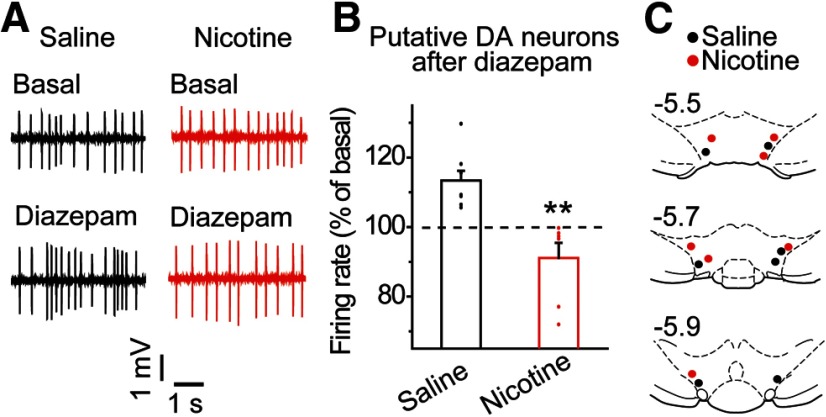
Nicotine use increases the risk for subsequent abuse of other addictive drugs, but the biological basis underlying this risk remains largely unknown. Interactions between nicotine and other drugs of abuse may arise from nicotine-induced neural adaptations in the mesolimbic dopamine (DA) system, a common pathway for the reinforcing effects of many addictive substances. Previous work identified nicotine-induced neuroadaptations that alter inhibitory transmission in the ventral tegmental area (VTA). Here, we test whether nicotine-induced dysregulation of GABAergic signaling within the VTA increases the vulnerability for benzodiazepine abuse that has been reported in smokers. We demonstrate in rats that nicotine exposure dysregulates diazepam-induced inhibition of VTA GABA neurons and increases diazepam consumption. In VTA GABA neurons, nicotine impaired KCC2-mediated chloride extrusion, depolarized the GABA reversal potential, and shifted the pharmacological effect of diazepam on GABA neurons from inhibition toward excitation. In parallel, nicotine-related alterations in GABA signaling observed were associated with enhanced diazepam-induced inhibition of lateral VTA DA neurons Targeting KCC2 with the agonist CLP290 normalized diazepam-induced effects on VTA GABA transmission and reduced diazepam consumption following nicotine administration to the control level. Together, our results provide insights into midbrain circuit alterations resulting from nicotine exposure that contribute to the abuse of other drugs, such as benzodiazepines.
尼古丁使用会增加随后滥用其他成瘾性药物的风险,但这种风险的生物学基础在很大程度上仍不清楚。尼古丁和其他滥用药物之间的相互作用可能源于尼古丁引起的中脑边缘多巴胺(DA)系统的神经适应,这是许多成瘾物质强化作用的共同途径。先前的工作确定了尼古丁诱导的神经适应会改变腹侧被盖区(VTA)中的抑制性传递。在这里,我们测试尼古丁诱导的 VTA 内 GABA 能信号失调是否会增加吸烟者报告的苯二氮䓬类药物滥用的易感性。我们在大鼠中证明,尼古丁暴露会使地西泮诱导的 VTA GABA 神经元抑制失调,并增加地西泮的消耗。在 VTA GABA 神经元中,尼古丁损害了 KCC2 介导的氯离子外排,使 GABA 反转电位去极化,并将地西泮对 GABA 神经元的药理作用从抑制转变为兴奋。平行地,观察到的与尼古丁相关的 GABA 信号改变与增强的地西泮诱导的外侧 VTA DA 神经元抑制有关。用激动剂 CLP290 靶向 KCC2 可使地西泮对 VTA GABA 传递的影响正常化,并将尼古丁给药后地西泮的消耗降低至对照水平。总之,我们的研究结果提供了关于尼古丁暴露导致中脑回路改变的见解,这些改变导致了其他药物(如苯二氮䓬类药物)的滥用。