Public Health and Community Medicine, Menoufia Faculty of medicine, Shebin El-Kom, Menoufia, Egypt
Pediatrics department, Menoufia faculty of medicine, Shebin El-Kom, Menoufia, Egypt.
BMJ Open. 2020 Feb 25;10(2):e034079. doi: 10.1136/bmjopen-2019-034079.
Neonatal jaundice (NNJ) is a frequent complication of glucose-6-phosphate dehydrogenase (G6PD) deficiency.
To estimate the prevalence of G6PD deficiency among neonates with jaundice and to assess mothers' perception towards G6PD and NNJ.
A cross-sectional study was carried out on 487 ethnic Egyptian neonates with indirect hyperbilirubinaemia from June 2018 to July 2019. The collected data included maternal and neonatal characteristics. Laboratory investigations included serum bilirubin, reticulocyte count, ABO grouping, Rh typing and neonatal serum G6PD test. Mothers were interviewed individually using a structured, researcher-administered questionnaire to assess their perceptions of G6PD deficiency and NNJ.
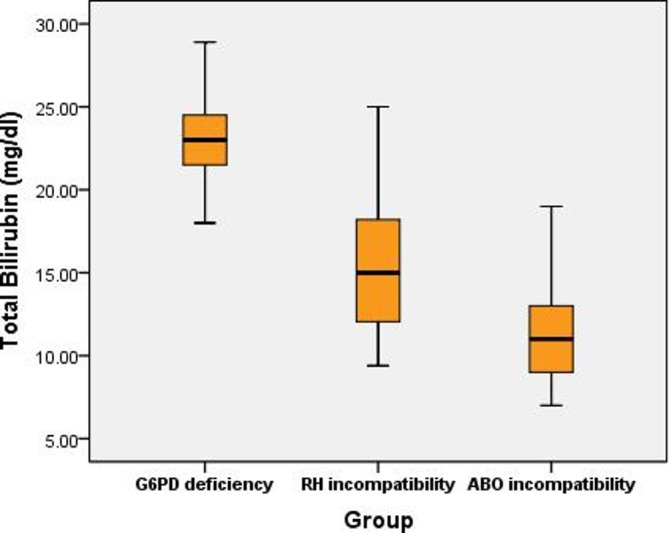
The prevalence of G6PD deficiency was 10.10%. Neonates with G6PD deficiency showed higher levels of serum bilirubin (p<0.001). Male gender, family history of G6PD deficiency and consanguinity were risk factors for G6PD deficiency (OR=4.27, 95% CI 1.66 - 10.99; OR=9.54, 95% CI 4.80- 18.95; OR=10.219, 95% CI 5.39 - 19.33, respectively). Mothers' perceptions of NNJ and G6PD were low, with only 30% having good knowledge on NNJ and 17.10% on G6PD deficiency, 46.8% with positive attitude towards NNJ and 45.0% towards G6PD deficiency, and 29.9% with good practice towards NNJ and 19.9% towards G6PD deficiency.
G6PD deficiency seems to be an important cause of NNJ. Mothers' perceptions of both NNJ and G6PD deficiency were low. A mass health education programme on both of these diseases is needed to ensure better and early detection, good timing of treatment, and better prevention of the triggering factors to ensure better health for children.
新生儿黄疸(NNJ)是葡萄糖-6-磷酸脱氢酶(G6PD)缺乏症的常见并发症。
评估葡萄糖-6-磷酸脱氢酶(G6PD)缺乏症在黄疸新生儿中的流行率,并评估母亲对 G6PD 和 NNJ 的认知。
对 2018 年 6 月至 2019 年 7 月间患有间接高胆红素血症的 487 例埃及裔新生儿进行横断面研究。收集的数据包括母婴特征。实验室检查包括血清胆红素、网织红细胞计数、ABO 分组、Rh 定型和新生儿血清 G6PD 检测。采用结构化、研究者管理的问卷对母亲进行单独访谈,以评估她们对 G6PD 缺乏症和 NNJ 的认知。
G6PD 缺乏症的患病率为 10.10%。G6PD 缺乏症新生儿的血清胆红素水平较高(p<0.001)。男性、家族 G6PD 缺乏症史和近亲结婚是 G6PD 缺乏症的危险因素(OR=4.27,95%CI 1.66-10.99;OR=9.54,95%CI 4.80-18.95;OR=10.219,95%CI 5.39-19.33)。母亲对 NNJ 和 G6PD 的认知度较低,仅有 30%对 NNJ 有较好的认识,17.10%对 G6PD 缺乏症有较好的认识,46.8%对 NNJ 有积极的态度,45.0%对 G6PD 缺乏症有积极的态度,29.9%对 NNJ 有良好的实践,19.9%对 G6PD 缺乏症有良好的实践。
G6PD 缺乏症似乎是 NNJ 的一个重要原因。母亲对 NNJ 和 G6PD 缺乏症的认知度都较低。需要开展大规模的卫生教育计划,普及这两种疾病的知识,以确保更好、更早地发现疾病,及时进行治疗,并更好地预防触发因素,从而确保儿童的健康。