The Eppley Institute for Research in Cancer and Allied Diseases, University of Nebraska Medical Center, Omaha, NE, USA.
Department of Biostatistics, University of Nebraska Medical Center, Omaha, NE, USA.
Oncogene. 2020 Apr;39(16):3381-3395. doi: 10.1038/s41388-020-1225-4. Epub 2020 Feb 26.
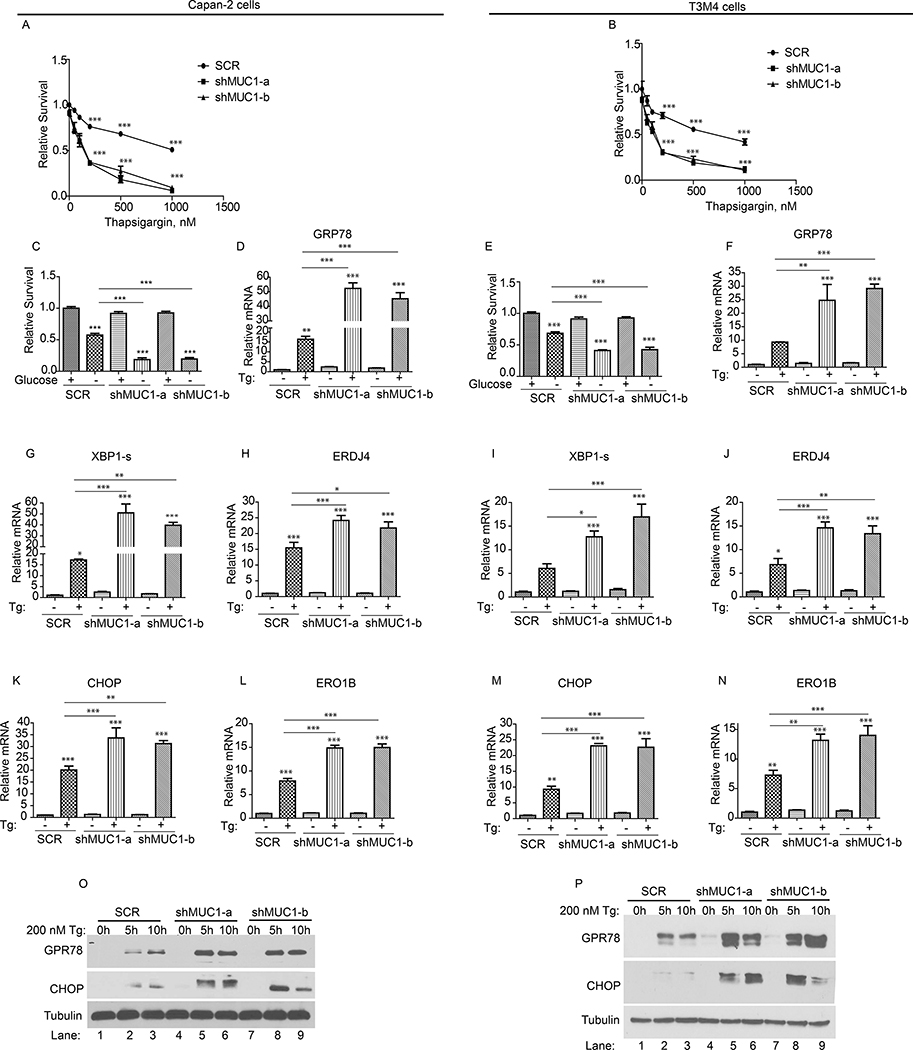
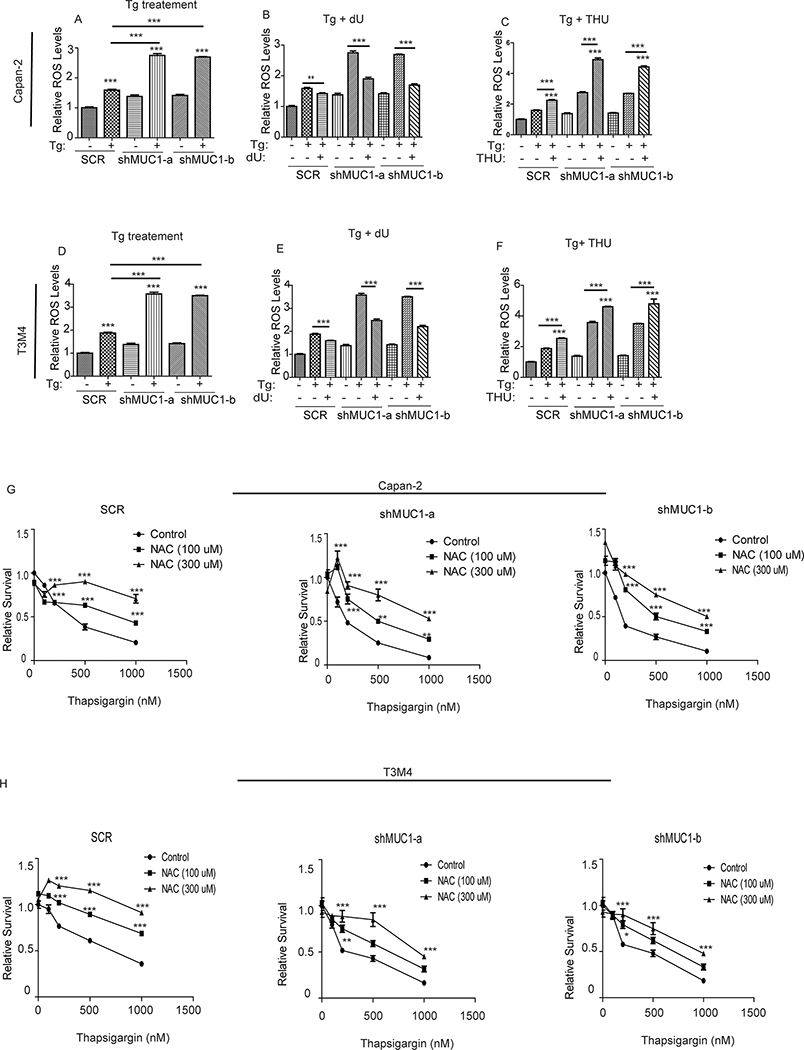
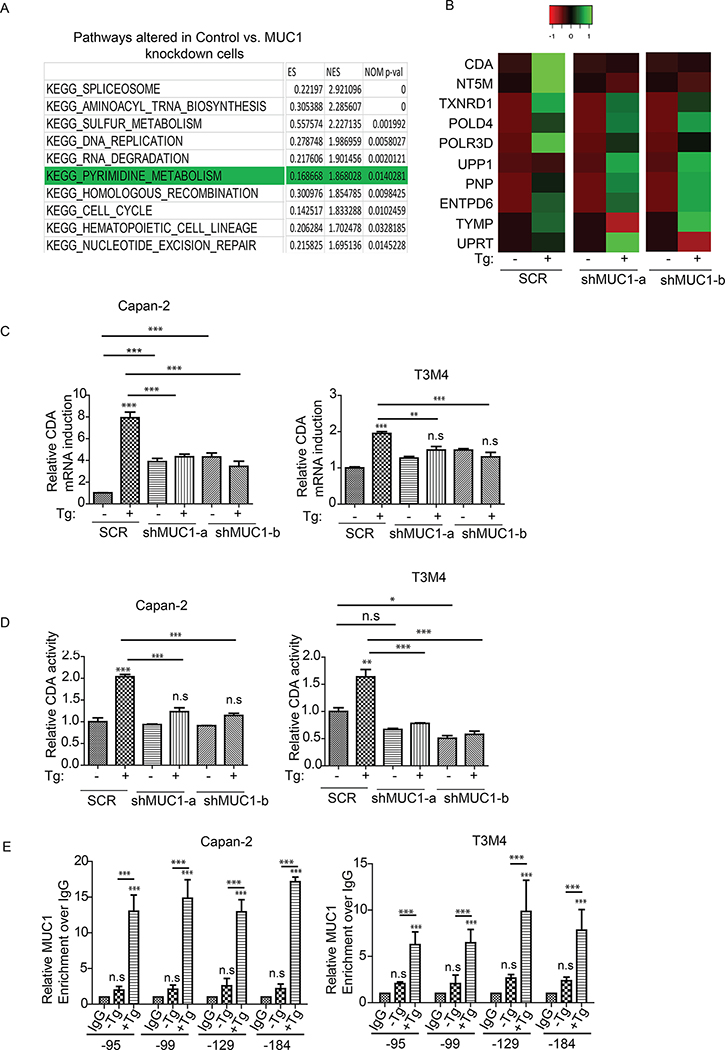
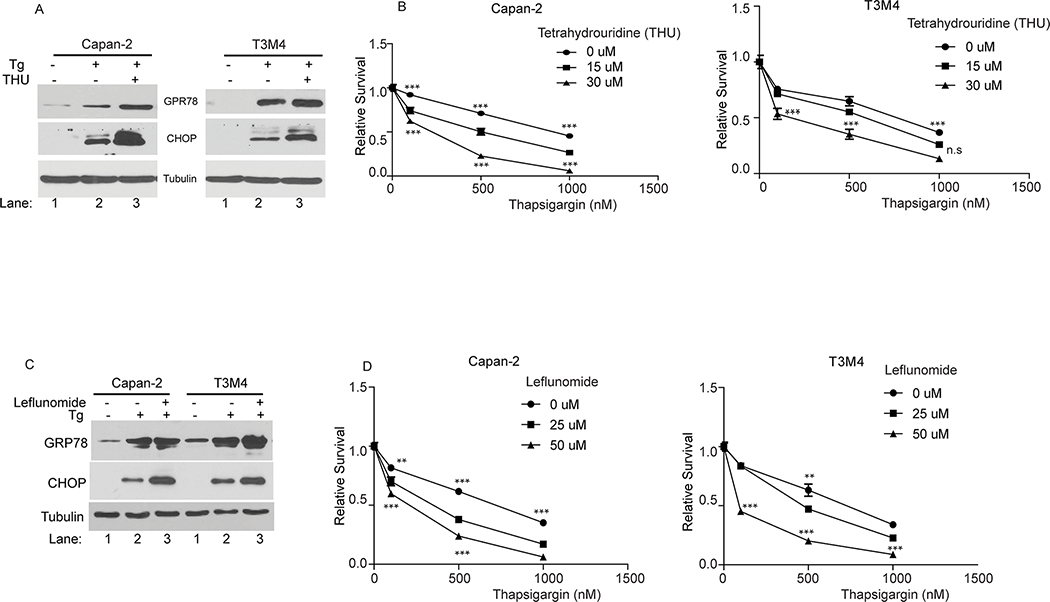
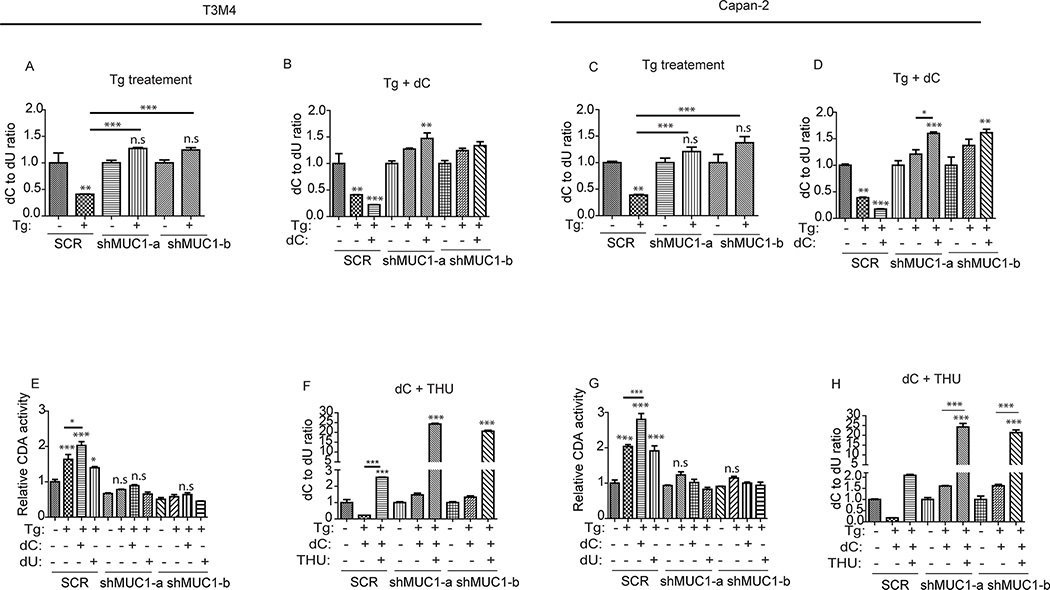
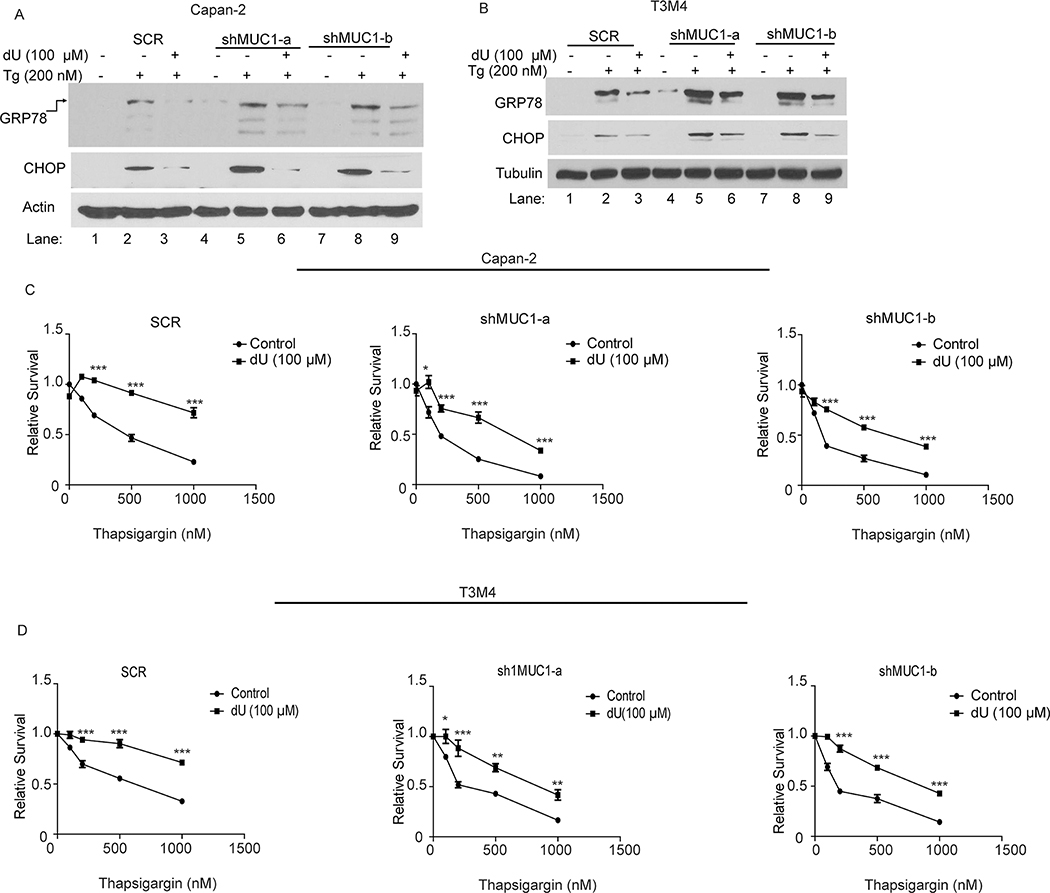
The Mucin 1 (MUC1) protein is overexpressed in various cancers and mediates chemotherapy resistance. However, the mechanism is not fully understood. Given that most chemotherapeutic drugs disrupt ER homeostasis as part of their toxicity, and MUC1 expression is regulated by proteins involved in ER homeostasis, we investigated the link between MUC1 and ER homeostasis. MUC1 knockdown in pancreatic cancer cells enhanced unfolded protein response (UPR) signaling and cell death upon ER stress induction. Transcriptomic analysis revealed alterations in the pyrimidine metabolic pathway and cytidine deaminase (CDA). ChIP and CDA activity assays showed that MUC1 occupied CDA gene promoter upon ER stress induction correlating with increased CDA expression and activity in MUC1-expressing cells as compared with MUC1 knockdown cells. Inhibition of either the CDA or pyrimidine metabolic pathway diminished survival in MUC1-expressing cancer cells upon ER stress induction. Metabolomic analysis demonstrated that MUC1-mediated CDA activity corresponded to deoxycytidine to deoxyuridine metabolic reprogramming upon ER stress induction. The resulting increase in deoxyuridine mitigated ER stress-induced cytotoxicity. In addition, given (1) the established roles of MUC1 in protecting cells against reactive oxygen species (ROS) insults, (2) ER stress-generated ROS further promote ER stress and (3) the emerging anti-oxidant property of deoxyuridine, we further investigated if MUC1 regulated ER stress by a deoxyuridine-mediated modulation of ROS levels. We observed that deoxyuridine could abrogate ROS-induced ER stress to promote cancer cell survival. Taken together, our findings demonstrate a novel MUC1-CDA axis of the adaptive UPR that provides survival advantage upon ER stress induction.
黏蛋白 1(MUC1)蛋白在各种癌症中过表达,并介导化疗耐药。然而,其机制尚未完全阐明。鉴于大多数化疗药物作为其毒性的一部分破坏内质网(ER)稳态,并且 MUC1 的表达受 ER 稳态相关蛋白调节,我们研究了 MUC1 与 ER 稳态之间的联系。在胰腺癌细胞中敲低 MUC1 可增强未折叠蛋白反应(UPR)信号传导,并在 ER 应激诱导时促进细胞死亡。转录组分析显示嘧啶代谢途径和胞苷脱氨酶(CDA)发生改变。染色质免疫沉淀和 CDA 活性测定表明,MUC1 在 ER 应激诱导时占据 CDA 基因启动子,与 MUC1 表达细胞中 CDA 表达和活性的增加相关,而与 MUC1 敲低细胞相比。在 ER 应激诱导时,抑制 CDA 或嘧啶代谢途径均可减少 MUC1 表达的癌细胞的存活。代谢组学分析表明,MUC1 介导的 CDA 活性与 ER 应激诱导时脱氧胞苷到脱氧尿苷代谢重编程相对应。由此增加的脱氧尿苷减轻了 ER 应激诱导的细胞毒性。此外,鉴于(1)MUC1 在保护细胞免受活性氧(ROS)损伤方面的既定作用,(2)ER 应激产生的 ROS 进一步促进 ER 应激,以及(3)脱氧尿苷的新兴抗氧化特性,我们进一步研究了 MUC1 是否通过脱氧尿苷对 ROS 水平的调节来调节 ER 应激。我们观察到脱氧尿苷可以消除 ROS 诱导的 ER 应激,从而促进癌细胞存活。总之,我们的研究结果表明,MUC1-CDA 轴是一种适应性 UPR,可在 ER 应激诱导时提供生存优势。