Fan Kenneth C, Lin James, Yannuzzi Nicolas A, Al-Khersan Hasenin, Patel Nimesh A, Maestre-Mesa Jorge, Zaidi Mustafa, Miller Darlene, Flynn Harry W
Department of Ophthalmology, Bascom Palmer Eye Institute, Miller School of Medicine, University of Miami, Miami, FL, USA.
J Ophthalmic Inflamm Infect. 2020 Feb 27;10(1):9. doi: 10.1186/s12348-020-0200-0.
To assess the in-vitro efficacy of delafloxacin, a new fourth generation fluoroquinolone, against Staphylococcus vitreous isolates from patients with clinically diagnosed endophthalmitis. This is the first investigation of delafloxacin in ocular tissues.
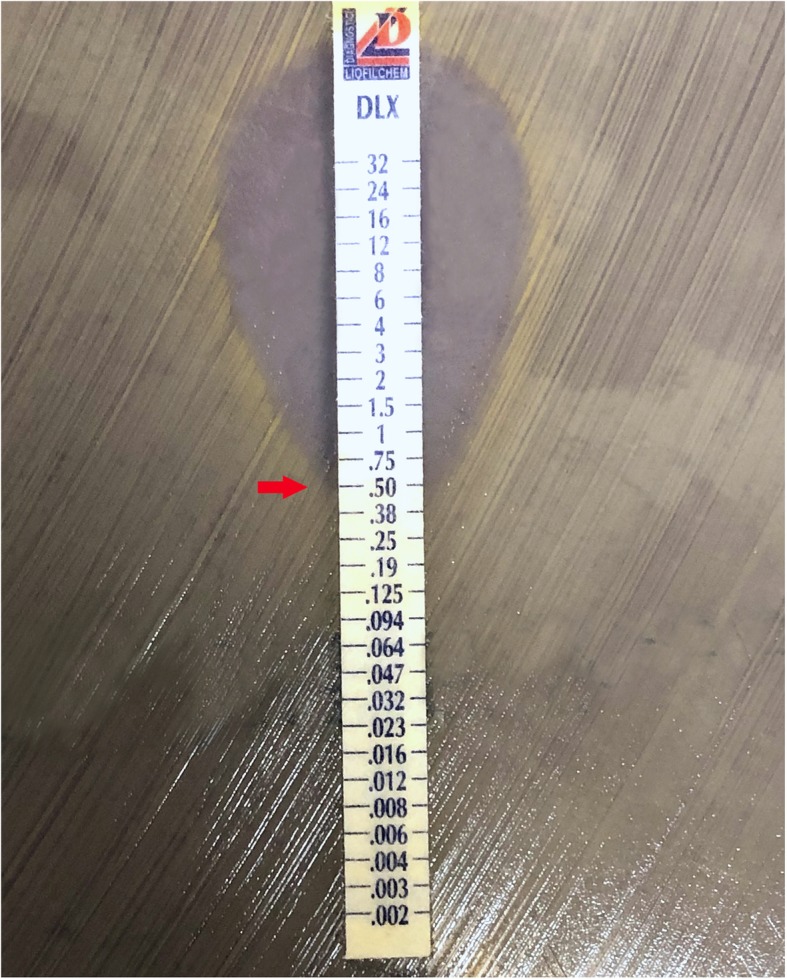
Intravitreal isolates of culture-proven S. aureus and S. epidermidis were identified between 2014 and 2018. Minimum inhibitor concentrations (MIC) were determined using ETEST strips. The antibiotic susceptibilities were tested against a panel of drugs including glycopeptides such as vancomycin, as well as traditional and newer fluoroquinolones (levofloxacin, moxifloxacin, and delafloxacin).
Of 45 total isolates identified between 2014 and 2018, 13% (6) were methicillin-resistant S. aureus (MRSA), 9% (4) were methicillin-sensitive S. aureus (MSSA), 53% (24) were methicillin-resistant S. epidermidis (MRSE), and 24% (11) were methicillin-sensitive S. epidermidis (MSSE). Among the fluoroquinolones, resistance rates were 61% for levofloxacin, 50% for moxifloxacin, and 12% for delafloxacin. Inter-class comparisons between delafloxacin and the two other fluoroquinolones demonstrated higher Gram-positive susceptibility to delafloxacin (p < 0.01). MIC90 values were lowest for delafloxacin (1.0 μg/mL) compared to levofloxacin (8.0 μg/mL) and moxifloxacin (8.0 μg/mL). Vancomycin was 100% effective against all isolates with MIC90 value of 0.75 μg/mL.
Compared to levofloxacin and moxifloxacin, the newer fluoroquinolone delafloxacin demonstrated the lowest MICs values and lowest rates of resistance for Gram-positive in-vitro S. epidermidis and S. aureus vitreous isolates.
评估新型第四代氟喹诺酮类药物德拉氟沙星对临床诊断为眼内炎患者玻璃体液分离出的葡萄球菌的体外疗效。这是德拉氟沙星在眼组织中的首次研究。
2014年至2018年间对培养证实的金黄色葡萄球菌和表皮葡萄球菌的玻璃体液分离株进行鉴定。使用ETEST试纸条测定最低抑菌浓度(MIC)。针对一组药物测试抗生素敏感性,这些药物包括糖肽类如万古霉素,以及传统和新型氟喹诺酮类药物(左氧氟沙星、莫西沙星和德拉氟沙星)。
在2014年至2018年间鉴定出的45株分离株中,13%(6株)为耐甲氧西林金黄色葡萄球菌(MRSA),9%(4株)为甲氧西林敏感金黄色葡萄球菌(MSSA),53%(24株)为耐甲氧西林表皮葡萄球菌(MRSE),24%(11株)为甲氧西林敏感表皮葡萄球菌(MSSE)。在氟喹诺酮类药物中,左氧氟沙星的耐药率为61%,莫西沙星为50%,德拉氟沙星为12%。德拉氟沙星与其他两种氟喹诺酮类药物的组间比较显示,德拉氟沙星对革兰氏阳性菌的敏感性更高(p < 0.01)。与左氧氟沙星(8.0μg/mL)和莫西沙星(8.0μg/mL)相比,德拉氟沙星的MIC90值最低(1.0μg/mL)。万古霉素对所有分离株的有效率为100%,MIC90值为0.75μg/mL。
与左氧氟沙星和莫西沙星相比,新型氟喹诺酮类药物德拉氟沙星对革兰氏阳性体外表皮葡萄球菌和玻璃体液分离的金黄色葡萄球菌显示出最低的MIC值和最低耐药率。