Epigenetics and Chromatin Biology Group, Gupta Laboratory, Cancer Research Institute, Advanced Centre for Treatment Research and Education in Cancer, Tata Memorial Centre, Kharghar, Navi Mumbai, Maharashtra 410210, India.
Department of Developmental Biology, School of Medicine, Washington University in St. Louis, Saint Louis, MO 63130, United States.
World J Gastroenterol. 2020 Feb 14;26(6):598-613. doi: 10.3748/wjg.v26.i6.598.
The prognosis of gastric cancer continues to remain poor, and epigenetic drugs like histone deacetylase inhibitors (HDACi) have been envisaged as potential therapeutic agents. Nevertheless, clinical trials are facing issues with toxicity and efficacy against solid tumors, which may be partly due to the lack of patient stratification for effective treatments.
To study the need of patient stratification before HDACi treatment, and the efficacy of pre-treatment of HDACi as a chemotherapeutic drug sensitizer.
The expression activity of class 1 HDACs and histone acetylation was examined in human gastric cancer cells and tissues. The potential combinatorial regime of HDACi and chemotherapy drugs was defined on the basis of observed drug binding assays, chromatin remodeling and cell death.
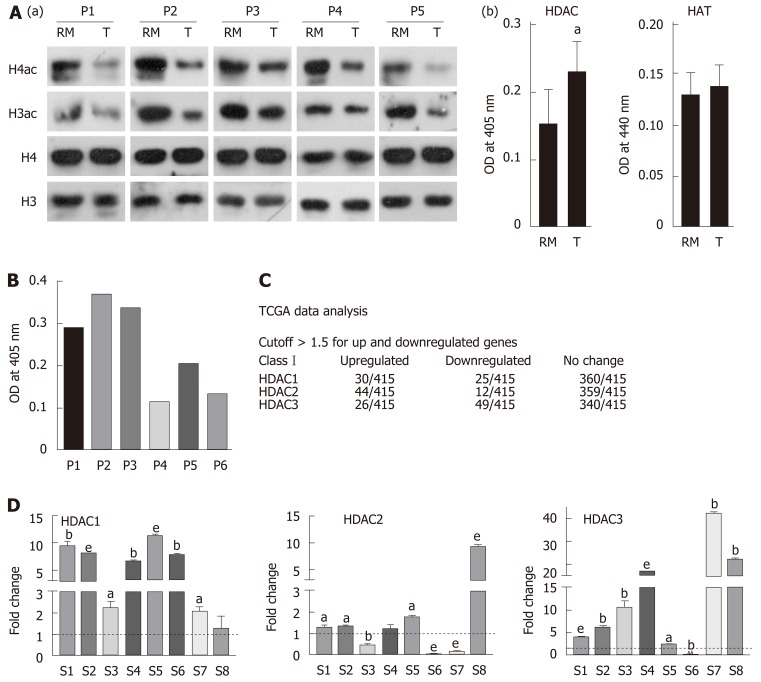
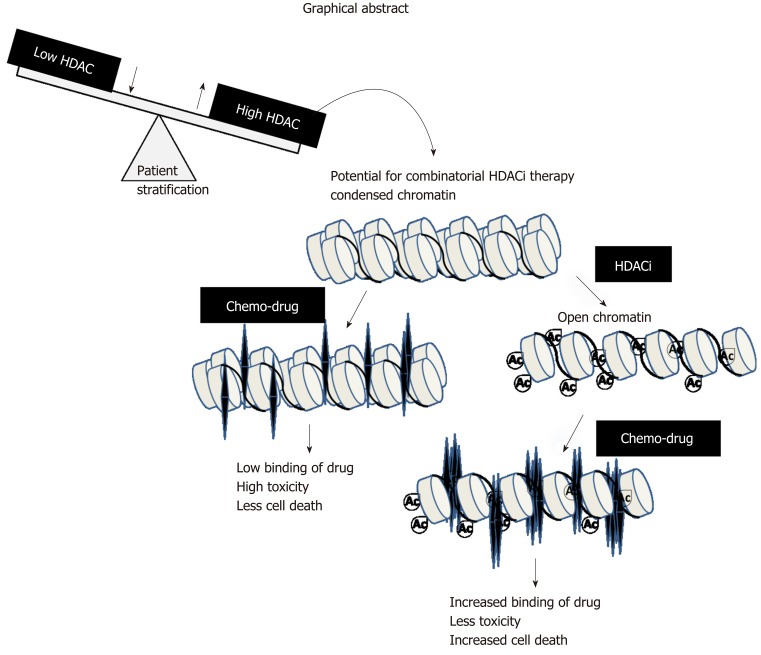
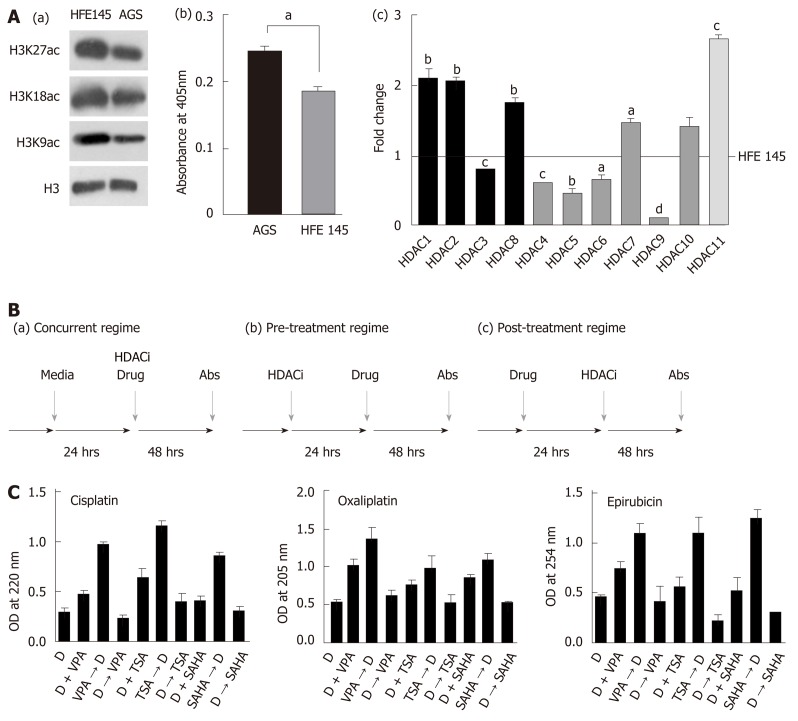
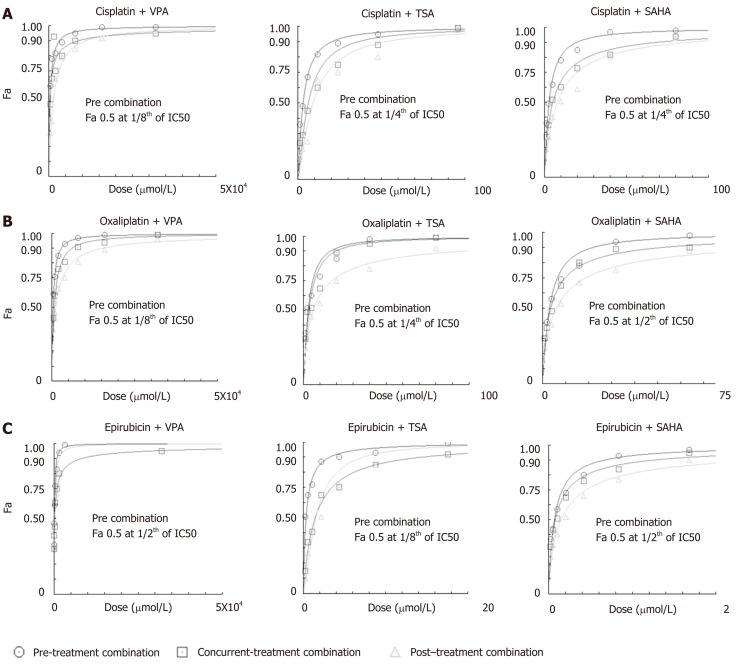
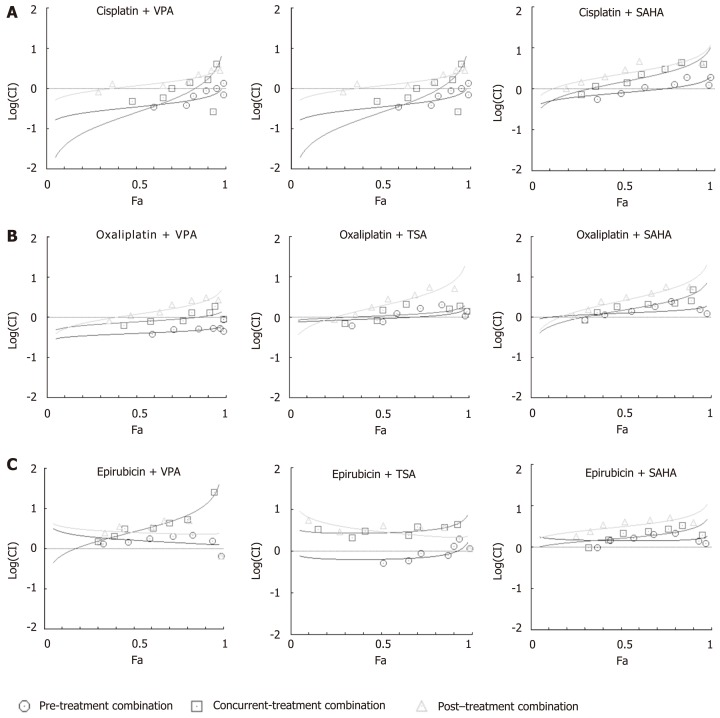
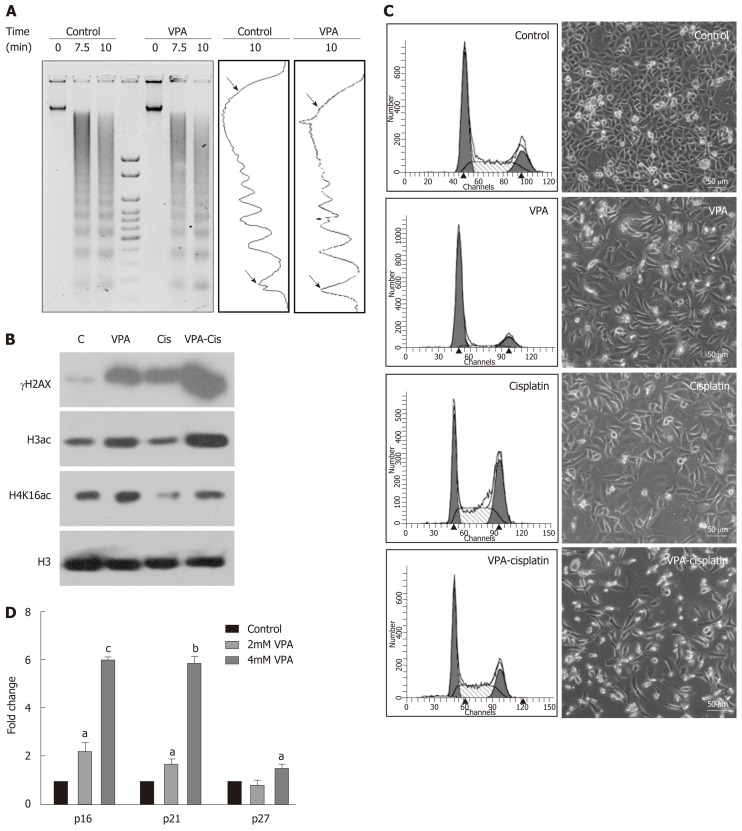
In the present study, the data suggest that the differential increase in HDAC activity and the expression of class 1 HDACs are associated with hypo-acetylation of histone proteins in tumors compared to normal adjacent mucosa tissue samples of gastric cancer. The data highlights for the first time that pre-treatment of HDACi results in an increased amount of DNA-bound drugs associated with enhanced histone acetylation, chromatin relaxation and cell cycle arrest. Fraction-affected plots and combination index-based analysis show that pre-HDACi chemo drug combinatorial regimes, including valproic acid with cisplatin or oxaliplatin and trichostatin A with epirubicin, exhibit synergism with maximum cytotoxic potential due to higher cell death at low combined doses in gastric cancer cell lines.
Expression or activity of class 1 HDACs among gastric cancer patients present an effective approach for patient stratification. Furthermore, HDACi therapy in pre-treatment regimes is more effective with chemotherapy drugs, and may aid in predicting individual patient prognosis.
胃癌的预后仍然较差,组蛋白去乙酰化酶抑制剂(HDACi)等表观遗传药物已被视为潜在的治疗药物。然而,临床试验在针对实体瘤的毒性和疗效方面面临问题,这可能部分是由于缺乏针对有效治疗的患者分层。
研究在接受 HDACi 治疗前进行患者分层的必要性,以及在作为化疗药物增敏剂的预处理中使用 HDACi 的疗效。
在人胃癌细胞和组织中检测了 I 类 HDAC 的表达活性和组蛋白乙酰化。根据观察到的药物结合测定、染色质重塑和细胞死亡,定义了 HDACi 和化疗药物的潜在联合方案。
本研究表明,与胃癌的正常相邻黏膜组织样本相比,HDAC 活性和 I 类 HDAC 表达的差异增加与组蛋白蛋白的低乙酰化有关。数据首次表明,HDACi 的预处理导致与增强的组蛋白乙酰化、染色质松弛和细胞周期停滞相关的更多 DNA 结合药物的增加。分数影响图和基于组合指数的分析表明,包括丙戊酸与顺铂或奥沙利铂以及曲古抑菌素 A 与表柔比星在内的 HDACi 联合化疗药物预处理方案在胃癌细胞系中以低组合剂量表现出协同作用,具有最大的细胞毒性潜力,因为细胞死亡更高。
胃癌患者中 I 类 HDAC 的表达或活性提供了一种有效的患者分层方法。此外,预处理方案中的 HDACi 治疗与化疗药物联合使用更有效,并可能有助于预测个体患者的预后。